
Bit (horse): function, types, fitting, and welfare
A bit is mouthgear used with a bridle and reins to communicate with a horse. This article covers its parts, common types, materials, discipline uses, fitting, and welfare concerns.
A bit is an instrument, usually metal, placed in a horse's mouth and attached to a bridle and reins to transmit the rider's aids. It is one component of a bridle assembly that helps the rider cue direction, speed, and head carriage. A correctly chosen and fitted bit allows clear, humane communication; incorrect selection or heavy hands can cause pain and behavioral problems.
Image gallery
8 Images



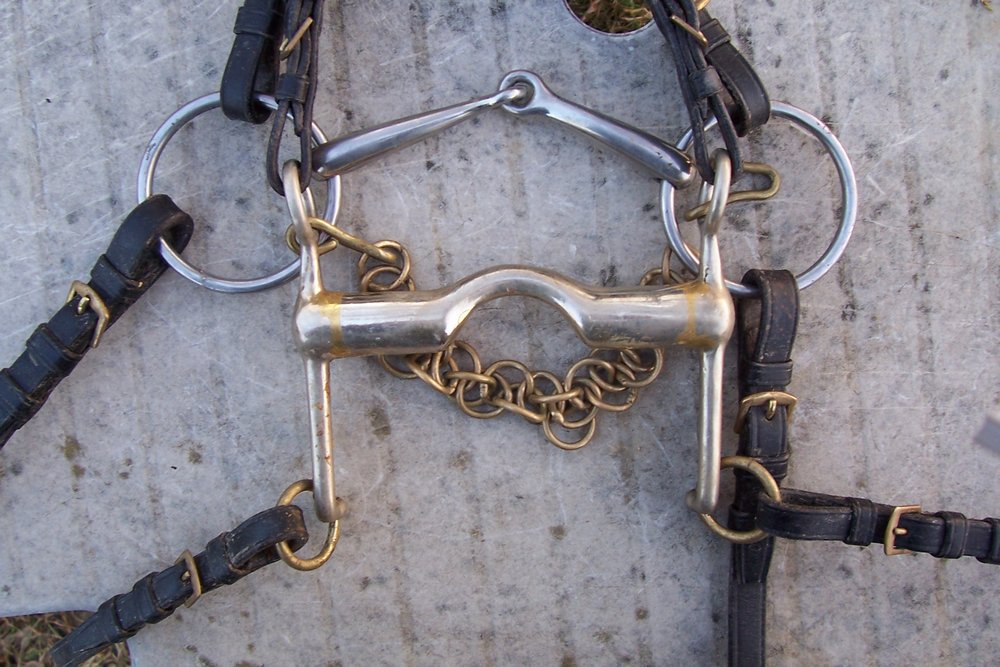


Parts and how a bit works
Most bits have two main parts: the mouthpiece, which lies inside the horse's mouth, and the cheekpieces or shanks, which attach to the bridle and reins. The mouthpiece rests on or between the bars (the toothless gap of the upper and lower jaw) and the tongue; its shape determines where pressure is applied. Cheekpieces translate rein movement into leverage, poll pressure, or curb chain pressure in curb-style bits. The rider's hand, via the reins, transmits signals that the horse learns to respond to.
Common types and characteristics
- Snaffle: A non-leverage bit that acts primarily on the mouth. Snaffles vary by mouthpiece: single-jointed, double-jointed (e.g., French link), mullen, or twisted.
- Curb: Uses shanks to create leverage and can apply poll and chin pressure; often seen in western riding.
- Pelham: Combines snaffle and curb actions; used with one or two reins and a curb strap.
- Gag and elevator bits: Increase pressure on the poll and mouth for specific control situations.
- Double bridle: Two bits (a bridoon and a curb) used mainly in advanced classical riding to enable nuanced signals.
Materials and mouthpiece designs
Mouthpieces are commonly metal but can include copper, sweet iron, stainless steel, rubber, or synthetic plastics. Different materials change taste and heat transfer and may encourage salivation. Mouthpiece design—smooth bar, jointed, ported, or twisted—affects how pressure is distributed: smoother, anatomically shaped pieces are generally considered milder; twisted or thin wires concentrate pressure and can feel harsher.
Uses, disciplines, and alternatives
Equestrian disciplines favor particular bits: many English riders use snaffles at lower levels and add curb elements for advanced work; western riders frequently use curb-style bits; saddleseat and higher-level dressage may employ double bridles. Training goals, rider skill, and the horse's mouth conformation influence choice. Bitless options, such as a mechanical hackamore or a sidepull, communicate via the nose or poll and are alternatives when a bit is undesirable.
Fitting, selection, and welfare
Proper fit is essential: a bit should sit comfortably without pinching lips or constantly banging teeth, and the rider should use steady, light contact. Young or inexperienced riders are advised to use milder mouthpieces until they develop sensitive hands. Misuse, harsh hands, or inappropriate choice of bit can injure the mouth, tongue, or bars and damage trust. Consultation with a knowledgeable instructor, trainer, or equine dentist is recommended when selecting or fitting a bit.
For more on how a bit is held in place within the wider headgear, see the bridle: bridle.
Bits have evolved alongside riding traditions; their variety reflects different training philosophies and the need to balance precise communication with the horse's comfort. Understanding function, materials, and fit helps riders choose equipment that supports clear cues and the animal's welfare.
Questions and answers
Q: What is a bit?
A: A bit is a type of equipment that is put in a horse's mouth to help control it. It is attached to a bridle and reins, which the rider holds and uses to cue the horse.
Q: What materials are bits usually made of?
A: Bits are usually made of metal, but may also be made of plastic or rubber.
Q: How do different types of bits work?
A: Different types of bits work differently. Some are "softer" than others, meaning that when there is a pull on them it is gentler for the horse than with harsher bits. For example, smooth mouthpieces are softer than those with twisted mouthpieces.
Q: Are bits cruel if used correctly?
A: No, if used correctly bits can be effective without being cruel to the horse. However, if a rider pulls too hard they can hurt the horse's mouth, especially when using harsh bits.
Q: Should inexperienced riders use softer bits?
A: Yes, inexperienced riders should use softer bits so that when mistakes are made they do not hurt the horse as much as harsher ones would. Experienced riders who have more skill can use harsher bits for greater control over the horse without causing harm.
Q: What type of bit is commonly used in western style riding?
A: Western style riding usually uses a curb bit.
Q: What type of bridle does saddleseat riding and high levels dressage require?
A: Saddleseat riding and high levels dressage require double bridles which hold two different kinds of bit so that the rider can give different cues to the horse with each one while handling both reins at once requiring great skill from the rider.
Tags
Related articles
Author
AlegsaOnline.com Bit (horse): function, types, fitting, and welfare Leandro Alegsa
URL: https://en.alegsaonline.com/art/11830