
Edwin Hubble
American astronomer whose observations established that many nebulae are galaxies beyond the Milky Way, provided evidence for an expanding universe, and introduced a galaxy classification system.
Overview
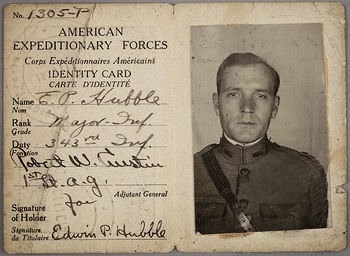
Edwin Powell Hubble (1889–1953) was an American astronomer whose observations in the early 20th century changed the scientific picture of the cosmos. He demonstrated that many objects then called "nebulae" are in fact separate galaxies outside the Milky Way and provided strong empirical evidence of a systematic relation between distance and redshift, a finding interpreted as an expanding universe. For a concise biographical summary see biography.
Image gallery
9 Images




Early life and career
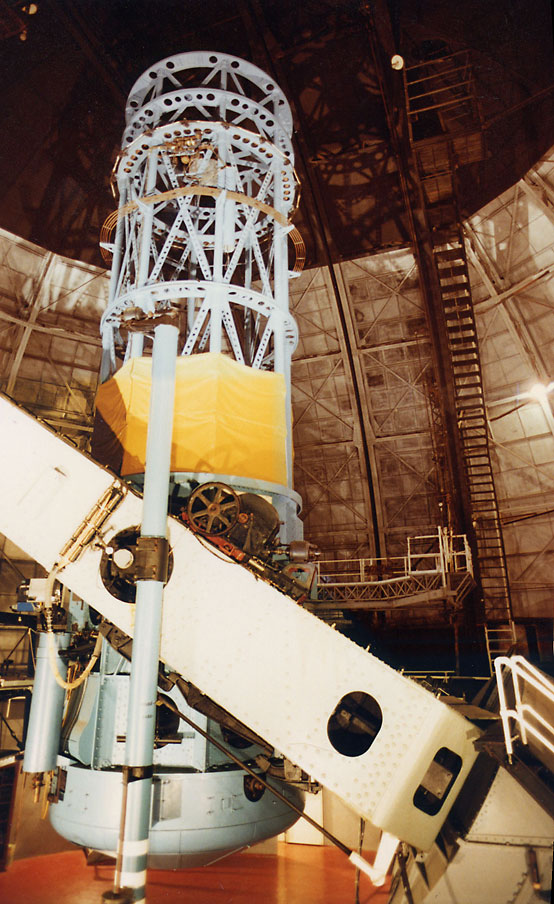
Hubble studied at the University of Chicago and as a Rhodes Scholar at Oxford, but ultimately returned to observational astronomy. He worked at the Mount Wilson Observatory where access to large telescopes allowed him to resolve individual stars in nearby galaxies. By identifying Cepheid variable stars and using them as standard candles he measured distances that placed those nebulae well beyond the Milky Way. Archival material and further details on his career can be found via archival resources.
Principal contributions
Two of Hubble's contributions remain central to astronomy. First, his morphological scheme for classifying galaxies—the Hubble sequence—provides a practical framework for describing galaxy shapes (elliptical, spiral, barred spiral, irregular). Second, his observational result now called Hubble's law quantifies a correlation between galactic redshift and distance, which became a cornerstone of modern cosmology. His work supplied the observational basis that encouraged theoretical models of a dynamic universe.
Hubble's legacy is both scientific and cultural. The Hubble Space Telescope bears his name, and the Hubble constant (the parameter describing expansion rate) remains a key quantity in cosmology, subject to ongoing measurement and refinement. Historians note that theoretical ideas about an expanding universe predated his measurements, so his role is best viewed as providing decisive observational support rather than as sole originator of the concept.
- Namesake: Hubble Space Telescope, honoring his impact on observational cosmology.
- Methods: Use of Cepheid variables and spectroscopic redshifts to determine distances and velocities.
- Classification: The Hubble sequence remains a widely used descriptive tool for galaxy morphology.
- Further reading and curated resources: additional materials.
Questions and answers
Q: Who was Edwin Powell Hubble?
A: Edwin Powell Hubble was an American astronomer.
Q: When was he born and when did he die?
A: He was born on November 20, 1889 and died on September 28, 1953.
Q: What is his legacy?
A: His findings changed the scientific view of the universe.
Q: What kind of research did he conduct?
A: He conducted astronomical research related to galaxies, stars, and other celestial bodies.
Q: Where did he work?
A: He worked at the Mount Wilson Observatory in California.
Q: What awards has he received for his work?
A: He received numerous awards for his contributions to astronomy including the Gold Medal of the Royal Astronomical Society in 1935 and the Bruce Medal in 1938.
Related articles
Author
AlegsaOnline.com Edwin Hubble Leandro Alegsa
URL: https://en.alegsaonline.com/art/118178
Sources
- books.google.com : The day we found the Universe
- ui.adsabs.harvard.edu : 1926ApJ....64..321H
- doi.org : 10.1086/143018
- nature.com : Published online 27 June 2011| Nature|
- dx.doi.org : 10.1038/news.2011.385
- nature.com : "Lost in translation: Mystery of the missing text solved"
- doi.org : 10.1038/479171a
- arxiv.org : arxiv.org
- antwrp.gsfc.nasa.gov : Sandage, Allan 1989. Edwin Hubble 1889–1953
- adsabs.harvard.edu : Effects of red shifts on the distribution of nebulae
- adsabs.harvard.edu : Red-shifts and the distribution of nebulae
- wikidata.orgQ43027.html : wikidata.orgq43027.html
- catalogue.bnf.fr : cb13595260x
- data.bnf.fr : (data)
- d-nb.info : 119183684