
Edward L. Tatum
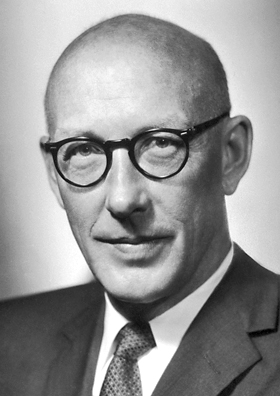
Edward L. Tatum (1909–1975), American geneticist who established the genetic control of metabolism and helped launch bacterial genetics; co-winner of the 1958 Nobel Prize in Physiology or Medicine.
Overview
Edward Lawrie Tatum (1909–1975) was an American geneticist whose experiments established a direct link between genes and the biochemical reactions that sustain life. Working with colleagues, he helped transform genetics from a descriptive discipline into one that could explain molecular function. His work on metabolic mutants and later studies of bacterial genetic exchange were foundational to molecular biology and earned him a share of the 1958 Nobel Prize in Physiology or Medicine.
Image gallery
4 Images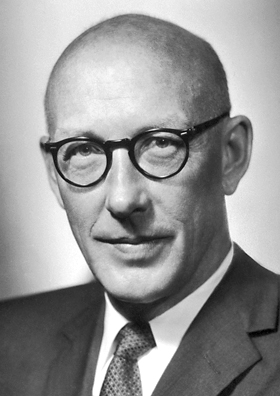


Key experiments and the one gene–one enzyme idea
In the late 1930s and early 1940s, Tatum and his collaborator George Beadle used the bread mold Neurospora crassa to study how genes affect cellular chemistry. They exposed spores to X-rays to induce mutations and isolated strains that could grow only when particular nutritional supplements were provided. By linking specific growth requirements to individual genetic lesions and to defects in particular enzymatic steps in metabolic pathways, they proposed that each gene directs the production of a specific enzyme. This principle became known as the "one gene–one enzyme" hypothesis and provided a conceptual bridge between classical genetics and biochemistry.
Extension to bacterial genetics
Tatum later helped to extend genetic analysis to bacteria. Working with his student Joshua Lederberg, he showed that Escherichia coli can exchange genetic information, demonstrating recombination between bacterial strains. These findings helped establish bacteria as tractable models for genetic and molecular studies and opened the door to modern microbial genetics, genetic mapping, and the molecular characterization of genes.
Career, training and personal background
Tatum was born in Boulder, Colorado, and completed undergraduate study at the University of Chicago followed by a Ph.D. in biochemistry at the University of Wisconsin–Madison in 1934. He began important collaborations while at Stanford University in the late 1930s, spent time on the faculty at Yale where he mentored younger scientists, and later held positions back at Stanford and at the Rockefeller Institute. Known for his rigorous experimental approach, he combined genetics and biochemical assays to trace the molecular consequences of mutation. He died in New York City in 1975.
Significance and later perspective
The experimental strategy introduced by Beadle and Tatum—using mutants to dissect metabolic pathways—remains a central method in genetics. Their formulation was refined over time: enzymes are produced by polypeptides encoded by genes, and genes can have regulatory roles beyond encoding enzymes. Nonetheless, the essential insight that genes determine biochemical function underpins molecular genetics, biotechnology, and much of modern biomedical research.
Further reading and links
- Biographical summary of Edward Tatum
- Nobel Prize citation for Beadle and Tatum
- Overview of gene concepts
- Metabolism and metabolic pathways
- Joshua Lederberg — collaborator and Nobel laureate
- Details of Beadle and Tatum's Neurospora experiments
- Mutagenesis and X-ray induced mutations
- Enzymes and genetics
- The one gene–one enzyme hypothesis
- Escherichia coli as a genetic model
- Boulder, Colorado — birthplace of Tatum
- University of Chicago — education
- Ph.D. in biochemistry — graduate training
- University of Wisconsin–Madison — doctoral work
- Stanford University — early faculty and research
- Yale University — mentorship and teaching
- Health and personal habits
- New York City — place of death
- Cause of death and medical context
- Tatum's later appointments and honors
Questions and answers
Q: Who was Edward Lawrie Tatum?
A: Edward Lawrie Tatum was an American geneticist.
Q: What did he win the Nobel Prize for?
A: He won the Nobel Prize in Physiology or Medicine in 1958 with George Beadle for showing that genes control individual steps in metabolism.
Q: How did they demonstrate this hypothesis?
A: They exposed the bread mold Neurospora crassa to x-rays, causing mutations and showed that these mutations caused changes in specific enzymes involved in metabolic pathways.
Q: What was their hypothesis known as?
A: Their hypothesis was known as the "one gene, one enzyme" hypothesis.
Q: Where did Ed Tatum attend college?
A: Ed Tatum attended college at the University of Chicago.
Q: When did he receive his PhD? A: He received his PhD in biochemistry from the University of Wisconsin–Madison in 1934.
Q: Where did he mentor Joshua Lederberg? A: He mentored Joshua Lederberg at Yale University in 1945.
Related articles
Author
AlegsaOnline.com Edward L. Tatum Leandro Alegsa
URL: https://en.alegsaonline.com/art/118165