
Edgar the Ætheling
Edgar the Ætheling (c.1051–c.1126) was an Anglo-Saxon royal claimant after 1066, briefly acclaimed by some English, later a figure in resistance to the Norman Conquest and a symbol of the old dynasty.
Overview
Edgar the Ætheling (often spelled Atheling), born about 1051 and dying around 1126, was the leading male heir of the pre-Conquest English royal house at the moment of crisis in 1066. With close blood ties to an earlier English king, he was seen by many contemporaries as a living link to the old monarchy and thus a natural focal point for those who opposed Norman rule. Despite occasional acclamation, Edgar was never crowned and his political career is best understood as the story of a young prince and his shifting fortunes after the Conquest.
Image gallery
2 Images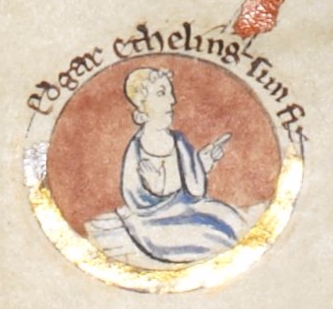

Origins and family
Edgar was the son of Edward the Exile and a descendant of King Edmund Ironside. His family had spent years abroad: Edgar himself was born in Hungary while his father lived in exile. When Edward the Exile returned to England in the 1050s he died soon afterwards under circumstances that contemporaries found suspicious. That left the teenage Edgar as one of the closest surviving male members of the house that had ruled England before the Norman era.
Claim to the throne and 1066
When Edward the Confessor died childless in 1066, rival claimants competed for the throne. Many English magnates favoured Edgar because he was native-born and of royal blood; his supporters included elements of the English nobility who preferred continuity with the Anglo-Saxon dynasty. In the confused months after the Battle of Hastings and the deaths of other leading figures, Edgar’s name recurred as a rallying point for resistance, but he was too young and without sufficient armed backing to be established as king.
Resistance, exile and alliances
After the Norman victory, Edgar became associated at different times with uprisings and with refugee courts abroad. He spent periods at the courts of other rulers and was involved with those who sought help against Norman rule. His situation illustrates how the Norman Conquest did not immediately erase opposition: a dispossessed native prince could serve as a symbol around which rebellions and diplomatic efforts were organized.
Later life and legacy
In later decades Edgar fades from the centre of political drama but survived into the early 12th century. He appears in records as a nobleman who, like some other members of the old elite, adjusted to the new political landscape in various ways. Historically he is important less for a single achievement than for what he represented: the continuity of the Anglo-Saxon royal line, the limits of Norman authority in the immediate aftermath of 1066, and the human consequences of conquest.
Key points
- Born c.1051 in Hungary during his family's exile.
- Grandson of Edmund Ironside and son of Edward the Exile.
- Considered a candidate for the throne after Edward the Confessor's death in 1066.
- Was a focus of native English resistance; later lived under shifting circumstances including contact with foreign courts and eventual submission to Norman rule.
For more on the period and related figures, see studies of the Norman Conquest and the late Anglo-Saxon monarchy; primary sources and modern histories give differing emphasis to Edgar’s role but agree on his symbolic importance. Further reading and archival references can be followed through library catalogues and specialist works on 11th-century England. England in 1066 was a kingdom undergoing rapid transformation; Edgar’s brief prominence helps explain why the Conquest remained contested for many years.
Exile and return, royal descent and the use of the title Ætheling (a term for a prince of royal blood) are recurring themes in accounts of Edgar. His life illustrates how claims of legitimacy, military power and foreign alliances combined to shape succession in medieval Europe.
See also references to contemporary politics and the fates of other claimants and magnates in the years following 1066.
Questions and answers
Q: Who was Edgar the Aethling?
A: Edgar the Aethling was a claimant to the throne of England in 1066 after Edward the Confessor died.
Q: Why was Edgar a popular choice among the English?
A: Edgar was a popular choice among the English because he was English and a grandson of Edmund Ironside.
Q: Where was Edgar born?
A: Edgar was born in Hungary because his father was in exile there.
Q: Why had Edgar's father been exiled from England?
A: Edgar's father had been exiled from England during the Viking reign.
Q: When did Edgar's father return to England from Hungary?
A: Edgar's father returned to England from Hungary when Edgar was five years old.
Q: What happened to Edgar's father soon after his return to England?
A: Soon after returning, Edgar's father died under mysterious circumstances.
Q: When did Edgar the Aethling die?
A: Edgar the Aethling's exact date of death is uncertain, but he is believed to have died around 1126.
Related articles
Author
AlegsaOnline.com Edgar the Ætheling Leandro Alegsa
URL: https://en.alegsaonline.com/art/118070