
Edgar Cortright — NASA scientist, Langley director and Apollo 13 investigator
Edgar M. Cortright (1923–2014) was an American scientist and senior NASA official, director of Langley Research Center and chair of the Apollo 13 Review Board, known for work in aeronautics and mission safety.
Overview
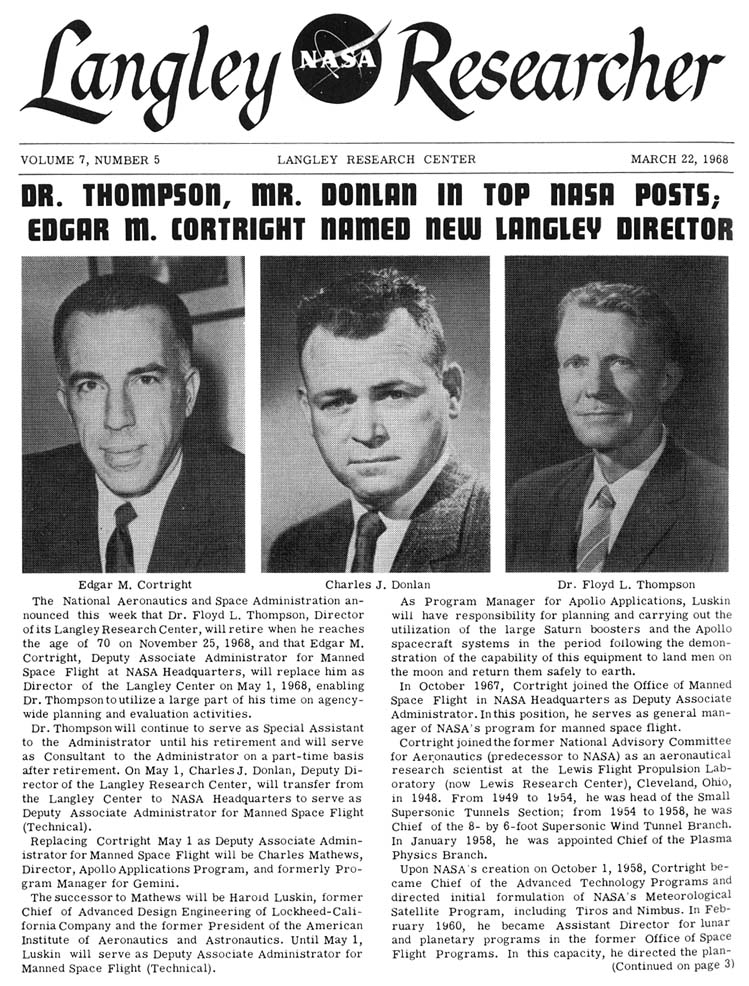
Edgar Maurice Cortright was an American scientist and engineer and a senior official at the National Aeronautics and Space Administration. Over a multi‑decade career he held leadership roles in research management, laboratory operations and safety oversight. His public profile is closely tied to two prominent responsibilities: directing a major NASA research center and chairing the independent review of the Apollo 13 accident.
Image gallery
3 Images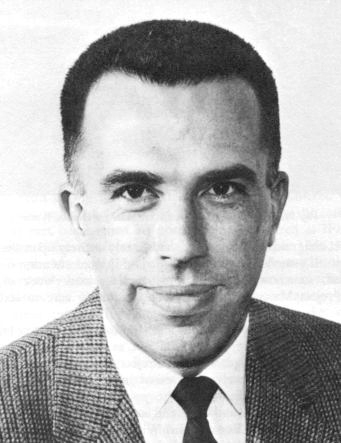

Career and roles
Cortright’s professional life was rooted in mid‑20th century aeronautics and spaceflight development. He rose through technical and administrative ranks to lead significant programs that connected basic research, wind tunnel testing and flight applications. As director of a major NASA center he oversaw scientific staff, test facilities and collaborations with industry and universities, managing the transition of technologies from laboratory to operational use.
Apollo 13 Review Board
Following the in‑flight failure of Apollo 13, an independent board was convened to determine causes and recommend corrective steps. Cortright served as chairman of that review board, guiding investigations that examined hardware, procedures and organizational factors. The board’s work helped shape safety improvements and operational changes that affected subsequent missions and informed broader NASA approaches to risk reduction.
Contributions and responsibilities
- Leadership of research programs integrating aeronautics and space technology.
- Management of large technical facilities and personnel.
- Direction of accident investigation and the formulation of safety recommendations.
- Fostering partnerships between government, industry and academia to apply research results.
Legacy and notable facts
Cortright is remembered for bridging scientific understanding and practical engineering in an era when spaceflight moved from experimental to operational phases. His chairmanship of the Apollo 13 review board placed him at a defining moment for crew safety and program learning. As a senior manager he contributed to the institutional development of research centers that supported both aeronautical innovation and human spaceflight.
He died in 2014 from a stroke in Palm City, Florida, at age 90. His career reflects the roles that experienced technical leaders played in shaping aerospace research and the safety culture of American space endeavors in the second half of the 20th century in the United States.
Related articles
Author
AlegsaOnline.com Edgar Cortright — NASA scientist, Langley director and Apollo 13 investigator Leandro Alegsa
URL: https://en.alegsaonline.com/art/118062
Sources
- nasa.gov : Former Langley Center Director Edgar Cortright Dies
- crgis.ndc.nasa.gov : Edgar M. Cortright
- legacy.com : Obituary: Dr. Edgar Cortright