
Bismuth(III) chloride (bismuth trichloride)
Bismuth(III) chloride (BiCl3) is a white to pale yellow inorganic compound. It acts as a Lewis acid, hydrolyzes in water to give bismuth oxychloride, and is used as a precursor and catalyst in synthesis.
Bismuth(III) chloride, commonly called bismuth trichloride, is an inorganic compound with the formula BiCl3. It contains bismuth in the +3 oxidation state combined with chloride ligands and is an important precursor in the chemistry of bismuth. For basic chemical data see chemical data.
Image gallery
5 Images
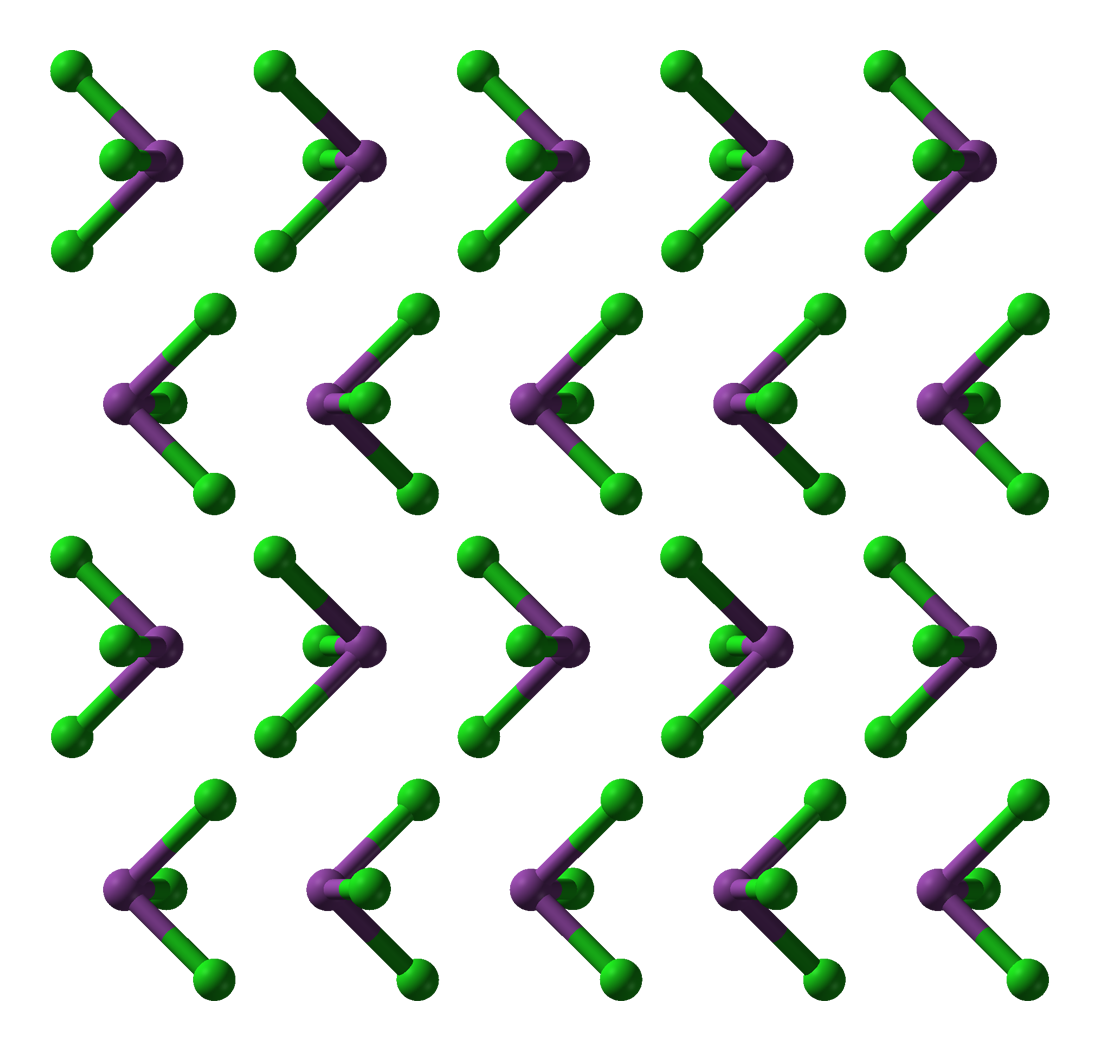


Composition and structure
In its simple description, BiCl3 consists of one Bi3+ center bonded to three chloride ions. The Bi3+ center bears a stereochemically active lone pair, which gives low-coordinate molecular species a trigonal pyramidal geometry in the gas and some solution phases. In the solid state the bismuth centers commonly adopt higher coordination numbers by bridging chloride ligands, so condensed phases can show extended structures rather than discrete molecules.
Physical and chemical properties
Bismuth(III) chloride is typically a white to pale yellow crystalline solid. It is hygroscopic and reacts with water; hydrolysis produces acidic solutions and insoluble bismuth oxychloride (BiOCl). As a soft Lewis acid it forms complexes with additional chloride or donor ligands and can produce complex anions in chloride-rich media. For more on the bismuth element and its oxidation behavior see bismuth and for chloride chemistry see chloride.
Preparation and reactions
BiCl3 is prepared by direct chlorination of elemental bismuth or by treating bismuth oxides or carbonates with hydrogen chloride. Typical reactions include hydrolysis to yield oxychloride or oxide-hydroxide phases, complexation with extra chloride to form coordination anions, and use as a Lewis acid catalyst to promote organic transformations. For general information on oxidation states and reactivity consult oxidation state references.
Uses and applications
- Precursor to other bismuth compounds and pigments (for example, bismuth oxychloride used in pearlescent finishes).
- Catalyst or reagent in organic synthesis for certain substitutions, rearrangements and activation of electrophiles.
- Laboratory reagent for preparative inorganic chemistry and materials synthesis.
Safety and handling
While bismuth compounds are generally considered less toxic than many heavy metals, BiCl3 is corrosive and can liberate hydrochloric acid on contact with moisture. It should be handled with appropriate personal protective equipment, in a well-ventilated area or under inert atmosphere, and stored dry. Consult material safety resources such as safety data before use.
Notable facts: bismuth(III) chloride illustrates the inert-pair tendencies of heavy p-block elements, where the lone pair influences geometry and reactivity, and serves as a convenient, reactive source of Bi3+ in both academic and industrial chemistry.
Questions and answers
Q: What is Bismuth(III) chloride?
A: Bismuth(III) chloride is a chemical compound with formula BiCl3.
Q: What are the ions present in Bismuth(III) chloride?
A: Bismuth(III) chloride contains bismuth and chloride ions.
Q: What is the oxidation state of bismuth in Bismuth(III) chloride?
A: The oxidation state of bismuth in Bismuth(III) chloride is +3.
Q: What is the other name for Bismuth(III) chloride?
A: The other name for Bismuth(III) chloride is bismuth trichloride.
Q: What is the chemical formula of Bismuth(III) chloride?
A: The chemical formula of Bismuth(III) chloride is BiCl3.
Q: What is the significance of the +3 oxidation state of bismuth in Bismuth(III) chloride?
A: The +3 oxidation state of bismuth in Bismuth(III) chloride indicates that bismuth has lost three electrons and has a positive charge of three.
Q: Is Bismuth(III) chloride a solid, liquid or gas at room temperature?
A: Bismuth(III) chloride is a solid at room temperature.
Related articles
Author
AlegsaOnline.com Bismuth(III) chloride (bismuth trichloride) Leandro Alegsa
URL: https://en.alegsaonline.com/art/11805