
Donovan (Donovan Phillips Leitch): Scottish 1960s folk‑pop singer-songwriter
Overview of Donovan, the Scottish born singer-songwriter of the 1960s: musical style, notable songs, career highlights, anti‑drug stance, legacy and later work, with a list of key recordings.
Donovan Phillips Leitch (born 10 May 1946 in Maryhill, Glasgow) is a Scottish singer, guitarist and songwriter who rose to prominence during the 1960s. Often associated with the folk‑rock and psychedelic pop movements of that decade, Donovan combined acoustic folk traditions with pop melodies and touches drawn from jazz and Indian musical ideas. Early in his career he was compared to Bob Dylan, but he quickly developed a distinctive voice that fused lyricism, unusual chord voicings and an interest in world sounds.
Image gallery
8 Images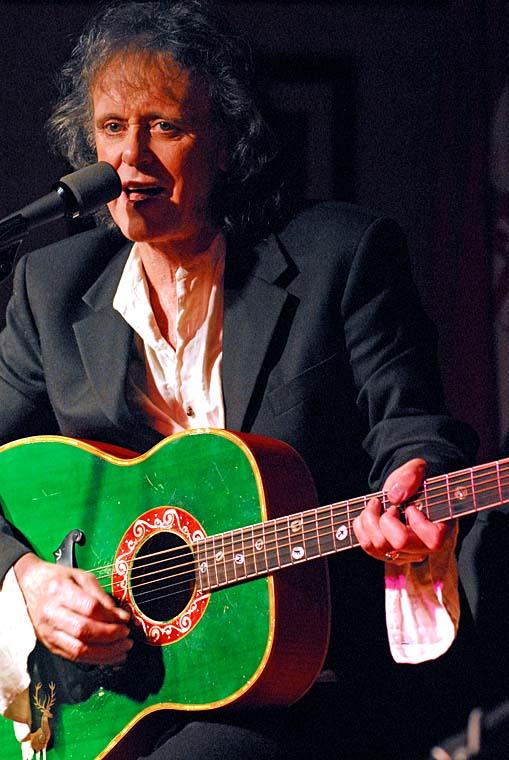

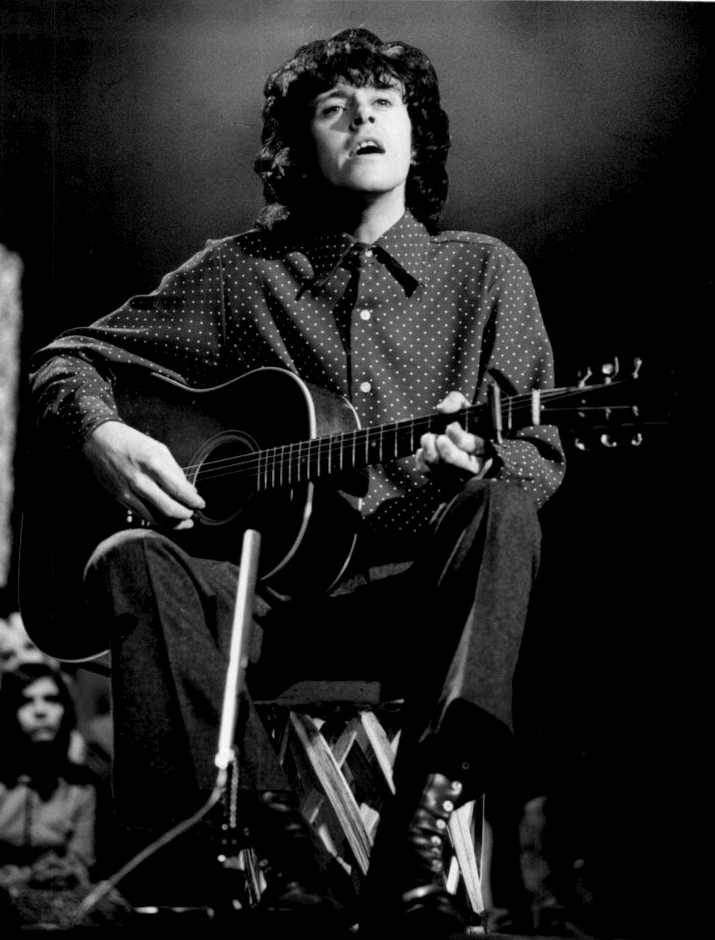




Musical style and influences
Donovan's work spans acoustic balladry, electric pop and more experimental psychedelia. He is known for a warm vocal delivery, fingerpicked guitar lines and melodic hooks that often incorporate modal or Eastern‑tinged motifs. His arrangements sometimes added brass, strings or exotic percussion to the basic folk framework, reflecting the cross‑pollination of popular music in the mid‑1960s. His approach influenced peers and later musicians who explored the intersection of folk, pop and psychedelic textures.
Career highlights and public life
Donovan found chart success and wide radio play in the mid‑1960s and became a visible figure in the era's countercultural scene. He met and befriended contemporaries in the United States and Britain, including Bob Dylan, and his circle overlapped with members of the Beatles on several occasions. In 1966 he was arrested for hashish possession; that episode, and concerns about harder drugs among friends, prompted him to speak out against drug abuse in the liner notes to his 1967 double album A Gift From a Flower to a Garden. He later noted changes in his own habits but remained identified with the hopeful, peace‑oriented attitudes often summarized as "flower power." He published a memoir, The Hurdy Gurdy Man, in 2005.
Notable songs and recordings
Several songs from Donovan's 1960s period remain well known and are frequently anthologized or used in media. These songs show the range of his writing, from intimate folk ballads to more psychedelic pop:
- "Catch the Wind" — an early acoustic single that introduced his gentle, lyrical style.
- "Sunshine Superman" — title track blending electric color and pop sensibility.
- "Mellow Yellow" — a playful, groove‑based pop single associated with the era.
- "Atlantis" — a longer, spoken‑word style piece with mythic imagery; reports associate it with contributions from notable contemporaries.
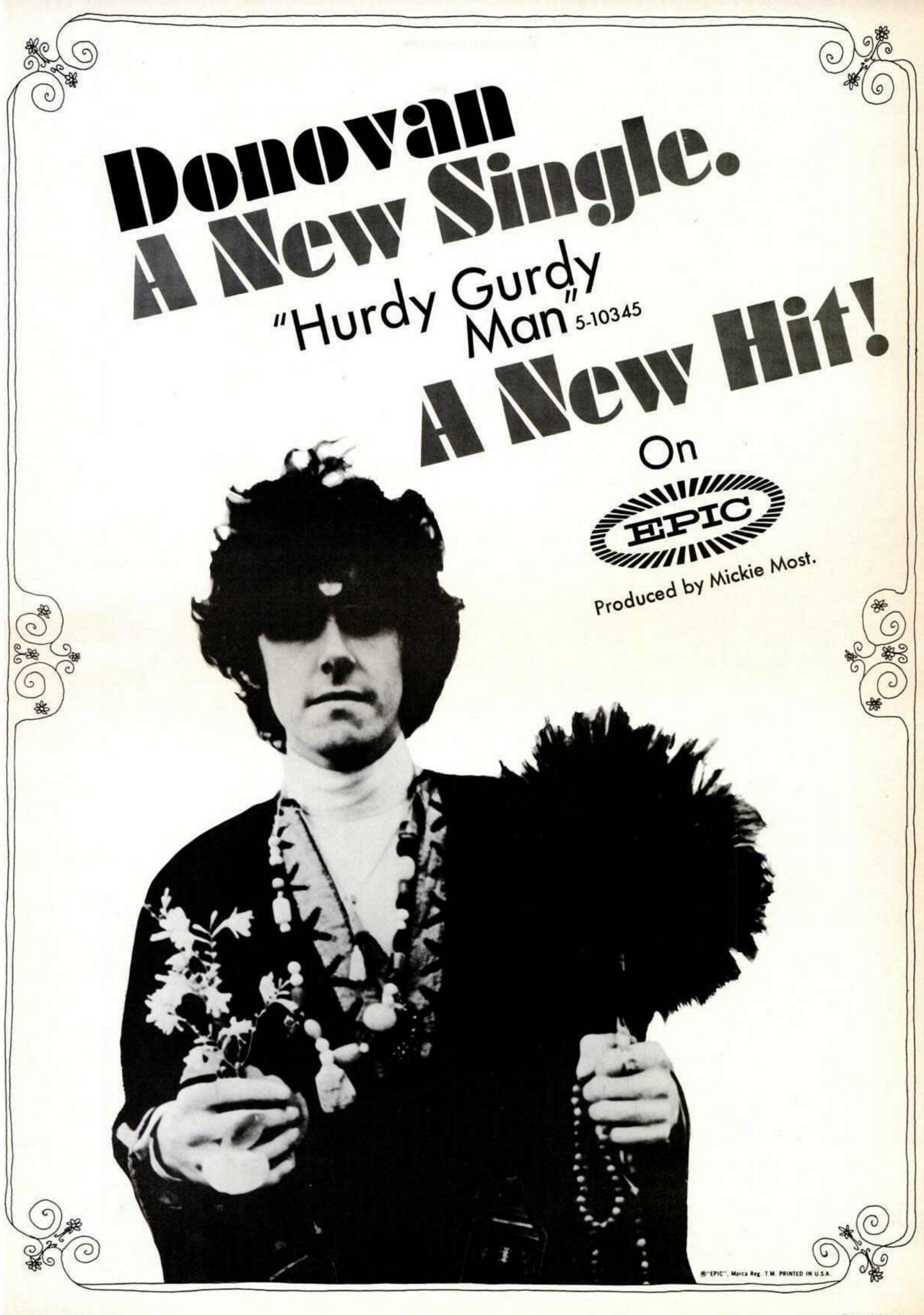
- "Hurdy Gurdy Man" — a strident, droning song whose title became emblematic of Donovan's public persona.
Later work and legacy
After the 1960s Donovan's commercial visibility diminished relative to his peak, but he continued to record and tour across subsequent decades. He released studio albums, live recordings and compilations through the 1970s and 1980s, and performed internationally. His songs have been licensed for film and advertising, keeping several titles in public circulation. Donovan's blend of folk songwriting with psychedelic and world‑music elements marks him as an influential figure in the transition from 1950s folk revival to more eclectic popular music of the late 1960s.
Notable facts and further reading
Two of his children, Donovan Leitch and Ione Skye, pursued careers in acting. Donovan's public statements, musical experiments and collaborations make him a frequent subject of retrospectives and biographies. For more information, recordings and retrospectives, consult the resources below.
- Official biography overview
- Early recordings and sessions
- Contemporary reviews and press
- 1960s cultural context
- Accounts of meetings with Bob Dylan
- Musical influences: jazz elements
- Use of Indian motifs and instruments
- Connections with the Beatles
- Notes on collaborative anecdotes
- John Lennon related references
- Paul McCartney related references
- Donovan's public stance on drugs
- 1966 legal incident
- Contemporaries' drug use and culture
- Amphetamine and 1960s music scenes
- Later life and habits
- Flower power era summaries
- Use of Donovan songs in television and media
- Discography highlights through the 1980s
- Autobiography: The Hurdy Gurdy Man (2005)
Questions and answers
Q: What is Donovan Phillips Leitch's profession?
A: Donovan Phillips Leitch is a Scottish-born pop singer and guitarist.
Q: When was he born?
A: He was born on 10 May 1946 in Maryhill, Glasgow, Scotland.
Q: What are some of his most famous songs?
A: Some of his best-remembered songs include "Catch The Wind", "Mellow Yellow", "Sunshine Superman", "Happiness Runs", and "Hurdy Gurdy Man".
Q: How did he help the Beatles?
A: He helped the Beatles with their song "Yellow Submarine" and two Beatles (John Lennon and Paul McCartney) sang on his song "Atlantis".
Q: What did he do after seeing friends use hard drugs like heroin and speed (amphetamine)?
A: After seeing friends begin to use hard drugs like heroin and speed (amphetamine), Donovan was one of the first pop musicians to denounce the use of drugs, after his own arrest for hashish possession in 1966. The liner notes to his 1967 album A Gift From a Flower to a Garden called upon young people to "stop the use of all drugs, and heed the quest to seek the Sun."
Q: How has Donovan's music been remembered since then?
A: Since then, Donovan's music has been remembered as part of the flower power era. Many of his songs now appear in television commercials. He continued to make albums regularly through the 1980s, and sometimes in the 1990s. He also continued to tour, and some of his later albums are of live performances.
Q: Are any members of Donovan's family involved in show business?
A: Yes, two of Donovan's children - Donovan Leitch and Ione Skye - are actors.
Related articles
Author
AlegsaOnline.com Donovan (Donovan Phillips Leitch): Scottish 1960s folk‑pop singer-songwriter Leandro Alegsa
URL: https://en.alegsaonline.com/art/117833