
Dennis Brain: British Horn Player (1921–1957)
Renowned mid-20th-century British horn virtuoso whose tone, technique and recordings—including Mozart concertos with Karajan—helped popularize the horn and inspired new works written for him.
Overview
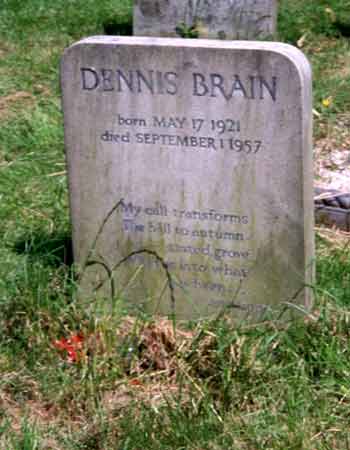
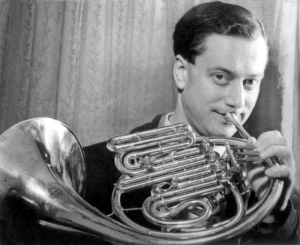
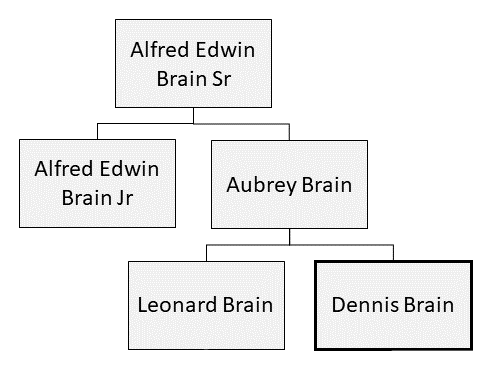
Dennis Brain (17 May 1921 – 1 September 1957) was a British horn virtuoso widely admired for the musical clarity, warmth of tone and technical fluency he brought to the instrument. Born into a family of horn players, he rose to international prominence during the 1940s and 1950s and is often cited as one of the defining horn artists of the 20th century. His playing played a major role in bringing the horn to greater public attention among classical audiences.
Image gallery
4 Images
Career and recordings
Brain made numerous studio and live recordings that remain influential. Among the most celebrated are his recordings of the Mozart horn concertos, made with the Philharmonia Orchestra under the baton of Herbert von Karajan. These recordings were praised for their elegance, transparent phrasing and rhythmic precision and became reference performances for listeners and students.
Style and contributions
His style combined a pure, singing tone with lightness of articulation and an acute sense of musical line. Listeners and colleagues admired his ability to balance technical brilliance with expressive subtlety, making even demanding passages sound effortless. He helped define modern expectations for phrasing, articulation and intonation on the instrument.
Repertoire and collaborations
Brain championed both classical staples and contemporary works. Several composers wrote pieces for him, and he frequently collaborated with leading conductors and chamber ensembles of his day. His advocacy broadened the horn’s solo and chamber repertoire and encouraged composers to explore the instrument’s lyrical and agile possibilities.
Death and legacy
Dennis Brain’s career was cut short by a fatal road accident in 1957 when he was 36. Despite his early death, his recordings and the standards he set continued to influence generations of horn players. Conservatories, teachers and professional players still refer to his phrasing and tone as benchmarks for musical and technical excellence.
Notable distinctions
He is remembered both for his recorded legacy and for the renewed public interest in the horn that he helped create. His reputation as a musician’s musician — respected by performers and composers alike — secures his place in 20th-century musical history.
Questions and answers
Q: Who was Dennis Brain?
A: Dennis Brain was a British horn player.
Q: When was Dennis Brain born and when did he die?
A: Dennis Brain was born on May 17, 1921, and died on September 1, 1957, in London.
Q: How famous was Dennis Brain in his life?
A: Dennis Brain became world-famous during his short life.
Q: What did many people consider Dennis Brain to be?
A: Many people considered Dennis Brain to be the greatest horn player ever.
Q: What did Dennis Brain achieve in the British classical music scene?
A: Dennis Brain made the horn very popular among classical music lovers in Britain.
Q: What were some of the recordings made by Dennis Brain?
A: Some of the recordings made by Dennis Brain include the four horn concertos by Wolfgang Amadeus Mozart, which he recorded with the Philharmonia Orchestra conducted by Herbert von Karajan.
Q: Who conducted the Philharmonia Orchestra during Dennis Brain's recording of Mozart's horn concertos?
A: Herbert von Karajan conducted the Philharmonia Orchestra during Dennis Brain's recording of Mozart's horn concertos.
Related articles
Author
AlegsaOnline.com Dennis Brain: British Horn Player (1921–1957) Leandro Alegsa
URL: https://en.alegsaonline.com/art/117527