
David II of Scotland: life, reign, captivity and legacy
David II (1324–1371), son of Robert the Bruce, reigned through minority, invasion, exile and a long English captivity; his childless death ended the direct Bruce line and brought the Stewart dynasty to the throne.
Overview
David II (5 March 1324 – 22 February 1371) was King of Scots from 1329 until his death. He was the only surviving son of Robert the Bruce and Elizabeth de Burgh. Born at Dunfermline in Fife, his life illustrates the dangers that faced a medieval child monarch: factional rivalry at home, contested claims supported from across the border, and the long-term consequences of capture and ransom.
Image gallery
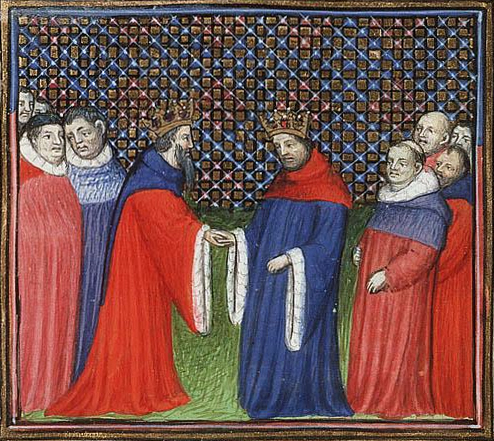
5 Images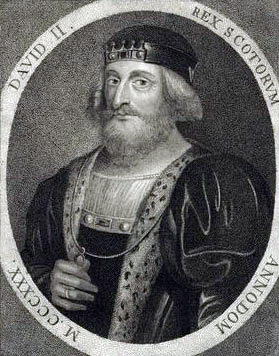


Background and early life
David succeeded when he was five years old after the death of his father in 1329 and was crowned at Scone in 1331. In 1328, as part of a political settlement after the First War of Scottish Independence, the child-king was married to Joan of the Tower, a daughter of Edward II of England and Isabella of France. Both bride and groom were children; the union was dynastic and produced no surviving legitimate heirs.
Regency, Balliol challenge and exile
David's minority left the kingdom under regency and vulnerable to rival magnates. Ambitious opponents encouraged by elements of the English crown pushed forward the claim of Edward Balliol. Balliol, with military backing from Edward III of England and from discontented Scottish nobles, defeated the supporters of the Bruce dynasty at Dupplin and briefly took the Scottish throne. The young David spent part of his early years in exile on the Continent for safety before returning to exercise authority in Scotland.
Return to power and the 1346 campaign
David returned to Scotland in the early 1340s and worked to restore royal control, but the Anglo-Scottish frontier remained volatile. In 1346 David led an expedition into northern England; at the Battle of Neville's Cross he was defeated and captured. His captivity lasted many years and removed him from direct rule during a critical period for the Scottish realm.
Captivity and ransom
After his capture David was held in England, living mainly in London and at Odiham in Hampshire (Odiham). Negotiations for his release culminated in the Treaty of Berwick (1357), which fixed a large ransom. The scale of the ransom placed a heavy burden on the Scottish exchequer and politics: payments were made in instalments, many were deferred or defaulted, and the attempt to raise funds shaped the kingdom's fiscal and diplomatic choices for the remainder of the century.
Later reign and governance
Following his return to Scotland, David resumed kingship but never fully restored the authority or stability that had existed under his father's leadership. The long absence had allowed powerful nobles greater autonomy and the finances of the crown remained strained. David spent much of his later reign dealing with internal rivalries, enforcing royal rights where possible, and managing the consequences of the unpaid ransom.
Death and succession
David died childless on 22 February 1371 at Edinburgh Castle. With no direct male heir from the Bruce line, succession passed to his nephew Robert II, son of David's sister Marjorie, marking the start of the Stewart (later Stuart) dynasty. The transition was significant for Scottish dynastic and political continuity.
Legacy
David II's reign is remembered less for great achievements than for the problems it exposed: the fragility of minority rule, the influence of English intervention in Scottish affairs, and the heavy toll that royal captivity and ransom could take on a medieval kingdom. As the last male monarch of the Bruce line, his death closed a chapter begun by his father and opened another in Scottish history under the Stewarts.
Key dates
- Born: 5 March 1324
- Married Joan of the Tower: 17 July 1328
- Succeeded to the throne: 7 June 1329
- Crowned at Scone: November 1331
- Battle of Dupplin: 12 August 1332 (Balliol challenge)
- Captured at Neville's Cross: 17 October 1346
- Ransomed under Treaty of Berwick: 1357
- Died at Edinburgh Castle: 22 February 1371
Further reading: For narrative accounts and primary documents related to David II, consult authoritative histories of medieval Scotland and editions of contemporary chronicles and treaties. For online summaries and references see general encyclopaedic entries and specialist studies of the Wars of Scottish Independence and the mid-14th-century Anglo-Scottish frontier.
Questions and answers
Q: Who was David II?
A: David II was the King of Scots, son of King Robert the Bruce by his second wife, Elizabeth de Burgh.
Q: Who was David II married to?
A: David II was married to Joan of the Tower, daughter of Edward II of England and Isabella of France.
Q: When did David II become King of Scotland?
A: David II became King of Scotland at the age of five, after the death of his father on 7 June 1329.
Q: Who fought against David II to become king?
A: Edward Balliol, with support from Edward III of England, fought against David II to become king.
Q: Was David II defeated in a battle?
A: Yes, David II was defeated at the Battle of Dupplin on 12 August 1332 by Edward Balliol.
Q: When did David II invade England, and was he successful?
A: David II invaded England in 1346 but was defeated and taken prisoner at the Battle of Neville's Cross on 17 October 1346.
Q: Where did David II die?
A: David II died in Edinburgh Castle in 1371.
Related articles
Author
AlegsaOnline.com David II of Scotland: life, reign, captivity and legacy Leandro Alegsa
URL: https://en.alegsaonline.com/art/117300