
David Hubel — pioneer in visual neuroscience
Canadian neurophysiologist (1926–2013) whose electrophysiology work with Torsten Wiesel revealed how the visual cortex processes information; co-recipient of the 1981 Nobel Prize.
David H. Hubel (February 27, 1926 – September 22, 2013) was a Canadian neurophysiologist renowned for experimental discoveries about how the brain represents visual information. Working in the mid-20th century, Hubel used single-cell recording techniques to investigate the organization and function of the primary visual cortex, transforming understanding of sensory processing and cortical development. His work, conducted in close collaboration with Torsten Wiesel, earned him a share of the 1981 Nobel Prize in Physiology or Medicine and wide influence across neuroscience and medicine.
Image gallery
3 Images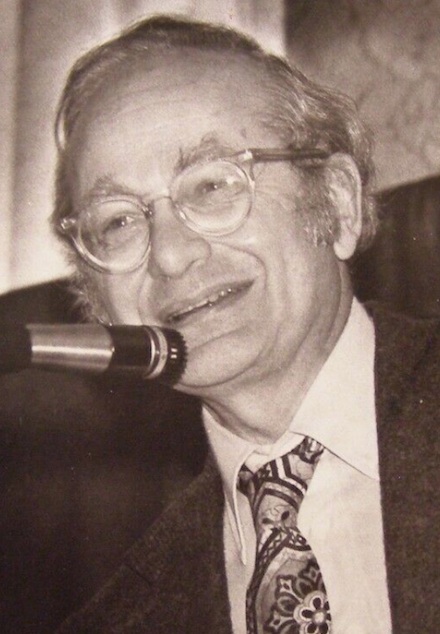


Overview of research and methods
Hubel combined precise microelectrode recordings with carefully controlled visual stimuli in anesthetized animals to map how individual neurons respond to features of the visual scene. These methods revealed that neurons in the primary visual cortex are tuned to specific stimulus properties and are organized into systematic maps. The approach set a standard for linking single-cell physiology to perceptual function.
Key findings
- Discovery of receptive fields: neurons in early visual cortex respond to limited regions of the visual field and to particular stimulus attributes.
- Classification of "simple" and "complex" cells: distinct response patterns to edges and motion clarified stages of cortical processing.
- Identification of columnar organization and ocular dominance patterns: neurons preferring one eye or particular orientations are grouped into columns.
- Demonstration of critical periods: experiments showed that early experience profoundly shapes cortical connectivity, informing clinical views on amblyopia and visual development.
These discoveries provided a mechanistic framework for how the brain extracts edges, orientations and binocular information—fundamental operations underlying vision.
Historical context and influence
Hubel's work came at a time when neuroscience was shifting from anatomical description to physiological mechanism. By linking cellular responses to perceptual properties, his studies influenced fields ranging from developmental neurobiology to computational models of vision. Clinically, the concept of a developmental "critical period" influenced treatment timing for childhood visual disorders.
Hubel trained as a physician-scientist and spent much of his career in academic laboratories where his careful experiments and clear writing inspired generations of researchers. He was elected a Fellow of the Royal Society and received numerous honors in addition to the Nobel Prize. His papers and collaborations remain central references for anyone studying sensory systems and cortical plasticity.
Questions and answers
Q: Who was David Hubel?
A: David Hunter Hubel was a Canadian neurophysiologist.
Q: What was David Hubel noted for?
A: David Hubel was noted for his studies of the structure and function of the visual cortex.
Q: What is the visual cortex?
A: The visual cortex is the part of the brain responsible for processing visual information.
Q: What did David Hubel and Torsten Wiesel win the Nobel Prize for?
A: David Hubel and Torsten Wiesel won the Nobel Prize in Physiology or Medicine in 1981 for their discoveries concerning information processing in the visual system.
Q: Who did David Hubel share the Nobel Prize with?
A: David Hubel shared the Nobel Prize with Torsten Wiesel and Roger W. Sperry.
Q: What were the discoveries of David Hubel and Torsten Wiesel?
A: David Hubel and Torsten Wiesel discovered how information is processed and transmitted by the visual system.
Q: When did David Hubel pass away?
A: David Hubel passed away on September 22, 2013.
Related articles
Author
AlegsaOnline.com David Hubel — pioneer in visual neuroscience Leandro Alegsa
URL: https://en.alegsaonline.com/art/117293
Sources
- nobelprize.org : "David H. Hubel - Biographical"
- docs.google.com : "Fellowship of the Royal Society 1660-2015"
- doi.org : 10.1098/rsbm.2016.0022
- nobelprize.org : "The Nobel Prize in Physiology or Medicine 1981"
- doi.org : 10.1113/jphysiol.1959.sp006308
- doi.org : 10.1113/jphysiol.1962.sp006837
- doi.org : 10.1126/science.3283936
- legacy.com : David Hunter Hubel
- books.google.com : Brain and visual perception: the story of a 25-year collaboration
- hubel.med.harvard.edu : hubel.med.harvard.edu