
Birinus — 7th-century missionary and first Bishop of Dorchester
Birinus (d. c.650) was an early medieval missionary to the West Saxons and the first recorded Bishop of Dorchester; celebrated as a saint with a feast day on December 3.
Overview
Birinus is remembered as an early medieval Christian missionary active in southern England in the first half of the 7th century. Medieval tradition and later hagiography describe him as the first Bishop of Dorchester and credit him with initiating the conversion of the kingdom of Wessex to Christianity. He is venerated as a saint, with a liturgical feast celebrated on December 3.
Image gallery
2 Images
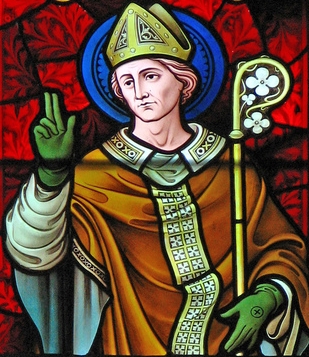
Life and mission
Details of Birinus's origins are uncertain; contemporary records are sparse and later writers give varying accounts. He is traditionally said to have arrived in southern England in the early 7th century and worked among Anglo-Saxon communities who were still pagan. Sources attribute to him the baptism of at least one West Saxon ruler, an event that opened the way for wider missionary activity in the region. Modern historians treat such narratives cautiously but agree that he played a formative role in bringing Roman Christian practices to parts of southern England.
Episcopal seat and duties
Birinus is usually called the first Bishop of Dorchester, a see located at Dorchester-on-Thames in present-day Oxfordshire. From that centre he is said to have organized churches, ordained clergy, and carried out pastoral work over a broad area. The episcopal structure he helped establish was part of the gradual emergence of diocesan organisation across Anglo-Saxon England.
Legacy and veneration
After his death, around 650 by traditional dating, Birinus was remembered as a local patron and missionary saint. Churches and shrines associated with him preserved relics and commemorated his feast. His cult contributed to the identity of early Christian communities in the region and to later medieval historiography of conversion. Several churches in England still bear his name and his story is a frequent subject in surveys of early English Christianity.
Notable facts and historical notes
- Feast day: December 3.
- Role: Missionary and first bishop with pastoral responsibility in parts of southern England.
- Sources: Accounts are derived from later chroniclers and ecclesiastical tradition; precise details are debated.
- Further reading: introductory surveys on early English Christianity and local histories of Dorchester provide context; see general references on missionary activity here.

Questions and answers
Q: Who was Birinus?
A: Birinus was a missionary to Wessex and the first Bishop of Dorchester.
Q: When is St. Birinus' feast day celebrated?
A: St. Birinus' feast day is celebrated on December 3rd.
Q: Is Birinus still alive?
A: No, Birinus is not alive as he died in 650.
Q: What is the significance of Birinus' role as a missionary?
A: Birinus' role as a missionary was significant as he helped to spread Christianity to Wessex.
Q: Where did Birinus become the first Bishop?
A: Birinus became the first Bishop of Dorchester.
Q: Do people still celebrate St. Birinus' feast day today?
A: Yes, people still celebrate St. Birinus' feast day on December 3rd.
Q: How is Birinus remembered?
A: Birinus is remembered as a saint for his work as the first Bishop of Dorchester and his role in spreading Christianity to Wessex.
Related articles
Author
AlegsaOnline.com Birinus — 7th-century missionary and first Bishop of Dorchester Leandro Alegsa
URL: https://en.alegsaonline.com/art/11728