
David Cameron: British prime minister, Conservative leader, and Brexit figure
Profile of David Cameron, Conservative Party leader and UK prime minister from 2010–2016; his background, government agenda, the 2016 EU referendum and its consequences.
David William Donald Cameron (born 9 October 1966) is a British politician who led the Conservative Party and served as Prime Minister of the United Kingdom from 2010 to 2016. He entered national politics as the Member of Parliament for Witney and rose to party leadership in 2005. As head of government he presided over a coalition administration and later a Conservative majority, pursuing a modernising agenda within his party and navigating several high-profile domestic and international issues.
Image gallery
10 Images




Background and early career
Cameron was educated at Eton College and the University of Oxford, where he studied modern history. Before entering Parliament he worked in public relations and political organisations. Elected to the House of Commons in 2001, he became shadow education secretary and then Conservative leader in 2005. His leadership style emphasised message discipline, centralised campaigning and appeals to younger and centrist voters, reshaping parts of the party image.
Premiership and policy priorities
After the 2010 general election, which produced no single-party majority, Cameron led a coalition government with the Liberal Democrats. Following the 2015 election he served as prime minister of a Conservative majority administration. Key themes of his time in office included deficit reduction and economic recovery measures, public spending reforms often described as austerity, attempts to reform welfare and education policy, and efforts to reduce immigration. His government also passed the law allowing same-sex marriage in England and Wales.
- Economic policy: deficit reduction and fiscal consolidation.
- Social policy: welfare reform and education initiatives.
- Legal and cultural change: legalization of same-sex marriage.
- Foreign affairs: involvement in international action such as the 2011 intervention in Libya.
European Union referendum and resignation
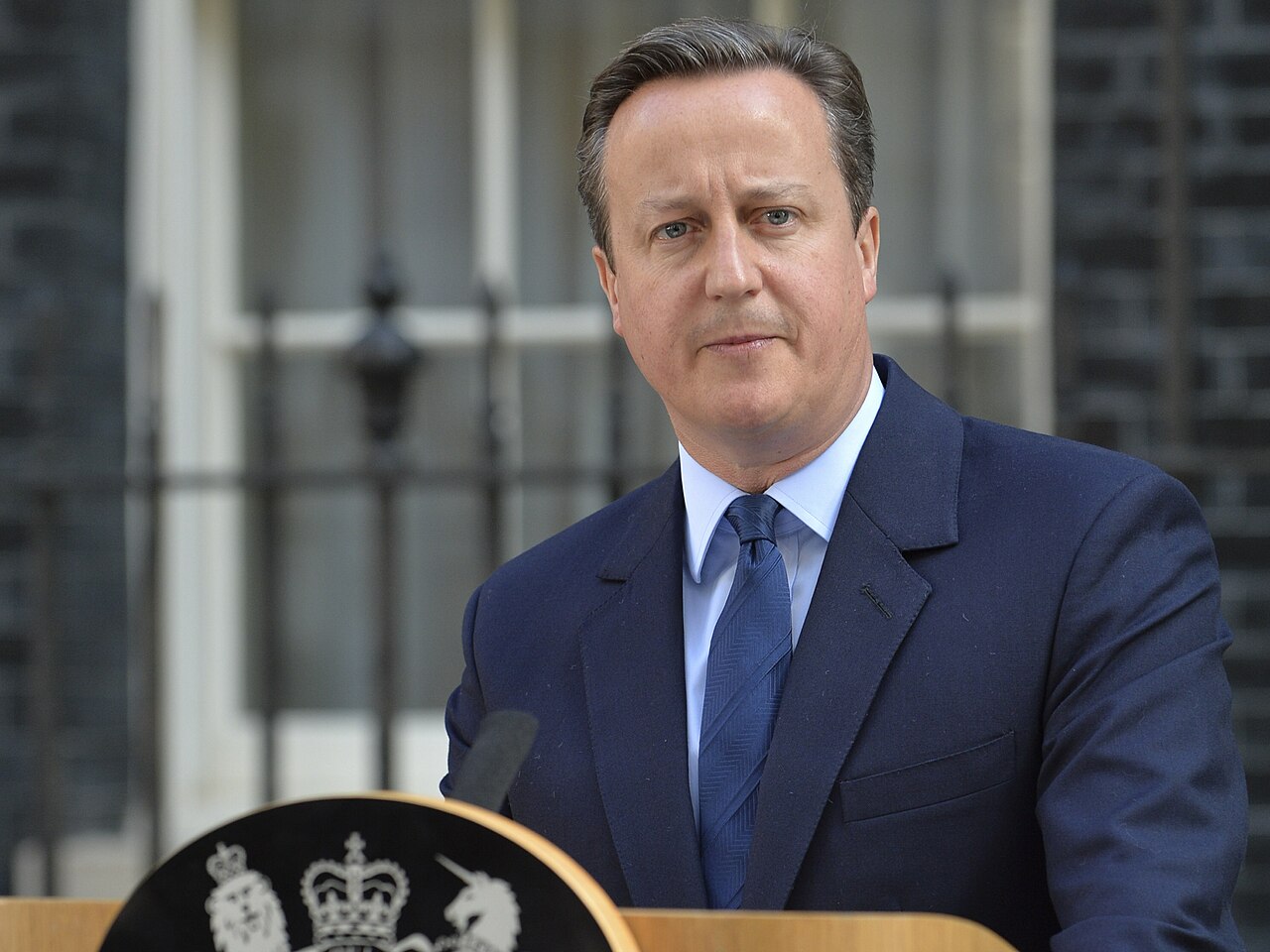
One defining moment of Cameron's government was the 2016 referendum on the United Kingdom's membership of the European Union. He campaigned for the UK to remain in the EU, but the leave side won the national vote. On 24 June 2016 he announced his intention to resign as prime minister, saying a new leader should guide the country through the next phase. He formally stepped down in July 2016 and was succeeded by Theresa May. The referendum and its aftermath remain central to assessments of his premiership.
Legacy and subsequent activity
Cameron's time in office is often discussed in terms of both achievements and controversies: proponents point to economic recovery after the global financial crisis and social reforms, while critics highlight the social effects of austerity and the political consequences of calling a binding EU referendum. After leaving frontline politics he returned to private life and public speaking, and he has engaged in writing and advisory work. He continues to be a prominent figure in discussions about recent British political history.
For more detailed timelines and documents related to his tenure and policies, see profiles of his government and party leadership: Prime Ministerial record and Conservative Party leadership.
Questions and answers
Q: Who is David Cameron?
A: David Cameron is a British politician who served as the Prime Minister of the United Kingdom from 2010 to 2016.
Q: What political party did David Cameron lead?
A: David Cameron was the leader of the British Conservative Party until July 2016.
Q: Why did David Cameron announce his resignation as Prime Minister?
A: David Cameron announced his resignation as Prime Minister following a vote in a referendum to leave the European Union.
Q: When did David Cameron announce he would step down as Prime Minister?
A: David Cameron announced he would step down as Prime Minister before the October 2016 Conservative Party Conference on June 24, 2016.
Q: Who replaced David Cameron as Prime Minister?
A: Theresa May became the designated Prime Minister after David Cameron announced his resignation, following the Conservative Party elections where she was the only candidate.
Q: When did David Cameron resign as Prime Minister?
A: David Cameron resigned as Prime Minister on July 13, 2016.
Q: Who succeeded David Cameron as Prime Minister of the United Kingdom?
A: Theresa May succeeded David Cameron as the Prime Minister of the United Kingdom.
Related articles
Author
AlegsaOnline.com David Cameron: British prime minister, Conservative leader, and Brexit figure Leandro Alegsa
URL: https://en.alegsaonline.com/art/117233
Sources
- wargs.com : "Ancestry of David Cameron"
- bbc.com : "EU referendum: UK votes to leave in historic referendum - BBC News"
- theguardian.com : "David Cameron resigns after UK votes to leave European Union"
- bbc.co.uk : "Theresa May to succeed Cameron as UK PM on Wednesday"
- books.google.com.hk : Call Me Dave: The Unauthorised Biography of David Cameron
- bbc.co.uk : "Camerons reveal daughter's name"
- theguardian.com : "David Cameron: 'I am a feminist'"
- theguardian.com : "So David Cameron is not a feminist. Well, knock me down with a feather - Rhiannon Lucy Cosslett"
- bbc.co.uk : "David Cameron tells MP Angela Eagle: 'Calm down, dear'"