
Daniel Webster: American statesman, orator, and defender of the Union
Daniel Webster (1782–1852), leading Whig statesman and famed orator, shaped early 19th‑century U.S. law and politics through landmark legal work, powerful speeches, and efforts to preserve the Union.
Daniel Webster (January 18, 1782 – October 24, 1852) was a prominent American lawyer, senator, secretary of state and public speaker whose career shaped constitutional law and national politics in the first half of the nineteenth century. He is remembered for forceful courtroom arguments, polished oratory in the Senate, and a political stance that increasingly emphasized national union and federal authority over sectional assertions.
Image gallery
10 Images




Early life and legal career
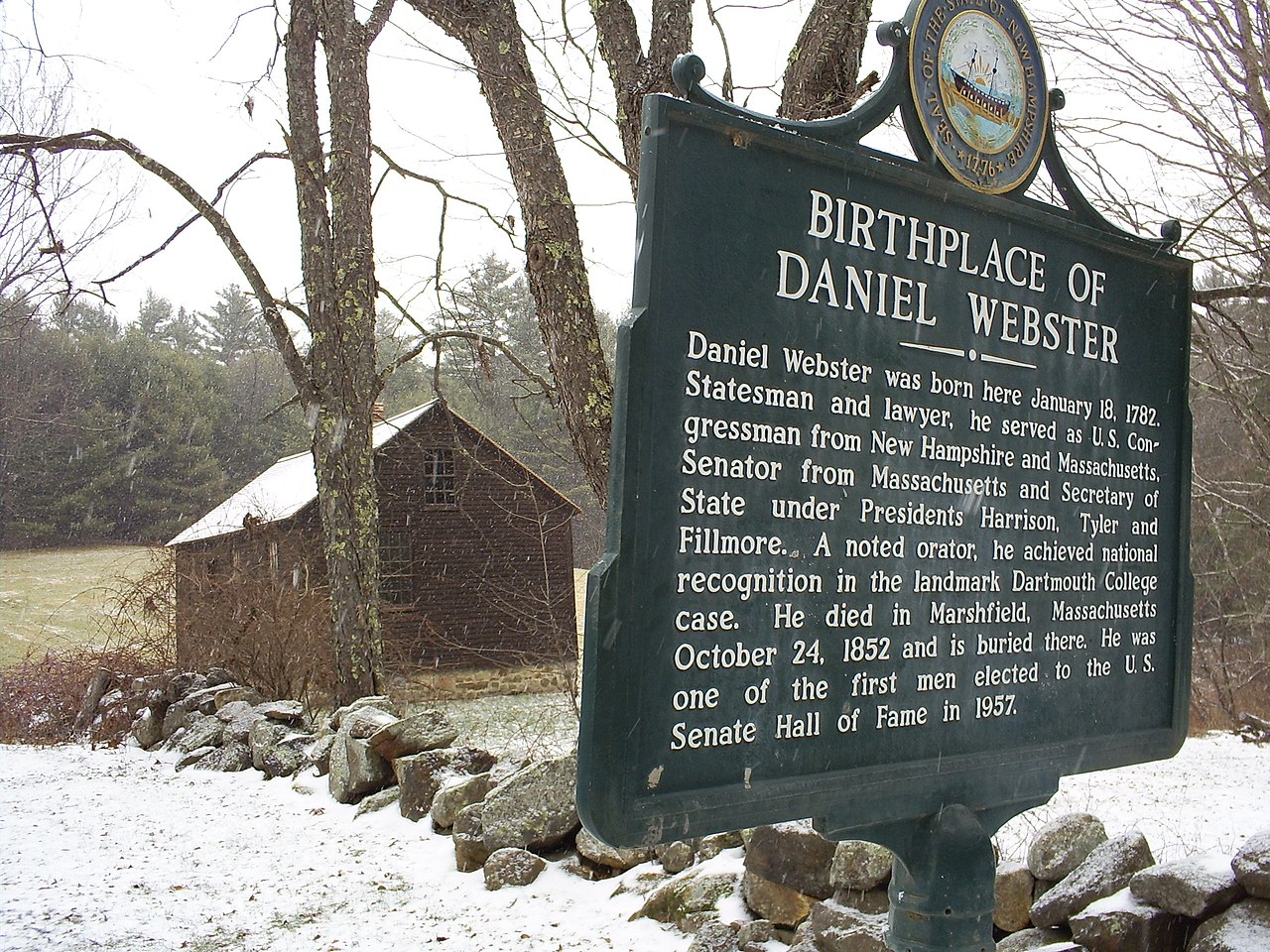
Born in New Hampshire, Webster trained as a lawyer and built an early reputation handling complex cases that affected commerce and institutions. He gained national attention defending property and contractual rights against state interference, and participated in litigation that helped define relationships between state governments, private charters and the emerging commercial economy. His advocacy before courts and his skill in oral argument made him one of the most sought‑after attorneys of his era and brought him into public life.
Major cases and legal influence
Webster’s legal practice often reflected the commercial interests of his region and the nation. He was associated in public memory with issues important to New England shipping and business, and he argued for interpretations of the Constitution that favored stability of contracts and national institutions. His legal work and public argumentation contributed to early American jurisprudence and helped shape doctrines that affirmed federal roles in the national economy.
Oratory and political philosophy
Over time Webster’s political outlook moved toward a vigorous definition of national power. He opposed doctrines that allowed states to nullify federal laws and insisted on the supremacy of the Constitution as the foundation of a single political community. His 1830 reply to Robert Hayne—commonly called the "Reply to Hayne"—is widely cited as one of the era’s great examples of congressional oratory, an address that emphasized the duties of citizenship, the meaning of the Union and a common political culture. That speech helped define Webster as a leading nationalist.
Party leadership and the Great Triumvirate
Webster emerged as a principal leader of the Whig party during the period known as the Second Party System. In the Senate he stood with Henry Clay and John C. Calhoun in what contemporaries called the "Great Triumvirate," three powerful figures who dominated debate over tariffs, banking, and sectional tensions. In debates and legislation Webster frequently defended a strong national government while seeking practical remedies for political disputes.
Slavery, compromise, and the preservation of the Union
Webster’s public position on slavery was complex. He personally expressed opposition to the institution in moral terms, but he repeatedly placed the preservation of the United States above immediate abolitionist goals. In 1850 he delivered the controversial "Seventh of March" speech in support of the Compromise of 1850, urging concessions intended to hold the nation together. That choice won him both praise and fierce criticism and remains a central part of assessments of his career: some scholars see his actions as sincere efforts to prevent civil war, others as political miscalculations that alienated reformers in the North.
Diplomacy and later public service
Webster served multiple terms in both houses of Congress and twice held the office of Secretary of State. In the 1840s he negotiated diplomatic agreements with foreign powers aimed at settling boundary disputes and averting conflict. His work in diplomacy, like his congressional speeches, reflected a determination to protect American interests through law, negotiation and a strong national presence.
Reputation and legacy
Webster was long celebrated as a model of formal rhetorical style; his speeches were widely printed and taught as examples of public address. He left an imprint on constitutional thought through legal argument and public debate about the balance between state and federal power. While his preference for compromise and union over radical change remains controversial—particularly in light of the later course of sectional conflict—he is generally ranked among the most influential senators and orators of his generation and is often discussed in histories of American political development and law.
- Renowned orator whose speeches exemplified nineteenth‑century rhetorical practice and public persuasion.
- Legal advocate whose arguments helped shape interpretations of contracts and national authority in the early republic.
- Political leader who sought to preserve the Union through constitutional argument and negotiated compromise.
- Figure linked to the era’s great debates on federalism, economy and sectional tension, often paired with contemporaries such as Henry Clay and John C. Calhoun.
Webster’s career illustrates the tensions of a growing republic: the collision of law and politics, the struggle to balance liberty with unity, and the role of persuasion in shaping national identity. He remains a central figure for understanding how legal reasoning, public speech and partisan leadership interacted in antebellum America. His long service in Congress and his public choices continue to be studied by historians, legal scholars and students of American political culture.
Questions and answers
Q: Who was Daniel Webster?
A: Daniel Webster was an important American statesman and one of the most famous orators and powerful Whig leaders of the Second Party System.
Q: Why did Daniel Webster become famous initially?
A: Daniel Webster became famous initially because of his defense of New England shipping interests.
Q: Did Daniel Webster like slavery?
A: No, Daniel Webster did not like slavery.
Q: What made Webster one of the most famous orators and powerful Whig leaders of the Second Party System?
A: Webster's growing nationalism and his power to convince many people to become nationalists too made him one of the most famous orators and powerful Whig leaders of the Second Party System.
Q: Who were the members of the "Great Triumvirate"?
A: The members of the "Great Triumvirate" were Henry Clay, John C. Calhoun and Daniel Webster.
Q: What was Daniel Webster's "Reply to Hayne" speech about?
A: Daniel Webster's "Reply to Hayne" speech was generally seen as "the most eloquent (powerful, fluent, well-spoken) speech ever delivered in Congress" and was about trying to keep the nation from civil war and making them have a firm peace.
Q: Was Daniel Webster officially recognized for his work as a member of the U.S. Senate?
A: Yes, Daniel Webster was officially named by the U.S. Senate in 1957 as one of its five best members.
Related articles
Author
AlegsaOnline.com Daniel Webster: American statesman, orator, and defender of the Union Leandro Alegsa
URL: https://en.alegsaonline.com/art/117058