
Daniel Barenboim: pianist, conductor and musical activist
Comprehensive overview of Daniel Barenboim: his background, dual career as pianist and conductor, the West–Eastern Divan project, public positions and controversies, and his cultural significance.

Overview
Daniel Barenboim (born 15 November 1942 in Buenos Aires) is an internationally recognized pianist and conductor. He came from a Jewish family of Eastern European origin and began performing at an early age. Over decades he has combined a high‑profile performing career with sustained work as a conductor and with public initiatives that use music to address political and cultural tensions.
Image gallery
9 Images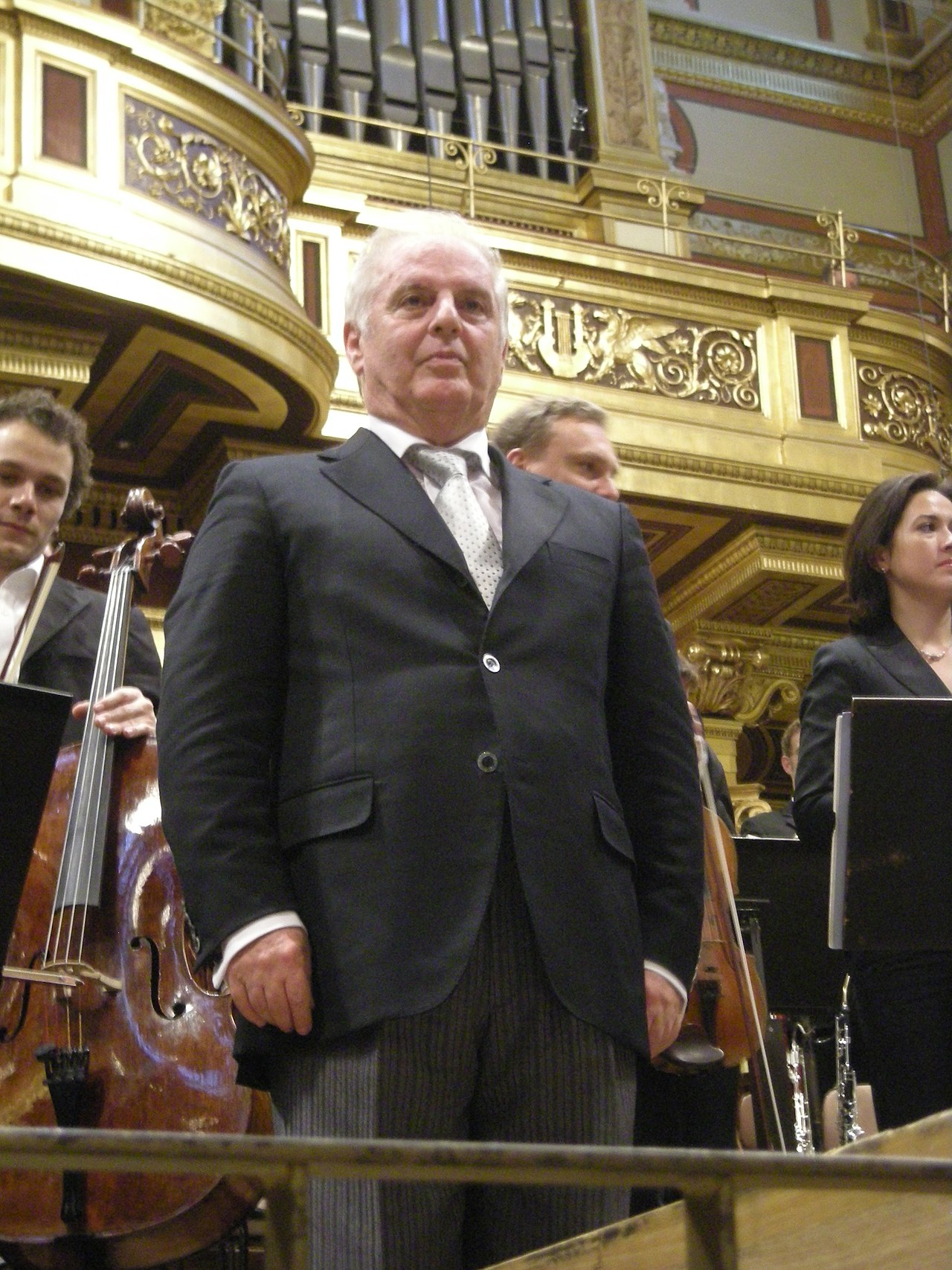



Background and identity
Barenboim was born in Argentina (Argentina) to immigrant parents whose family roots trace to the Russian Empire (Russia). He is of Ashkenazi Jewish heritage (Ashkenazi Jews). Over the years he has taken on multiple national ties and holds citizenships that reflect his international life, including connections to Israel, Spain and the Palestinian Authority. His family name, Barenboim, derives from a Yiddish phrase meaning "pear tree" (Yiddish).
Career and musical work
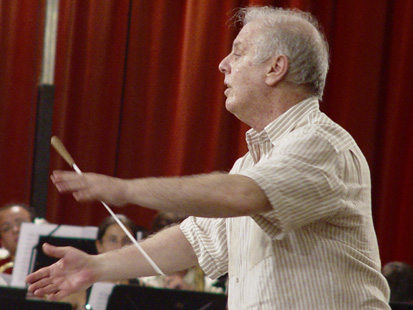
Barenboim established himself first as a virtuoso pianist and later became equally noted as a conductor and music director. He has worked extensively with major European opera houses and orchestras and has been praised for deep interpretations of the core symphonic and operatic repertoire. His musicianship is often described as combining technical command with a searching, philosophically informed approach to musical structure.
West–Eastern Divan and public engagement
One of Barenboim's best known initiatives is the West–Eastern Divan Orchestra, founded in partnership with the Palestinian scholar Edward Said. The ensemble brings together young musicians from Israel and Arab countries to rehearse and perform, aiming to foster dialogue through shared musical work (West–Eastern Divan). Beyond that project, Barenboim has frequently spoken and acted on political issues; for example he has publicly criticized certain Israeli settlement policies and other measures he regards as obstacles to peace (criticized).
Controversies and notable episodes
Barenboim's decisions and statements have sometimes provoked strong reactions. In 2001 he conducted music by Richard Wagner in Israel, an act that reopened debate there because Wagner's music had been largely absent from Israeli concert life since the mid‑20th century. Supporters argued for music's autonomy and reconciliation; opponents recalled historical associations and called for cultural sensitivity. Barenboim has said such choices reflect both musical conviction and a desire to confront difficult histories.
Legacy and distinctions
Barenboim's career spans performance, conducting, teaching and cultural diplomacy. He is widely regarded as a leading musical figure of his generation, notable not only for artistic achievement but for efforts to use music as a platform for education and civic exchange. His work continues to provoke discussion about the relationship between art, memory and politics, and his ensembles and recordings remain influential in contemporary classical music.
- Early virtuoso pianist and later prominent conductor
- Founder/co‑founder of cross‑cultural musical initiatives such as the West–Eastern Divan
- Publicly engaged on political and cultural questions (criticized)
For further reading about his recordings, programming and institutions with which he has been associated, see additional resources and biographies available through musical reference sites and library archives (Buenos Aires, pianist, conductor).
Questions and answers
Q: Who is Daniel Barenboim?
A: Daniel Barenboim is a pianist and conductor who holds citizenship of Argentina, Israel, Spain, and the Palestinian Authority.
Q: Where was Daniel Barenboim born?
A: Daniel Barenboim was born in Buenos Aires, Argentina.
Q: What is the significance of the name Barenboim?
A: Barenboim means "pear tree" in Yiddish.
Q: What is the West-Eastern Divan Orchestra?
A: The West-Eastern Divan Orchestra is an orchestra that works with young Arab and Israeli musicians and is particularly important for the work of Daniel Barenboim.
Q: What is Barenboim's view on the illegal Israeli settlements on Palestinian land?
A: Barenboim has criticized the illegal Israeli settlements on Palestinian land.
Q: Why did Barenboim make many people in Israel angry in 2001?
A: In 2001, Barenboim conducted the music of Wagner in a concert, which had not been performed in Israel since 1938 because of Wagner’s alleged anti-Jewish views and because he was Hitler's favourite composer.
Q: Did Wagner and Hitler personally know each other?
A: No, Wagner died in 1883 and Hitler was born in 1889, so they did not personally know each other.
Related articles
Author
AlegsaOnline.com Daniel Barenboim: pianist, conductor and musical activist Leandro Alegsa
URL: https://en.alegsaonline.com/art/117015