
Chris Christie
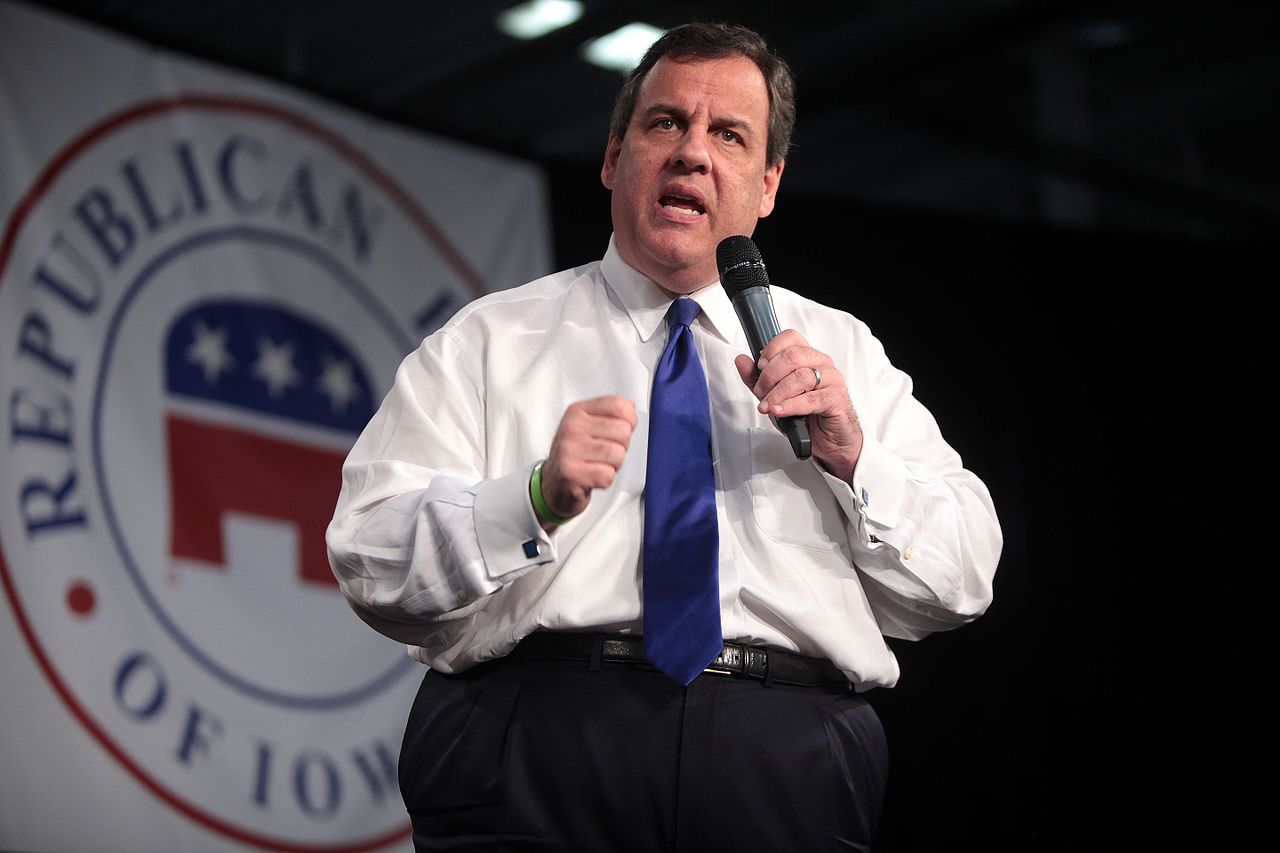
Chris Christie is an American Republican politician who served as Governor of New Jersey (2010–2018), ran for president in 2016, and chaired a federal commission on the opioid crisis.
Overview
Christopher James "Chris" Christie (born September 6, 1962) is an American politician and attorney known for his tenure as the 55th Governor of New Jersey. A member of the Republican Party, Christie gained national attention for his direct legislative style, high-profile prosecutions as a federal attorney, and his involvement in presidential politics. He left the governor's office in January 2018 after two terms.
Image gallery
10 Images




Early career and rise
Christie trained as an attorney and served as the United States Attorney for the District of New Jersey, a role in which he led numerous public-corruption and organized-crime prosecutions. His reputation for aggressive law enforcement and a blunt public manner helped him build a political profile in New Jersey, leading to his successful campaign for governor in 2009. He won statewide office at a moment when Republican victories in New Jersey were uncommon, signaling his appeal to moderate and conservative voters alike.
Governorship and policy
As governor, Christie emphasized fiscal discipline, pension and benefit reforms, and economic development efforts. He won reelection handily in 2013. His administration is also remembered for its management of major crises: notably the response to Hurricane Sandy in 2012, which earned bipartisan praise, and for budget decisions that drew criticism from opponents. Christie frequently took a confrontational approach to both political allies and adversaries.
Presidential campaign and national politics
Christie was an early contender for the Republican presidential nomination in 2016, formally announcing his campaign in June 2015. He competed in the Republican primary calendar, which included early contests in Iowa and New Hampshire, but poor polling and limited primary success led him to suspend his campaign in February 2016. During the 2016 general election, he became an ally of Donald Trump and was reported to be under consideration for the vice presidential slot alongside the eventual nominee, then-Governor of Indiana Mike Pence, who ultimately became the running mate.
Controversies and later roles
Christie's administration was marred by controversy, most notably the "Bridgegate" lane closure scandal in which senior aides were convicted for orchestrating traffic disruptions. Christie denied prior knowledge of the scheme and was not charged; the episode, however, damaged his national standing. In 2017 he was appointed to lead the federal commission on the opioid crisis, a post that drew on his law-enforcement background and focus on public-health and addiction policy.
Legacy and significance
Christie's career illustrates the trajectory of a high-profile state leader who moved between law enforcement, state governance, and national politics. He remains a figure often cited in discussions about party moderation, crisis leadership, and the interaction of personality and policy in American public life. For more detailed biographical and policy information, see official biographies and reputable news sources.
- Key offices: U.S. Attorney (District of New Jersey), Governor of New Jersey.
- Notable themes: anti-corruption prosecutions, fiscal reform, crisis management.
- Major controversies: Bridgegate lane closures and associated prosecutions.
Questions and answers
Q: Who is Chris Christie?
A: Chris Christie is an American politician who was the 55th Governor of New Jersey from 2010 to 2018.
Q: When did he become the Governor of New Jersey?
A: He became the Governor of New Jersey in 2010.
Q: Was he a leading candidate for the Republican Presidential nomination in 2016?
A: Yes, some people thought he was a leading candidate for the Republican Presidential nomination in 2016.
Q: When did he announce his presidential campaign?
A: He announced his presidential campaign on June 30, 2015.
Q: Why did he suspend his campaign?
A: He suspended his campaign after poor polling numbers and not winning the Iowa and New Hampshire primaries on February 10, 2016.
Q: Was Christie chosen as Trump's running mate in the general election?
A: No, Christie was reported to be on Trump's three-person shortlist to be his running mate but it was later announced that Mike Pence would be Trump's running mate instead.
Q: What role does Christie have with the Trump administration?
A: In March 2017, it was announced that Christie would chair the Trump administration's Opioid and Drug Abuse Commission.
Related articles
Author
AlegsaOnline.com Chris Christie Leandro Alegsa
URL: https://en.alegsaonline.com/art/116498
Sources
- articles.washingtonpost.com : "Chris Christie, volcanic politics and Election 2016"
- reuters.com : "New Jersey's Christie: likely "more ready" for president in 2016"
- cnn.com : "Analysis: It's never too early to talk about 2016"
- nbcnews.com : "Team Trump Plans Public Event Friday With VP Pick"
- washingtonpost.com : washingtonpost.com/news/post-politics/wp/2017/03/29/chris-christie-to-lead-trump-white-ho…
- njjewishnews.com : "Christie holds meeting with Orthodox leaders: Republican hopeful offers support for school funding plans"
- nj.com : "Christie vetoes minimum wage bill, Democrats vow to put measure on ballot"
- huffingtonpost.com : "Chris Christie Vetoes Minimum Wage Increase, Proposes Smaller One"
- abcnews.go.com : "Chris Christie Announces 2016 Presidential Campaign"
- cnn.com : "Chris Christie launches 2016 presidential bid from New Jersey"
- cnn.com : "Chris Christie suspends campaign"
- talkingpointsmemo.com : "What Chris Christie Said About Donald Trump BEFORE The Endorsement"
- nytimes.com : "Chris Christie Endorses Donald Trump"
- theatlantic.com : "Chris Christie Will Start Planning the Trump Administration"
- nytimes.com : "Chris Christie Becomes Powerful Figure in Donald Trump Campaign"