
Christopher Plummer: Career, Major Roles, and Legacy
Canadian actor Christopher Plummer (1929–2021) had a seven-decade career on stage, film, television and in voice work, admired for classical stage roles, wide-ranging screen portrayals and major awards including an Academy Award.
Overview
Arthur Christopher Orme Plummer (December 13, 1929 – February 5, 2021) was a Canadian actor whose professional work spanned stage, film, television and voice acting. He began performing in the mid-1940s and over more than seven decades developed a reputation for precise diction, versatility and an ability to move between classical theatre and contemporary screen roles. He is widely remembered for both leading performances and character parts, from romantic heroes to complex historical figures.
Image gallery
10 Images


Early life and training
Born in Toronto, Plummer entered the theatre as a young man and worked in repertory companies and regional stages before reaching New York. His early stage experience established habits of discipline and vocal clarity that informed a long career on classical and modern stages. His Broadway debut and early professional appearances brought him to wider attention and opened the way to film and television work in the late 1950s and 1960s; accounts of his rise often note the steady accumulation of roles rather than a sudden breakthrough to Broadway.
Stage career and classical work
Plummer remained active on stage throughout his life, earning praise for central roles in classical repertoire and in biographical drama. He played lead parts such as Cyrano de Bergerac and Iago in Othello, and he appeared in major Shakespearean roles including Macbeth and King Lear. His title performance in the play Barrymore drew attention for its mix of theatrical bravura and comic self-awareness. Directors and fellow actors often cited his preparation and command of text as hallmarks of his stage work.
Film, television and voice work
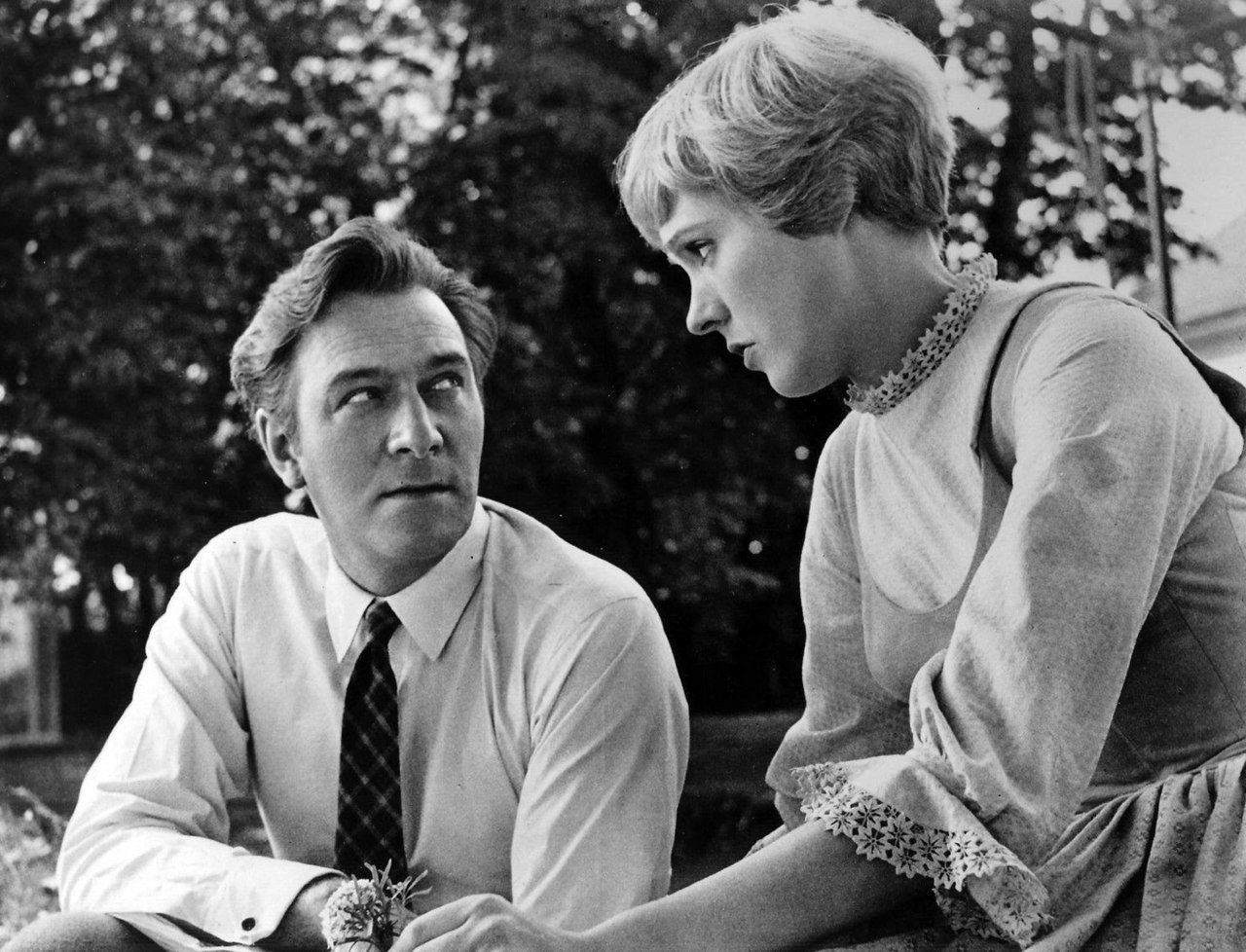
Plummer's transition to screen began in the late 1950s with early film appearances such as Stage Struck and Wind Across the Everglades. He achieved international fame as Captain Georg von Trapp in the 1965 musical The Sound of Music (film), a role that introduced him to global audiences while he continued to pursue a wide variety of screen parts. He frequently portrayed historical figures: the emperor Commodus in The Fall of the Roman Empire (Commodus), the Duke of Wellington in Waterloo, and Rudyard Kipling in The Man Who Would Be King. In later decades he portrayed journalist Mike Wallace in The Insider, Leo Tolstoy in The Last Station (Tolstoy), and industrialist J. Paul Getty in All the Money in the World (Getty).
Outside live action, Plummer's distinctive voice made him a sought-after narrator and voice actor. He narrated the children's series Madeline and voiced the antagonist Charles Muntz in Pixar's Up. Among his final film roles were the family patriarch Harlan Thrombey in Rian Johnson's Knives Out and parts in contemporary dramas such as The Last Full Measure, while he also appeared on television in series including Departure.
Acting style and professional reputation
Plummer was frequently praised for his command of language, an ear for rhythm in speech and an economical but powerful stage presence. Critics noted his ability to reshape his screen persona as he aged, moving from youthful romantic leads to authoritative and sometimes menacing character parts. Colleagues described him as a professional who brought meticulous preparation to rehearsals and film sets, and his performances are often used as study material in actor training for clarity and control.
Awards, distinctions and honors
Over his career Plummer received a wide range of awards and nominations. He won an Academy Award for Best Supporting Actor for his role in Beginners, and he earned multiple nominations across decades, including an acting nomination for All the Money in the World. He also won two Primetime Emmy Awards, two Tony Awards, a BAFTA, a Golden Globe and a Screen Actors Guild Award. These honours placed him among the small group of performers to complete the Triple Crown of Acting, and he was widely noted as the only Canadian to have achieved that set of major acting awards.
Personal life and later years
Plummer continued to work into his late eighties and remained active in theatre and film. He spoke occasionally about the demands of ageing as an actor and about maintaining vocal and physical health to continue performing. His late-career acclaim, including major awards and high-profile film roles, underscored a professional longevity rare in the performing arts.
Legacy and influence
Plummer left a substantial body of work across stage and screen that continues to be studied by actors and admired by audiences. His repertoire included Shakespeare, modern drama and mainstream cinema, and his career illustrated how a classically trained stage actor could sustain versatility in film and television. Critics and historians note his contribution to the craft of acting through recorded performances, interviews and masterclasses, and his portrayals of historical figures are frequently cited in surveys of acting in historical drama.
Selected roles (summary)
- The Sound of Music — Captain Georg von Trapp (1965)
- The Fall of the Roman Empire — Commodus (1964)
- Waterloo — The Duke of Wellington (1970)
- The Man Who Would Be King — Rudyard Kipling (1975)
- Up — voice of Charles Muntz (2009)
- The Last Station — Leo Tolstoy (2009)
- Beginners — award-winning supporting role (2010)
- All the Money in the World — J. Paul Getty (2017)
- Knives Out — Harlan Thrombey (2019)
Further reading: detailed accounts of Plummer's stage work, recorded interviews and theatre archives provide additional perspective on his methods and roles; many of his major films and plays are referenced above and can be consulted for primary examples of his work via the linked titles.
Questions and answers
Q: What year did Arthur Christopher Orme Plummer's career begin?
A: Plummer's career began in 1946.
Q: What was his first important stage role?
A: His first important stage roles were as Cyrano de Bergerac in Cyrano (1974) and Iago in Othello.
Q: When did he make his first movie?
A: He made his first movie, Stage Struck, in 1958.
Q: Who did he play in The Sound of Music?
A: In The Sound of Music, Plummer played Captain Georg von Trapp.
Q: What awards has he won for his work?
A: Plummer has won an Academy Award, two Primetime Emmy Awards, two Tony Awards, a Golden Globe Award, a Screen Actors Guild Award, and a British Academy Film Award.
Q: What is the Triple Crown of Acting?
A: The Triple Crown of Acting is an accolade awarded to actors who have achieved success in film, television and theater.
Q: How old was Arthur Christopher Orme Plummer when he won an Oscar for Best Supporting Actor for Beginners (2010)?
A: At the time of winning the Oscar for Best Supporting Actor for Beginners (2010), Plummer was 82 years old - making him the oldest person to win an acting Oscar at that time.
Related articles
Author
AlegsaOnline.com Christopher Plummer: Career, Major Roles, and Legacy Leandro Alegsa
URL: https://en.alegsaonline.com/art/116477
Sources
- telegraph.co.uk : Christopher Plummer Best Supporting Actors
- cbsnews.com : Christopher Plummer becomes oldest acting Oscar winner
- nytimes.com : "Christopher Plummer's legendary life, wonderfully retold"
- msn.com : "Christopher Plummer overview"
- imdb.com : "Awards for Christopher Plummer"
- variety.com : "Christopher Plummer Becomes Oldest Actor to Be Nominated for an Oscar"