
Charlotte of Mecklenburg-Strelitz, Queen Consort of King George III
German-born queen consort (1761–1818), wife of George III, mother of fifteen, patron of the arts, music and botany, supporter of charitable causes and a lasting cultural figure in Georgian Britain.
Charlotte of Mecklenburg-Strelitz (19 May 1744 – 17 November 1818) was the German-born wife of King George III and queen consort of Britain for more than five decades. She married George on 8 September 1761, soon after his accession, and remained by his side until her death in 1818. Their marriage produced fifteen children, thirteen of whom survived to adulthood. As queen consort she combined dynastic duty with active patronage of the arts, music, science and charitable institutions.
Image gallery
10 Images


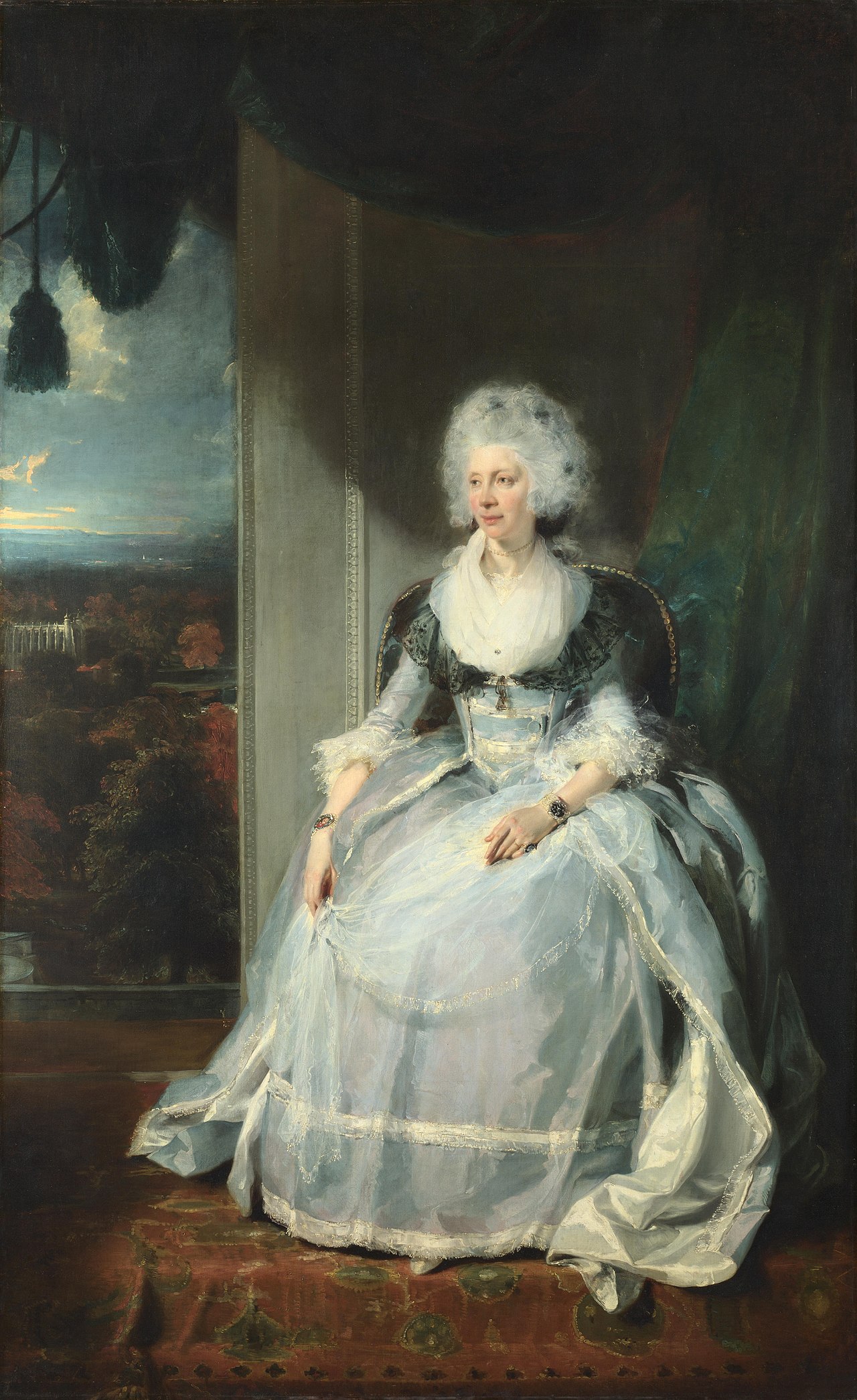


Early life and marriage
Born into the ducal house of Mecklenburg-Strelitz in northern Germany, Charlotte was selected from several Protestant German princesses as a suitable bride for the new king. She arrived in London as a teenager and adapted to court life; contemporaries praised her calm manner, domestic virtues and steady companionship. Her marriage to George was generally described as affectionate by the standards of the time and produced a large royal household.
Role as queen and patronage
Charlotte fulfilled the ceremonial and social duties expected of a consort: she presided over court functions, supported charities and appeared in public events. She was an active patron of music and the visual arts, encouraging musicians and commissioning portraits by leading painters of the era. The queen also took an interest in botany and horticulture: under her patronage the royal gardens and collections at Kew and other residences expanded, reflecting contemporary enthusiasm for plant collecting.
Family life and public responsibilities
As mother and matriarch, Charlotte shaped the upbringing and public presentation of the royal children. Several sons would become prominent public figures, including the future George IV, the Duke of York and William, later William IV. The demands of a large family and the rituals of court life occupied much of her time, alongside philanthropic work for women and children.
Later years and historical context
Charlotte's tenure as queen covered a turbulent era that included the American War of Independence, the French Revolution and the Napoleonic wars. During periods of King George's recurrent illness she remained a devoted companion; the king's incapacity occasioned political debates over regency and placed strain on the royal household. She continued to be a visible and stabilising presence at court until her death in 1818; George III died two years later.
Legacy and notable facts
- Queen for over fifty years, she is remembered for steady public service and cultural patronage.
- Her name is preserved in institutions and place names, including the hospital that bears her name and cities in the former British colonies named in her honour.
- She encouraged music at court and supported artists; popular attributions (for example, that she introduced the Christmas tree to Britain) are more complex and became widespread only in later decades.
Charlotte of Mecklenburg-Strelitz combined dynastic responsibility with a measured interest in the arts, sciences and philanthropy. While she was not a political leader, her role as consort and mother influenced the royal household and public taste in late Georgian Britain, leaving a recognisable cultural legacy that continued into the nineteenth century.
Questions and answers
Q: Who was Charlotte of Mecklenburg-Strelitz?
A: Charlotte of Mecklenburg-Strelitz was the queen of the United Kingdom as the wife of King George III.
Q: When did she marry King George III?
A: Charlotte married King George III on September 8, 1761.
Q: How many children did they have together?
A: Charlotte and George III had 15 children, of whom 13 survived to adulthood.
Q: How long did she serve as Queen Consort?
A: Charlotte served as Queen Consort for 58 years until her death in 1818.
Q: What year did she die?
A: Charlotte died in 1818.
Q: What year did King George III die?
A: King George III died two years after Charlotte's death in 1820.
Q: How long was their marriage?
A:Charlotte and King George were married for 57 years until her death in 1818.
Related articles
Author
AlegsaOnline.com Charlotte of Mecklenburg-Strelitz, Queen Consort of King George III Leandro Alegsa
URL: https://en.alegsaonline.com/art/116297