
Biofilm: microbial communities and their roles
A biofilm is a structured community of microorganisms embedded in a self-produced matrix. This article explains composition, formation, examples, impacts, and approaches to control and study biofilms.
Overview
A biofilm is a community of microorganisms that attach to surfaces and become embedded in a self-produced, sticky matrix. Rather than living as isolated, free-floating (planktonic) cells, organisms in a biofilm interact closely and behave as a cooperative unit. The concept is often described metaphorically as a "city for microbes," emphasizing the organized, three-dimensional nature of these assemblages. A useful starting reference for the basic concept is microorganisms.
Image gallery
10 Images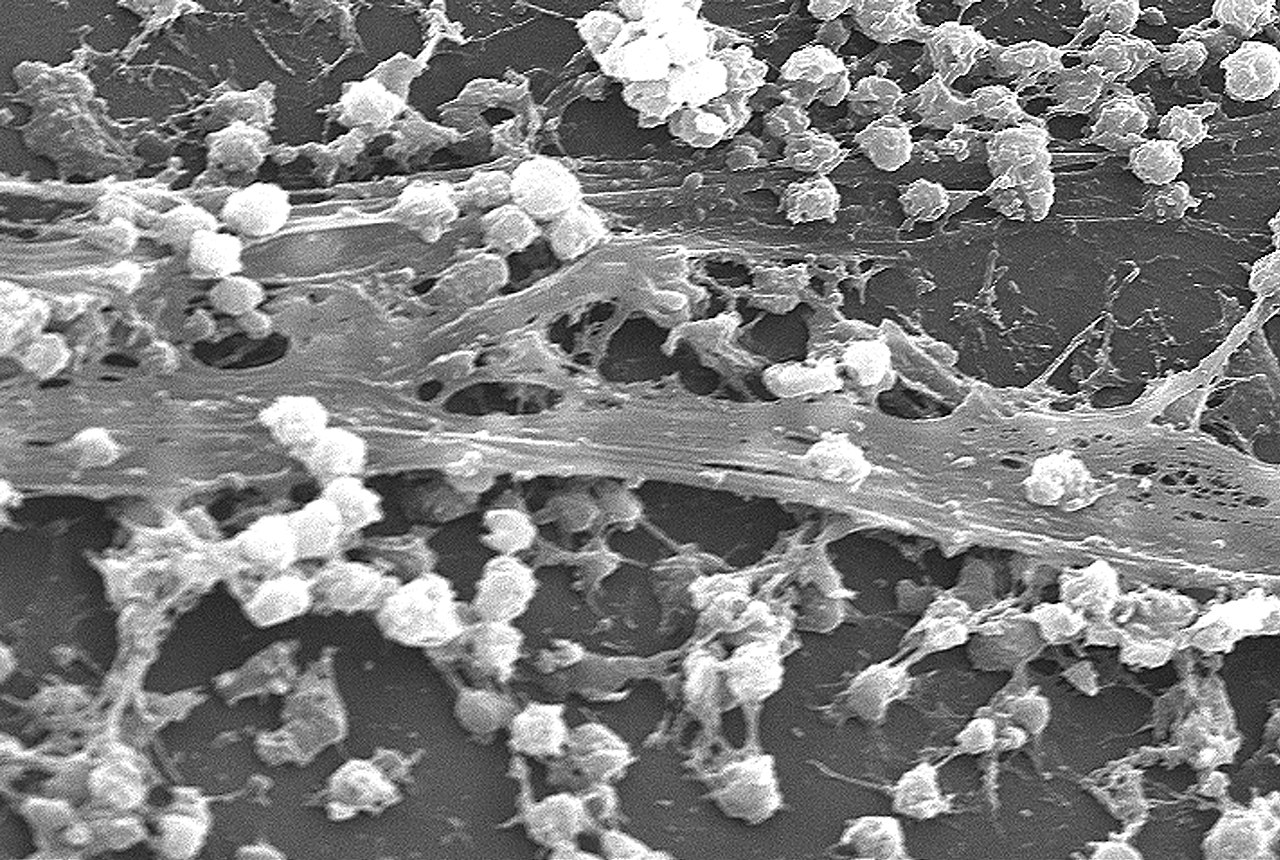


Composition and structure
Biofilms are held together by an extracellular polymeric substance (EPS) that the resident cells secrete. This matrix typically contains a mixture of long-chain sugars, proteins, lipids and extracellular DNA, each contributing different mechanical and chemical properties. Common components include extracellular polysaccharides, proteins, lipids and extracellular DNA. The EPS creates a hydrated, protective environment often referred to as a slimy matrix, which supports gradients of nutrients, oxygen and signaling molecules within the community.
Formation and lifecycle
Biofilm development is typically described in stages: initial reversible attachment of cells to a surface; irreversible adhesion and EPS production; maturation into a complex, often layered structure with channels for fluid flow; and finally dispersal of cells that return to a planktonic state to colonize new sites. During these stages microorganisms use chemical signaling (quorum sensing) to coordinate behaviors such as EPS synthesis and nutrient sharing. As a result, cells within a mature biofilm can benefit from communal resources while being protected from environmental stress.
Examples, importance and impacts
Biofilms are ubiquitous in natural, industrial and clinical settings. Dental plaque on teeth is a familiar human example. In nature, biofilms coat rocks and aquatic surfaces and play essential roles in nutrient cycling. In industry they can clog pipes, foul membranes and reduce heat-transfer efficiency. In medicine, biofilms on implants, catheters and wounds are a major concern because they are more tolerant of drying (desiccation), immune responses (host defenses) and many antimicrobial treatments (antibiotics). Examples include:
- Dental plaque and oral biofilms
- Biofouling on ship hulls and water systems
- Biofilms on medical devices such as prosthetic joints and catheters
- Constructed biofilms used in wastewater treatment
Control, prevention and beneficial uses
Managing biofilms requires strategies tailored to the context. Control approaches include mechanical removal, surface treatments that resist adhesion, development of materials that release or prevent microbial attachment, enzymatic degradation of EPS, and antimicrobial regimens designed to penetrate or disrupt the community. In contrast, engineered biofilms are harnessed beneficially in bioreactors and wastewater treatment plants where their collective metabolism is exploited to break down pollutants.
Notable distinctions and ongoing research
Key distinctions are between planktonic and biofilm lifestyles and between single-species and multispecies biofilms—many natural biofilms contain diverse bacteria, fungi and other microbes. Current research focuses on understanding biofilm architecture, signalling networks, and how physical and chemical gradients shape community behavior. New work seeks materials and therapies that prevent harmful biofilms without disrupting beneficial microbial processes. For further background see sources addressing microorganisms, the slimy matrix, and components like polysaccharides, proteins, lipids and extracellular DNA. Resistance to stresses such as desiccation, immune clearance (host immune systems) and antibiotics remains a central challenge for medicine and industry.
Readers seeking technical, clinical or engineering guidance can consult specialized literature and guidelines; this article presents a concise overview of biofilm concepts and significance.
Questions and answers
Q: What is a biofilm?
A: A biofilm is a group of microorganisms that stick to cell surfaces and create a slimy layer outside the cells of the body.
Q: What do cells in the biofilm produce?
A: Cells in the biofilm produce extracellular polysaccharides, proteins, lipids, and DNA.
Q: Why are biofilms considered a community lifestyle for microorganisms?
A: Biofilms are considered a community lifestyle for microorganisms because they have a three-dimensional structure and enable sharing of nutrients among the bacteria.
Q: How have biofilms been metaphorically described?
A: Biofilms have been metaphorically described as "cities for microbes".
Q: What are some harmful factors that biofilm bacteria are sheltered from?
A: Biofilm bacteria are sheltered from harmful factors in their local environment such as desiccation, antibiotics, and the host's immune system.
Q: What is an example of a biofilm?
A: The film of bacteria that live on your teeth is an example of a biofilm.
Q: Can biofilms form on inorganic objects?
A: Yes, biofilms can form on inorganic objects like stones in water.
Related articles
Author
AlegsaOnline.com Biofilm: microbial communities and their roles Leandro Alegsa
URL: https://en.alegsaonline.com/art/11628
Sources
- ncbi.nlm.nih.gov : "Biofilms"
- doi.org : 10.1101/cshperspect.a000398
- worldcat.org : 1943-0264
- pubmed.ncbi.nlm.nih.gov : 20519345
- journals.sagepub.com : "Biofilm Cohesive Strength as a Basis for Biofilm Recalcitrance: Are Bacterial Biofilms Overdesigned?"
- doi.org : 10.4137/MBI.S31444
- ncbi.nlm.nih.gov : "Biofilm, city of microbes"
- doi.org : 10.1128/jb.182.10.2675-2679.2000
- worldcat.org : 0021-9193
- pubmed.ncbi.nlm.nih.gov : 10781532
- quantamagazine.org : "Building Codes for Bacterial Cities | Quanta Magazine"