
Charles Manson: Leader of the 'Family' and the 1969 murders
Charles Manson (1934–2017) was an American criminal and cult leader whose followers committed the 1969 Tate–LaBianca killings; convicted and imprisoned for life, he remains a symbol of violent cult influence.
Overview
Charles Milles Manson was an American criminal and the central figure of a California cult commonly known as "the Family." Active in the late 1960s, Manson attracted a group of mainly young followers and exerted strong psychological influence over them. He became internationally notorious after members of the Family committed a series of brutal killings in 1969.
Image gallery
5 Images


Formation, beliefs and methods
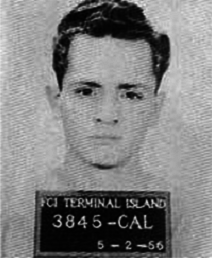
Manson spent much of his early life in and out of juvenile and adult correctional institutions. After being released in the 1960s he assembled a communal group of adherents who shared housing, resources and his apocalyptic rhetoric. He combined elements of fringe religious ideas, pop-culture references and personal charisma to create loyalties that many observers later described as cult-like. Manson also pursued a limited musical career and attempted to use contacts in the Los Angeles music scene to further that ambition.
1969 crimes and victims
In August 1969, followers of Manson carried out two nights of killings that became the focus of the subsequent criminal prosecutions. The first assault, on August 8–9, left actress Sharon Tate and four others dead; the second, the following night, claimed the lives of Leno and Rosemary LaBianca. Prosecutors argued that Manson ordered or directed his followers to commit these murders, even when he did not personally participate in the killings. Public revulsion at the violence and the apparent motive—described by prosecutors as an attempt to provoke social unrest—made the events a defining moment in late-1960s American history.
- Notable victims (selected): Sharon Tate, Jay Sebring, Abigail Folger, Wojciech Frykowski, Steven Parent, Leno and Rosemary LaBianca.
- The crimes were investigated and tried in the early 1970s; several Family members were convicted alongside Manson.
Trials, sentencing and imprisonment
Manson and several followers were tried and originally sentenced to death. In 1972 the California Supreme Court invalidated the state's death penalty statutes and the sentences for Manson and his co-defendants were commuted to life imprisonment. Manson remained incarcerated in California until his death in 2017. Over the years he appeared at parole hearings repeatedly; authorities consistently denied release based on continuing concerns about his potential danger and behavior while confined.
Cultural impact and legacy
The Manson case has generated extensive commentary in legal, psychological and media arenas. It influenced perceptions of youth movements and communal experiments of the 1960s and has been the subject of books, films, documentaries and scholarly study. Prosecutor Vincent Bugliosi’s account popularized the "Helter Skelter" interpretation of motive; that interpretation remains influential but also debated among historians and scholars studying cult dynamics and criminal responsibility.
Art, recordings and notable facts
Manson wrote songs and recorded material that was later released as the album Lie: The Love and Terror Cult. A reissued edition was released decades later; according to public reports, proceeds from a 2006 revival of the label were directed to the family of one of the victims. The Manson case also had legal significance: the commutation of death sentences after the state ruling in the early 1970s formed part of a period in which capital punishment in California underwent major judicial and legislative scrutiny.
Today Manson is widely regarded as a cautionary example of how charismatic authority, manipulative persuasion and extremist rhetoric can combine to produce violence. His life and the crimes of the Family continue to be examined in discussions of criminal justice, mental health, media representation and the social history of the 1960s.
Questions and answers
Q: Who was Charles Milles Manson?
A: Charles Milles Manson was an American criminal and leader of a California cult which murdered several people in the late 1960s and early 1970s.
Q: What is the name of his cult?
A: The name of his cult was "The Family."
Q: Who did Manson's followers murder on August 8, 1969?
A: On August 8, 1969, Manson's followers murdered Sharon Tate who was expecting a baby at 7/8 months; Steven Parent, a friend of the groundskeeper at the house; Jay Sebring, a hair stylist; Abigail Folger, an heiress and social worker; and Wojciech Frykowski, a Polish writer and actor.
Q: What happened to Manson after he was arrested?
A: After he was arrested for stealing cars, it became known that he had ordered his followers to commit several brutal murders. He was sentenced to life in prison in California. He and four Family members were initially sentenced to death but this sentence was later abolished in California shortly after that.
Q: How many times has Manson been refused parole?
A: Because of his violent behavior and unstable mental state, Manson has been refused parole 12 times. His last hearing had been set for 2027 when he would have been 77 years old.
Q: What album did Manson release?
A: Manson released an album titled Lie: The Love and Terror Cult which featured his music. All profits from the 2006 revived ESP-Disk label version went to the family of Wojciech Frykowski. Allmusic rated the album 4 out of 5 stars.
Related articles
Author
AlegsaOnline.com Charles Manson: Leader of the 'Family' and the 1969 murders Leandro Alegsa
URL: https://en.alegsaonline.com/art/116223
Sources
- npr.org : "Charles Manson, Leader Of Murderous Cult, Dies At 83"
- books.google.com : Swinging Single: Representing Sexuality in the 1960s
- articles.cnn.com : Չարլզ Մենսոնը հրաժարվում է հրապարակային խոսքից
- cnn.com : Next hearing is set for 2027.
- allmusic.com : "AllMusic - Record Reviews, Streaming Songs, Genres & Bands"
- onemansblog.com : 1981 Tom Snyder interview with Charles Manson
- aboundinglove.org : Manson
- law.umkc.edu : The Influence of the Beatles on Charles Manson
- charlesmanson.com : Transcript of the Testimony of Paul Watkins in the State of California v. Charles Manson; Los Angeles, California, Thursday, August 26, 1971
- latimes.com : "Killer Charles Manson's failing health renews focus on cult murder saga"
- rte.ie : "US killer Manson 'too weak' for surgery"
- latimes.com : "Charles Manson is returned to prison after stay at Bakersfield hospital"
- beta.latimes.com : "Charles Manson hospitalized in Bakersfield; severity of illness unclear"
- tmz.com : "Charles Manson Dead at 83"
- imdb.com : "Marilyn Manson"