
Charles Evans Hughes (1862–1948)
American statesman, lawyer and jurist who served as Governor of New York, Associate Justice and Chief Justice of the U.S. Supreme Court, U.S. Secretary of State and international jurist.
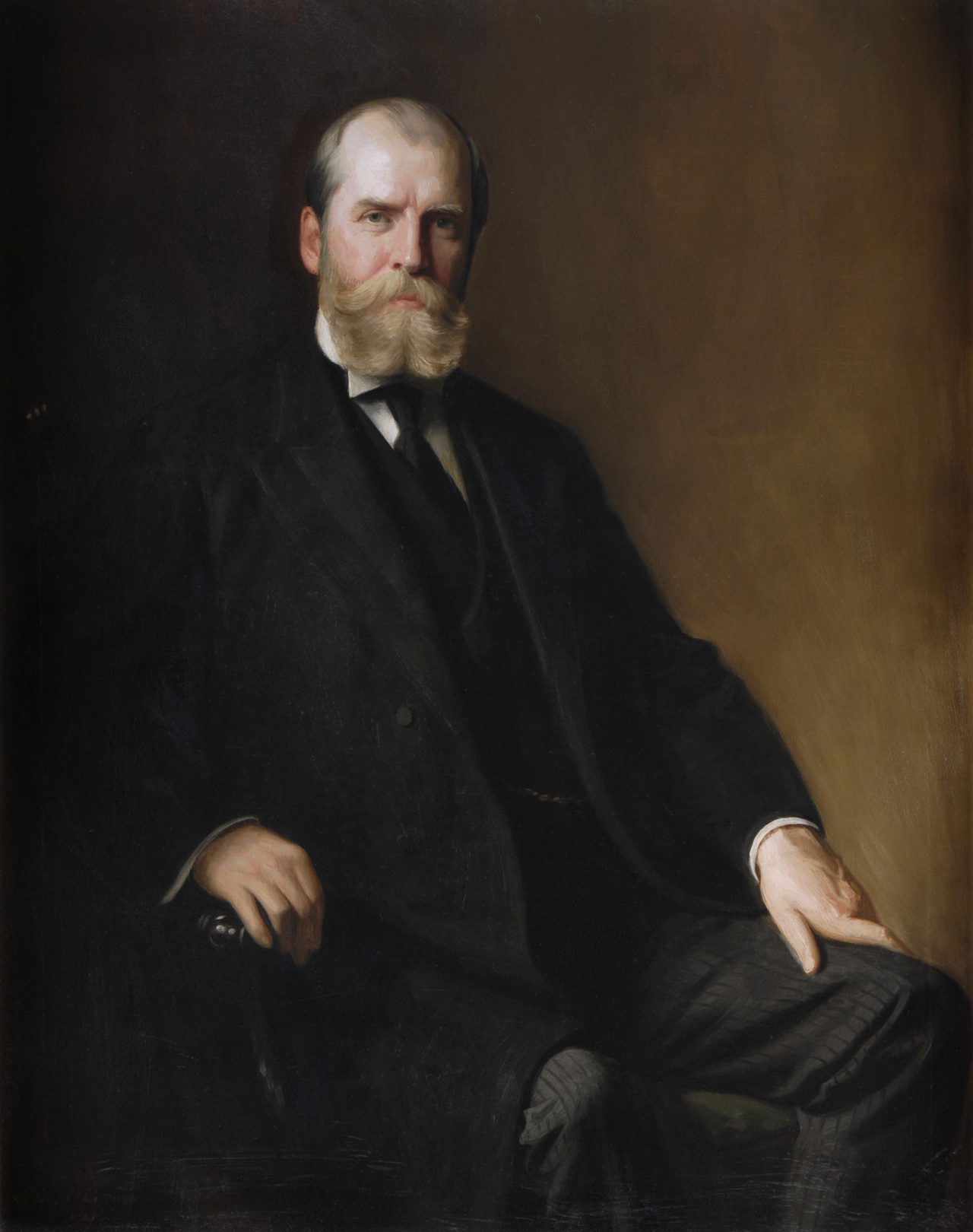
Charles Evans Hughes was an American statesman, lawyer and jurist whose long public career bridged municipal reform, national politics, international diplomacy and the federal judiciary. Born in 1862, Hughes combined private legal practice, teaching and public office, becoming a central figure in Progressive-era reform and in constitutional debates of the 1930s.
Image gallery
10 Images




Education and early career
Hughes trained in law and served as a professor in the 1890s, gaining a reputation for legal scholarship and administrative skill. He moved between private practice and public work, advising on regulatory questions and aligning with reformers who sought to modernize government. His outlook was informed by currents of New Liberalism and Progressive-era efforts to reconcile private enterprise with public accountability.
Governor and national politics
Active in Republican circles, Hughes became a leading Republican politician in New York. As the 36th Governor of New York, he pursued administrative reform, improved regulation of utilities and sought efficiency in state government. His national prominence grew, and in 1916 he accepted the Republican nomination for president, running a closely watched campaign and losing narrowly to Woodrow Wilson.
Judicial and diplomatic service
Hughes served as an Associate Justice of the Supreme Court before resigning to run for president. After the 1916 campaign he returned to private practice and later entered national diplomacy. As United States Secretary of State in the early 1920s, he played a prominent role in postwar international negotiations, including arms-limitation and treaty work that followed World War I. He also sat as a judge on the Permanent Court of International Justice, reflecting a long-standing interest in peaceful dispute resolution between states.
Chief Justice and jurisprudence
In 1930 Hughes was appointed the 11th Chief Justice of the United States. Over more than a decade on the bench he was widely regarded as a careful, institutionalist jurist who sought to balance constitutional limits with deference to legislative purpose. During the 1930s he often provided pivotal votes in cases arising from economic regulation and the New Deal, becoming known as a pragmatic centrist whose opinions emphasized reasoned legal analysis and the Court's role in preserving constitutional structure.
Reputation and influence
Historians and legal scholars have described Hughes variously as a progressive reformer, a conservative institutionalist and a public-minded lawyer who valued competence in government. Commentators including Clinton Rossiter have assessed his place among the leading figures of his generation. Hughes's career—spanning state reform, national politics, diplomacy and high judicial office—offers a study in how legal argument and public administration shaped American governance in the first half of the twentieth century.
Death and legacy
Hughes died on August 27, 1948, at the Wianno Club's Tiffany Cottage near Barnstable, Massachusetts. He was buried at Woodlawn Cemetery in the Bronx. His long service in elective office, diplomatic negotiation and on the Supreme Court left a lasting mark on constitutional doctrine, administrative law and U.S. foreign policy, and his papers and decisions remain a frequent subject for biographies and legal histories.
- Governor of New York (1907–1910)
- Associate Justice of the Supreme Court (1910–1916)
- Republican nominee for President (1916)
- U.S. Secretary of State (1921–1925)
- Judge on the Permanent Court of International Justice (1928–1930)
- Chief Justice of the United States (1930–1941)
For readers seeking deeper study, biographies and collections of Hughes's opinions provide detailed accounts of his reasoning, his diplomatic negotiations and his role in shaping twentieth-century American law and policy.
Questions and answers
Q: When was Charles Evans Hughes born?
A: Charles Evans Hughes was born on April 11, 1862.
Q: What political party did he belong to?
A: Charles Evans Hughes belonged to the Republican Party.
Q: What positions did he hold in his career?
A: During his career, Charles Evans Hughes held the positions of 36th Governor of New York (1907–1910), Associate Justice of the Supreme Court of the United States (1910–1916), United States Secretary of State (1921–1925), a judge on the Court of International Justice (1928–1930), and the 11th Chief Justice of the United States (1930–1941).
Q: Who did he run against in 1916 U.S. Presidential election?
A: In 1916, Charles Evans Hughes ran against Woodrow Wilson in the U.S. Presidential election.
Q: How is he described by historian Clinton Rossiter?
A: Historian Clinton Rossiter has hailed him as a leading American conservative.
Q: Where is Charles Evan Hughes buried?
A: Charles Evan Hughes is buried at Woodlawn Cemetery in Bronx, New York.
Q: Where did he die?
A:Charles Evan Hughes died at Tiffany Cottage of the Wianno Club near Barnstable, Massachusetts on August 27, 1948
Related articles
Author
AlegsaOnline.com Charles Evans Hughes (1862–1948) Leandro Alegsa
URL: https://en.alegsaonline.com/art/116191
Sources
- fjc.gov : "Federal Judicial Center: Charles Evans Hughes"
- historycooperative.org : "Charles Evans Hughes and the Strange Death of Liberal America" · web.archive.org
- supremecourthistory.org : "Christensen, George A. (1983) Here Lies the Supreme Court: Gravesites of the Justices, Yearbook"