
Charles Edward Stuart (Bonnie Prince Charlie)
Jacobite claimant and leader of the 1745 rising; famed as Bonnie Prince Charlie for his failed attempt to restore the Stuart monarchy and for his dramatic escape and later life in exile.
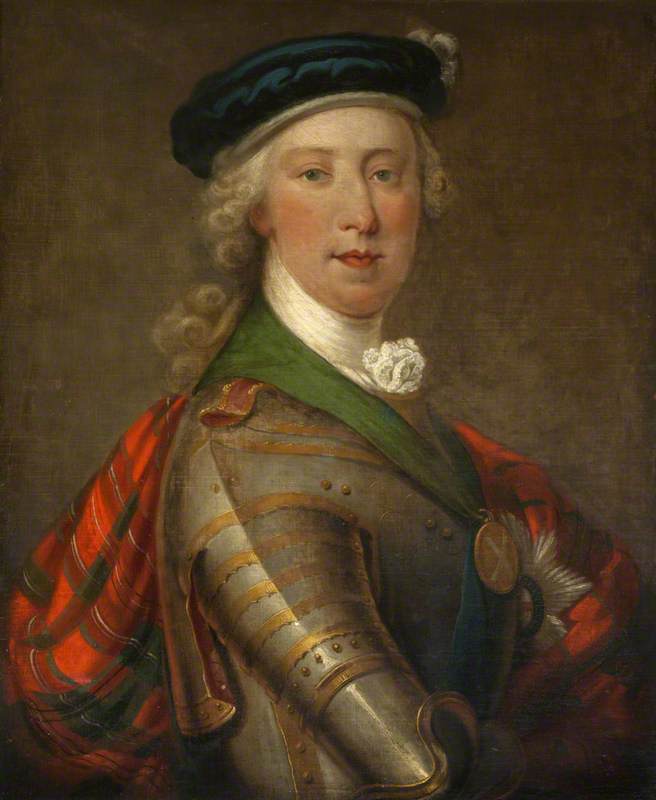
Charles Edward Stuart (31 December 1720 – 31 January 1788), commonly called Bonnie Prince Charlie or the Young Pretender, was the leading Jacobite claimant to the thrones of England, Scotland and Ireland in the mid‑18th century. He was the elder son of James Francis Edward Stuart and a grandson of James II and VII. His supporters considered him the legitimate heir of the Stuart line; to his opponents he was a foreign pretender and the focus of a dynastic and religious conflict that had persisted since the Glorious Revolution.
Jacobitism was the political movement backing restoration of the Stuarts, and Charles's role in it defined his public life. Trained and supported by sympathetic European courts and by networks of exiled Scots and Irish Catholics, he crossed to Scotland in 1745 to press his claim. This expedition became known as the 1745 rising and initially attracted many Highland clans and disaffected Lowland and English supporters.
Image gallery
10 Images





The 1745 campaign and Culloden
Charles's army won a number of early victories and advanced as far south as Derby, provoking alarm in the British government and briefly raising the prospect of a restored Stuart monarchy. However, the campaign faltered when promised French support did not arrive in sufficient strength. In April 1746 his forces were disastrously defeated at the Battle of Culloden (often discussed under the broader category of the pretender's military defeat), which ended organized Jacobite resistance and led to harsh reprisals against supporters. The defeat at Culloden is widely seen as the decisive end of the Jacobite military threat.
Escape, exile and later life
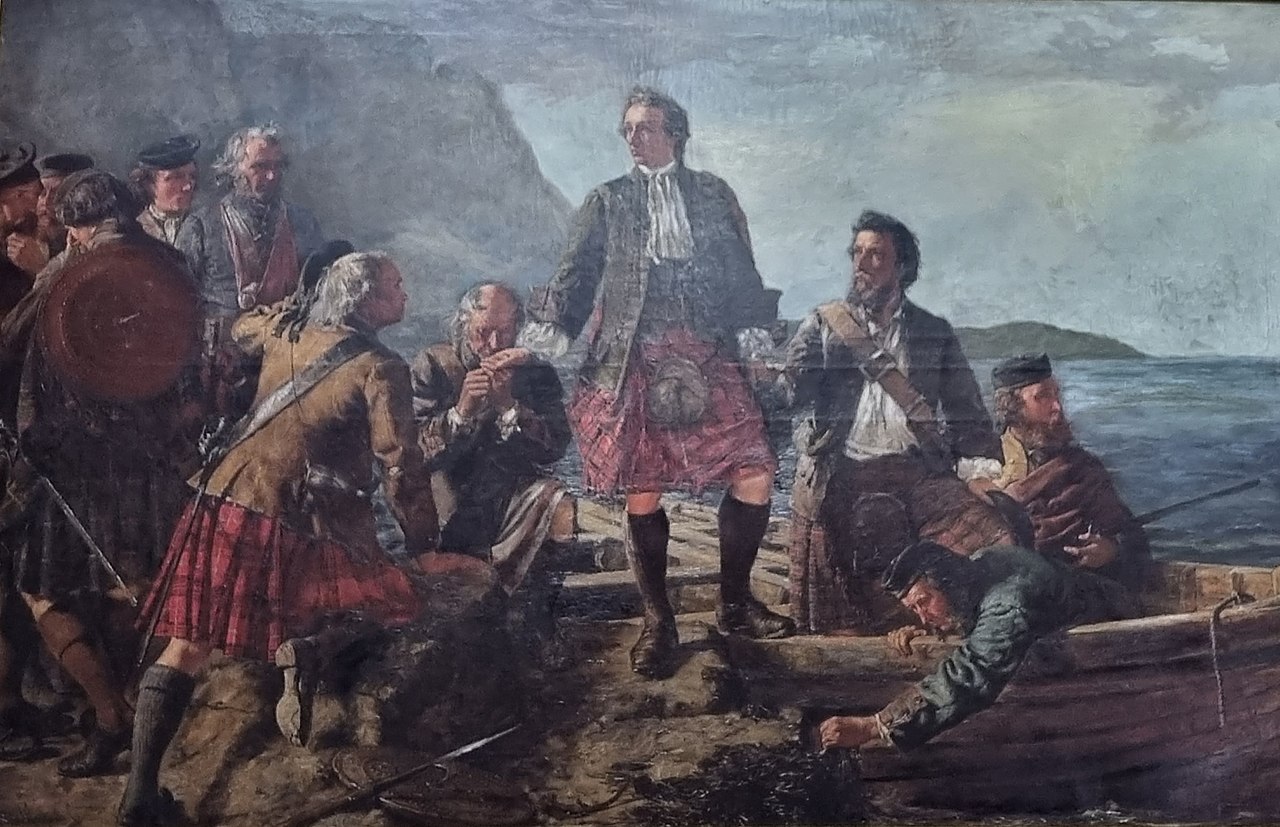
After Culloden Charles participated in one of the most famous escapes in British history, evading capture and making his way to safety with the aid of loyal supporters. His flight was later romanticized in songs such as the "Skye Boat Song" and in numerous poems and novels. He spent the remainder of his life in exile, mainly in Rome, where his father had been accommodated by the papacy. Although he made a few later attempts to regain influence, he never launched another serious military campaign.
Significance and legacy
Charles Edward Stuart's life combines political ambition, military drama and cultural myth. To supporters he was a charismatic leader devoted to a dynastic cause; to critics he was an adventurer whose failure solidified the authority of the Hanoverian state. The events of 1745–46 had lasting consequences for Highland society, British military and legal policy, and popular memory. The figure of Bonnie Prince Charlie became a potent symbol in literature, music and nationalist memory.
Distinctions and notable facts
- He is usually referred to as the "Young Pretender", while his father was known as the "Old Pretender" (James Francis Edward Stuart).
- His claim related to succession disputes after the deposition of James II and VII and the subsequent settlement of the British crowns.
- His campaign concerned the thrones of England, Scotland and Ireland, reflecting the dynastic scope of the Jacobite cause.
- The rising he led is commonly referred to in connection with the rebellion's events and battles, including the engagement often described in sources as the 1745 rebellion and the climactic Battle of Culloden.
Charles died in Rome in 1788, having spent much of his life as an exile and a romanticized figure of failed restoration. His story remains a major episode in British and Irish history and continues to attract interest from historians, musicians and the general public.
Questions and answers
Q: Who was Charles Edward Stuart?
A: Charles Edward Stuart was the Jacobite pretender to the thrones of England, Scotland, and Ireland, also known as Bonnie Prince Charlie or as 'The Young Pretender'.
Q: Who was Charles Edward Stuart's father?
A: Charles Edward Stuart's father was James Francis Edward Stuart, who was also a pretender to the throne of England.
Q: Why is Charles Edward Stuart famous?
A: Charles Edward Stuart is famous for leading the unsuccessful Jacobite uprising of 1745, which ended in a heavy defeat at the Battle of Culloden.
Q: What happened to the Jacobite cause after the Battle of Culloden?
A: The Jacobite cause ended after the Battle of Culloden, which was a significant defeat for the Jacobite rebellion.
Q: Where did Charles Edward Stuart go after the uprising in Scotland?
A: Charles Edward Stuart escaped from Scotland after the uprising and went to Rome, where his father had been given a home by Clement XI.
Q: How is Charles Edward Stuart remembered?
A: Charles Edward Stuart is remembered as a romantic figure of heroic failure, and the Skye Boat Song is one way in which he is remembered.
Q: Where did Charles Edward Stuart live and die?
A: Charles Edward Stuart lived and died in Rome.
Related articles
Author
AlegsaOnline.com Charles Edward Stuart (Bonnie Prince Charlie) Leandro Alegsa
URL: https://en.alegsaonline.com/art/116188