
Carl Stumpf: Philosopher, Psychologist, and Pioneer in Music Research
German philosopher and psychologist Carl Stumpf (1848–1936) shaped early phenomenology, influenced Gestalt psychology, and helped found systematic musicology and ethnomusicology.
Overview
Carl Stumpf (21 April 1848 – 25 December 1936) was a German philosopher and psychologist whose work bridged empirical study and philosophical analysis. He emphasized careful description of conscious experience and had an early role in shaping what became twentieth‑century phenomenology. His interactions with contemporaries, most notably Edmund Husserl, helped define discussions about the methods and aims of describing mental life.
Image gallery
1 Image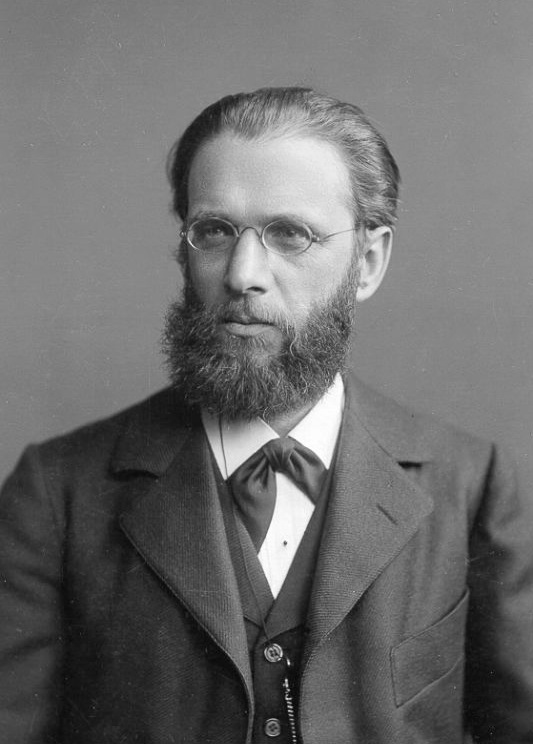
Philosophical and psychological contributions
Stumpf argued that psychology should begin with rigorous description rather than speculative theory. He promoted experimental methods combined with reflective analysis, a stance sometimes called descriptive psychology. His thinking influenced the founders of Gestalt psychology and the study of perception: he was an important intellectual figure for Max Wertheimer, Wolfgang Köhler and Kurt Koffka. The movement they advanced — Gestalt psychology — emphasized organization and wholes in perception, themes that resonated with Stumpf's insistence on immediate experience and its structure. Stumpf also debated the nature of imagination, emotion, and meaning, placing special weight on careful phenomenological description over reductionist accounts.
Work in musicology and ethnomusicology
Beyond philosophy and psychology, Stumpf was a pioneer in systematic musicology. He trained in acoustics and musical perception, and his studies treated tone, timbre, and the perception of melody with experimental and comparative methods. These endeavors opened the way for later ethnomusicological fieldwork by encouraging precise transcription, cross‑cultural comparison, and attention to the listener’s experience. His approach helped establish music as a subject suitable for scientific and historical inquiry rather than only for aesthetic commentary.
Academic appointments and institutional roles
Stumpf served on the faculties of several German and Central European universities during a long academic career. He held posts at the University of Göttingen, the University of Würzburg, Charles University in Prague, the University of Munich, and later at Halle, before a final appointment to a chair in Berlin. These positions placed him at intellectual crossroads where experimental laboratories, philosophical seminars, and music collections intersected.
Legacy and notable facts
Stumpf’s legacy is plural and indirect. He is remembered for:
- shaping methodological debates that fed into phenomenology and descriptive psychology;
- mentoring or influencing figures who founded Gestalt psychology (Wertheimer, Köhler, Koffka);
- founding systematic approaches in musicology and encouraging comparative studies that anticipated ethnomusicological practice.
Although later schools departed from some of his assumptions, researchers still cite Stumpf when tracing the historical roots of modern perception studies, the scientific study of music, and the effort to align empirical work with careful philosophical reflection. For entry points to his life and work, consult standard academic treatments and archival materials held by the universities where he taught, including records at Göttingen, Würzburg, Prague and Munich.
Questions and answers
Q: Who was Carl Stumpf?
A: Carl Stumpf was a German philosopher and psychologist who had a significant impact on phenomenology, an important philosophical trend of the twentieth century.
Q: Who did Carl Stumpf influence?
A: Carl Stumpf had an important influence on Edmund Husserl, the founder of modern phenomenology, as well as Max Wertheimer, Wolfgang Köhler and Kurt Koffka, co-founders of Gestalt psychology.
Q: What did Carl Stumpf pioneer?
A: Carl Stumpf was one of the pioneers of musicology and ethnomusicology.
Q: Where did Carl Stumpf hold positions?
A: Carl Stumpf held positions in the philosophy departments at the Universities of Göttingen, Würzburg, Prague, Munich and Halle.
Q: Did Carl Stumpf ever obtain a chair (professorship) at a university?
A: Yes, Carl Stumpf obtained a chair (professorship) at the University of Berlin.
Q: What is the significance of Carl Stumpf's impact on phenomenology?
A: Carl Stumpf's impact on phenomenology is significant because it helped shape one of the most important philosophical trends of the twentieth century.
Q: How did Carl Stumpf contribute to the fields of musicology and ethnomusicology?
A: Carl Stumpf contributed to the fields of musicology and ethnomusicology by being one of their pioneers.
Related articles
Author
AlegsaOnline.com Carl Stumpf: Philosopher, Psychologist, and Pioneer in Music Research Leandro Alegsa
URL: https://en.alegsaonline.com/art/116005
Sources
- plato.stanford.edu : Stanford Encyclopedia of Philosophy