
César Cui — Russian Composer, Critic and Military Engineer
César Cui (1835–1918) was a Russian composer and music critic who combined a career as a military engineer and professor with membership in the nationalist circle known as the Mighty Handful.
Overview: César Cui (18 January 1835 – 26 March 1918) was a Russian composer and critic born in Vilnius. He is commonly remembered as one of the five figures of the nationalist group often called the "Mighty Handful" or "The Five," alongside Mily Balakirev, Nikolai Rimsky-Korsakov, Modest Mussorgsky and Alexander Borodin. Although less famous than some of his colleagues, Cui contributed to the musical life of Russia while pursuing a parallel professional career.
Image gallery
7 Images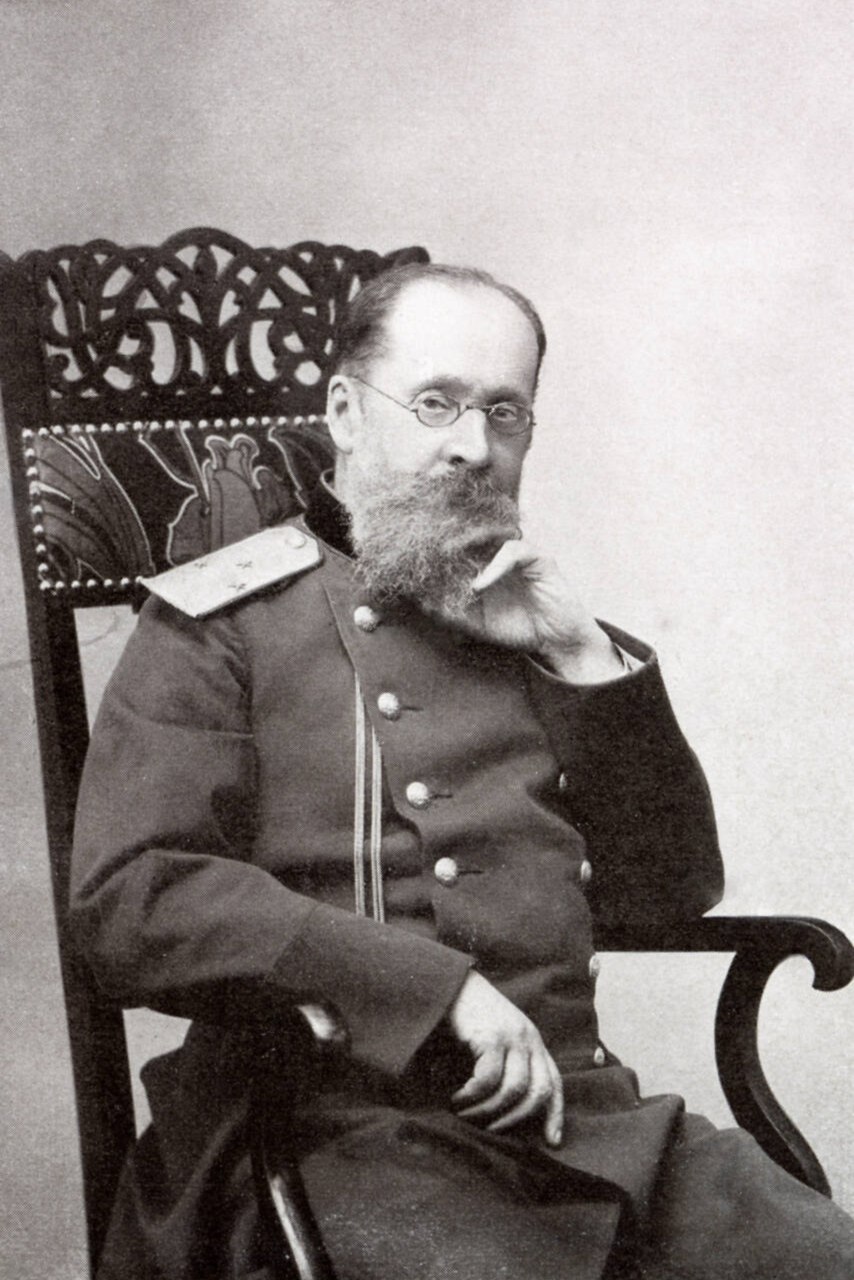



Life and dual career
Cui was born into a mixed family: his father was of French origin (France) and his mother came from Lithuania. Trained as an engineer, he made a professional name for himself in the study of military works. Throughout his life he worked as a fortifications specialist, published treatises on defensive systems and held academic posts, rising to the rank of general. In parallel with this technical career, he cultivated music—typical of many 19th-century (19th century) Russian figures who combined official professions with musical pursuits.
Musical activities and style
As an amateur composer in the strict sense used in his era, Cui nevertheless produced a substantial number of works: songs, piano pieces, chamber items, stage works and occasional orchestral pieces. He was especially admired for his songs and shorter piano pieces, which often show clear melodic invention and an ear for vocal writing. Some short works, such as a little cello piece commonly called "Orientale," have remained in the performance repertoire.
Cui's musical language reflects the nationalist aims of the Mighty Handful while also showing individual traits. He sometimes employed exotic or "Oriental" gestures and coloristic touches—an interest often described as Far Eastern in character. At the same time his orchestral technique could be uneven. He acknowledged limitations in orchestration, and colleagues such as Balakirev assisted with the scoring of certain pieces.
Criticism, relationships and legacy
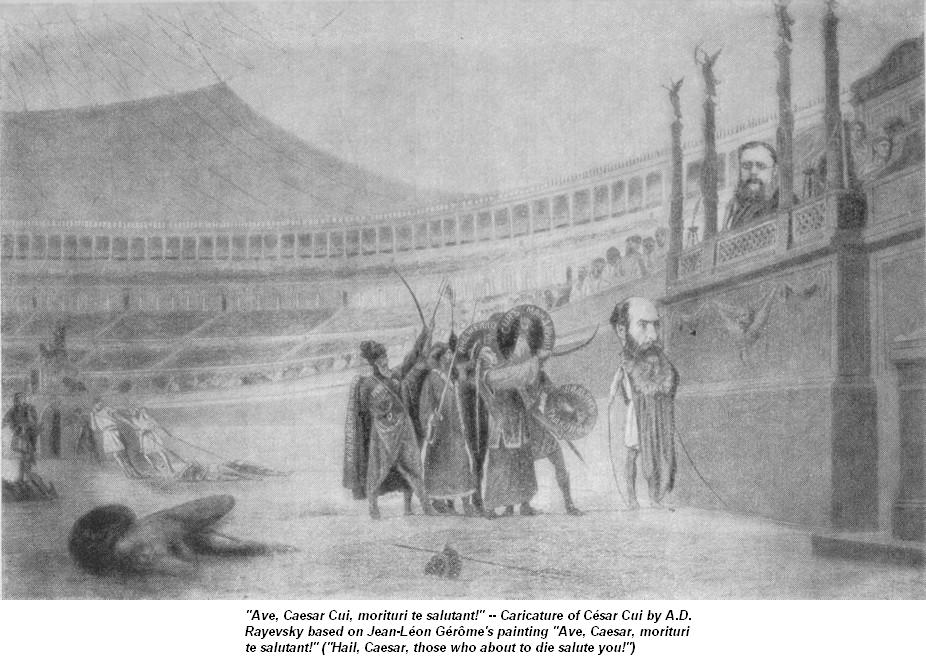
Cui was an active music critic and reviewer whose opinions shaped contemporary reception. He could be outspoken in his assessments, sometimes criticizing composers who gained wider popular success—among them Tchaikovsky and Rachmaninoff—which later writers have taken as evidence of professional rivalry as well as differing aesthetic priorities. Within the circle of the Five he remained on friendly terms with many members even when artistic disagreements occurred.
- Roles: composer, music critic, military engineer and educator (fortifications expert).
- Strengths: songs and short piano pieces; melodic clarity and vocal writing.
- Weaknesses: occasional problems with larger-scale orchestral balance and scoring.
- Significance: a representative figure of Russian musical nationalism and an example of the 19th-century polymath who combined scientific and artistic careers.
Today Cui's reputation rests less on a single masterpiece than on a body of smaller works and on his role in a formative musical circle. Recordings and scholarship have continued to reappraise his output, and performers occasionally revive his intimate pieces for voice, piano and chamber ensemble. For those tracing Russian music history, Cui remains a useful window into the cultural and institutional life that produced the more famous names of his generation.
Questions and answers
Q: Who was César Cui?
A: César Cui was a Russian composer who was part of the "Moguchaya Kuchka" ("Mighty Handful"), a group which included Mily Balakirev, Nikolai Rimsky-Korsakov, Modest Mussorgsky and Alexander Borodin.
Q: Where did he come from?
A: His father came from France and his mother from Lithuania.
Q: What was his main job?
A: His main job was as an expert on military fortifications. He became a professor in this subject and wrote important textbooks about military defences. He became a general.
Q: How did he feel about other Russian composers?
A: He liked his friends from the Moguchaya Kuchka, but was often very critical of music by other Russian composers such as Tchaikovsky and Rachmaninoff. This may have been because he was jealous of their success.
Q: What type of music did he find difficult to compose?
A: He did not find orchestration easy. Balakirev helped him a lot with the orchestration of some of his compositions.
Q: What type of music did he excel at writing?
A: He was best when writing songs and short piano pieces. He liked to write music that sounded Far Eastern in character. Cellists like to play a short piece he wrote called "Orientale".
Related articles
Author
AlegsaOnline.com César Cui — Russian Composer, Critic and Military Engineer Leandro Alegsa
URL: https://en.alegsaonline.com/art/115816