
Buckminster Fuller (1895–1983) — architect, inventor, and futurist
American inventor, architect, and systems thinker best known for geodesic domes, the concept of “Spaceship Earth,” and the Synergetics approach to design and sustainability.
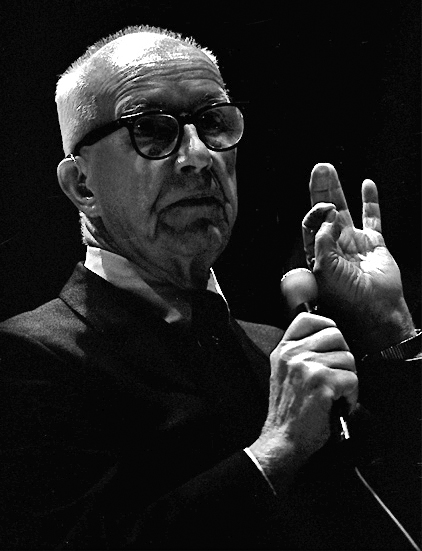
Richard Buckminster "Bucky" Fuller (July 12, 1895 – July 1, 1983) was a pioneering American architect, engineer, author, designer, and inventor. He became widely known for promoting holistic, resource-conscious design and for coining memorable concepts such as "Spaceship Earth" to describe the planet as a single, interdependent system. Fuller published more than thirty books and lectures during his long career, advancing an integrative discipline he called Synergetics that explored geometric and structural principles as the basis for efficient solutions.
Image gallery
10 Images


Major ideas and notable works
Fuller's work combined practical invention with big-picture thinking. Among his best-known contributions are:
- Geodesic domes — lightweight, triangulated spherical structures that efficiently distribute stress and cover large spans without internal supports. These domes were built for exhibition halls, homes, and experimental communities and remain a recognizable form in architecture and engineering.
- Dymaxion concepts — a series of projects such as the Dymaxion house and Dymaxion car that explored resource efficiency, aerodynamic form, and mass production as tools for improving human habitat.
- Systemic vocabulary — terms like "Spaceship Earth" and the formal study called Synergetics framed environmental, social, and technological problems as interconnected systems requiring integrated design responses.
History and development
Fuller worked across disciplines from the early to mid-20th century, responding to the era’s industrial, social, and material challenges. He sought to apply scientific and mathematical principles to everyday problems: reducing waste, maximizing strength-to-weight ratios, and designing for mass accessibility. His geodesic dome patents and public demonstrations in the 1940s and 1950s helped popularize new structural logics and inspired architects, engineers, and hobbyists.
Uses, examples, and influence
Geodesic domes and Fuller’s other designs have been used for exhibition pavilions, planetariums, military shelters, emergency housing, and experimental ecovillages. His emphasis on doing more with less anticipated later movements in sustainable architecture and appropriate technology. Fuller’s speculative projects included large-scale environmental proposals such as a conceptual five-kilometer-diameter dome envisioned over parts of a city, often cited in popular summaries as an extreme example of climate control thinking and sometimes referenced as a Manhattan dome concept in discussions of megastructures.
Legacy and notable facts
Fuller’s geometric forms influenced not only architecture but also science: the term fullerenes, a class of carbon molecules discovered in the 1980s, was inspired by the resemblance of their spherical shapes to geodesic constructions. His ideas seeded debates about technology’s role in society, and his books and lectures continue to be read by designers, environmentalists, and systems thinkers. While some of his proposals were visionary or speculative rather than widely adopted, his persistent focus on efficiency, durability, and planetary stewardship remains influential.
Fuller’s career blended practical prototypes with provocative concepts, leaving a body of built projects, theoretical work, and public outreach that shaped 20th-century debates on design, ecology, and the relationship between human systems and the planet.
Questions and answers
Q: Who was Richard Buckminster "Bucky" Fuller?
A: Richard Buckminster "Bucky" Fuller was an American architect, engineer, author, designer, inventor and futurist.
Q: What did he invent?
A: He invented the geodesic dome and popularized terms such as "Spaceship Earth" and "Synergetics".
Q: What is a geodesic dome?
A: A geodesic dome is a type of architectural structure that consists of several triangular elements that form a spherical shape. It is known for its strength and stability.
Q: How big was the pinnacle of his invention?
A: The pinnacle of his invention would have been a 5 kilometer diameter dome over Manhattan.
Q: What are fullerenes?
A: Fullerenes are carbon molecules that were named by scientists for their resemblance to geodesic spheres.
Q: What other inventions did he use besides the geodesic dome?
A: He used other architectural designs in addition to the geodesic dome.
Related articles
Author
AlegsaOnline.com Buckminster Fuller (1895–1983) — architect, inventor, and futurist Leandro Alegsa
URL: https://en.alegsaonline.com/art/115747
Sources
- britannica.com : "Fuller, R Buckminster"