
Boy George (George Alan O'Dowd) — singer, songwriter and cultural figure
Overview of Boy George (George Alan O'Dowd): early life, role in the New Romantic movement, Culture Club success, artistic style, later career, writings, controversies and legacy.
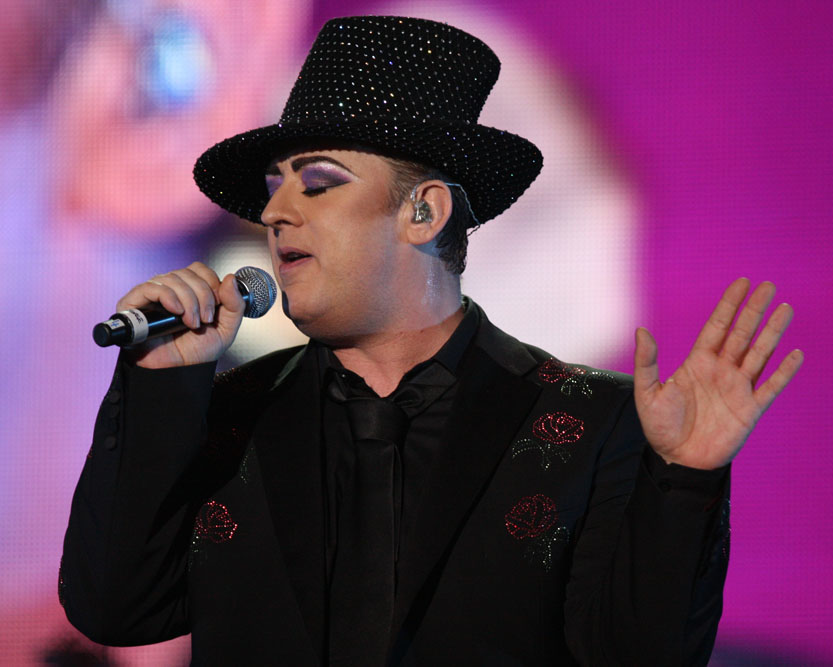
Boy George is the stage name of George Alan O'Dowd (born 14 June 1961), a British singer, songwriter, and club DJ best known as the lead vocalist of the 1980s pop group Culture Club. Rising to international prominence during the early 1980s, he became a prominent voice in what was called the New Romantic movement and is widely remembered for his distinctive soulful singing, bold fashion, and fluid gender presentation. His work spans pop, soul, reggae-inflected rhythms and later experiments with glam and dance music.
Image gallery
10 Images



Early life and influences
O'Dowd was born in Bexley, Kent, into a large working-class family of Irish descent. Growing up in that environment shaped both his outlook and his early tastes: he absorbed soul and rhythm & blues, alongside the growing post-punk and electronic sounds of the late 1970s. As a young man in London he frequented iconic clubs of the era and became associated with the community around The Blitz, where theatrical fashion, art-school aesthetics and a revival of glam and Bowie-inspired styles mixed with synth-based music. These influences informed his songwriting and stage persona.
Culture Club and musical style
With Culture Club, Boy George helped popularize a blend of pop, blue-eyed soul and reggae rhythms that produced a string of major international hits. His voice was often praised for its emotive tone and soulful phrasing, and the group's arrangements balanced catchy pop hooks with R&B and Caribbean influences. Alongside bandmates, he contributed to an image that challenged gender norms: stage makeup, brightly colored costumes and an androgynous look that made him a visible figure in discussions about gender expression in popular music.
Career development and projects
After Culture Club's peak commercial period, O'Dowd pursued solo releases, DJ work and television appearances while remaining an occasional collaborator with his former band. He has been a club DJ and performer for decades, adapting to changing musical trends and retaining a presence onstage. In 2018 Culture Club released the album Life and undertook an accompanying tour, demonstrating the group's long-term appeal. He has also been active as a cultural commentator and occasional television personality.
Writings, media and public controversies
O'Dowd has published memoirs reflecting on his life in music, fame and personal challenges. His first autobiography, Take It Like a Man, appeared in the mid-1990s and was followed by a later memoir that continued his account of career ups and downs. His life in the public eye has included well-documented controversies and legal problems that received media attention; these episodes form part of a complex public narrative that includes both artistic achievement and personal difficulties.
Legacy and cultural impact
Boy George remains an influential figure for several reasons: his role in bringing soulful melodic pop into the mainstream, his contribution to the visual language of the New Romantic era, and his early, high-profile challenge to conventional gender presentation in popular culture. Musicians, fashion designers and LGBT public figures have cited the era he helped define as formative. Beyond nostalgia, his continued performances, publications and public commentary have kept him engaged with new generations of fans.
Selected works and resources
- Band: Culture Club — several hit singles and albums during the 1980s and later reunions.
- Notable albums: early Culture Club records and the 2018 album Life.
- Books: autobiographical works published in the 1990s and 2000s that recount his career and personal life.
- Live work: extensive touring history as frontman, occasional reunions and DJ performances.
Further reading and links
- Biography and early life — Bexley reference
- Overview of Boy George's musical genre
- DJ career and club performances
- Family background: Irish roots
- Ancestral connections: Thurles, County Tipperary
- The Blitz club and Steve Strange
- Contemporaries: Spandau Ballet and the New Romantic scene
- Influences: David Bowie
- Electronic influences including Kraftwerk
- Culture Club: band history and members
- Musical style often described as blue-eyed soul
- Reggae and R&B influences
- Vocal style and comparisons to classic soul singers
- Glam rock influences and related artists
- Media interviews and broadcast appearances
- Live appearances and international concerts (example: Dubai)
- Tour dates and performances (example: Sydney)
- Autobiography: Take It Like a Man
- Later memoirs and publications
For researchers or fans seeking verified data—dates, discography details and contemporaneous reviews—consult dedicated music reference sources and published memoirs. Boy George's career spans several decades and genres, and his public life includes both creative milestones and controversies that have shaped his reputation.
Questions and answers
Q: What is Boy George's real name?
A: His real name is George Alan O'Dowd.
Q: Where did Boy George grow up?
A: He grew up in a large, working-class Irish family in Bexley, Kent. The family originally came from Thurles, Co. Tipperary, Ireland.
Q: What was the British new romantic movement popularised in the early 1980s?
A: The British new romantic movement was a style of music and fashion that emerged in the late 1970s and was popularised in the early 1980s. It was based on the coolness of David Bowie and high fashion, with influences from Kraftwerk, Marc Bolan and post punk New Wave music.
Q: What type of music did Boy George make with Culture Club during the 1980s?
A: With Culture Club during the 1980s, Boy George made what is often called blue-eyed soul music which was heavily influenced by Rhythm & Blues and reggae. Early recordings with Culture Club showed that O'Dowd's vocals had an emotional quality which was like American soul music of the 1960s and 1970s. His later solo work has also touched on glam rock influences and was particularly influenced by David Bowie and Iggy Pop.
Q: When did Boy George get released from prison?
A: On 11 May 2009, Boy George was released from prison at HMP Edmunds Hill in Newmarket, Suffolk after serving four months into a fifteen-month sentence for assault and false imprisonment of a male escort at his East London flat. He was tagged and placed on a curfew for the rest of his sentence.
Q: Did Culture Club have any tours or concerts to celebrate their 30th anniversary reunion tour?
A: Yes they did! In 2011 they played two live concerts - one in Dubai and one in Sydney - but didn't have an official tour until 2018 when they released an album called Life accompanied by their Life Tour concert series around Europe as well as some dates across North America too!
Q: How many autobiographies has Boy George written so far?
A: So far he has written two autobiographies; Take It Like A Man (1995) co-written with Spencer Bright which became a bestseller in UK; Straight (2005) co-written with Paul Gorman
Related articles
Author
AlegsaOnline.com Boy George (George Alan O'Dowd) — singer, songwriter and cultural figure Leandro Alegsa
URL: https://en.alegsaonline.com/art/115494
Sources
- theblitzkids.com : "Boy George"
- dailymail.co.uk : "Out, the new Boy George appeared thinner with a healthy glow after stint in prison | Mail Online"
- new.music.yahoo.com : Boy George and His Sparkly Hat Promise Culture Club Reunion – Amplifier