
Boudica, queen of the Iceni (c. 25 – 60/61 AD)
Boudica led a major uprising against Roman rule in Britain after the death of her husband Prasutagus. She is remembered as a symbol of resistance and appears in ancient sources and modern memorials.
Overview
Boudica (born about 25 AD, died 60/61 AD) was the ruler of the Iceni, a tribe often described as Celtic, in what is now Norfolk. Her life is known mainly through Roman historians. After her husband Prasutagus, who had ruled as a Roman client king, died, events around succession and Roman intervention led Boudica to lead a broad revolt against the occupying authorities in Roman Britain.
Image gallery
10 Images


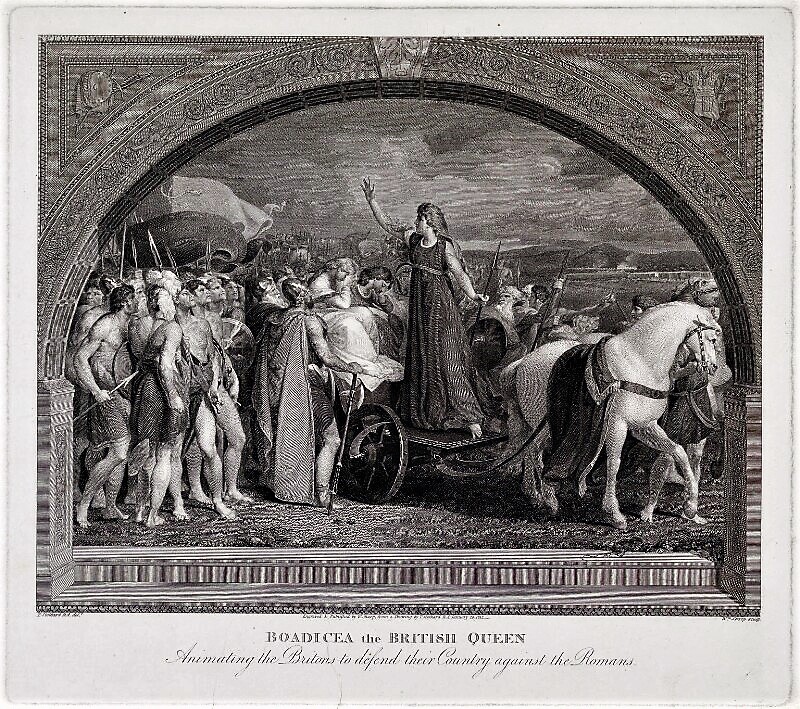
Background and the rebellion
Prasutagus left his realm jointly to his daughters and the Roman emperor; Roman officials ignored this arrangement, annexed territory and subjected the Iceni to harsh treatment. Ancient accounts report that Roman actions included confiscation of property and physical abuses that provoked widespread anger. Boudica gathered allies from neighboring tribes and launched a campaign that sacked several Roman towns, including important settlements that acted as administrative and commercial centers.
Course and outcome
The uprising struck major settlements and inflicted heavy damage before Roman forces under Governor Gaius Suetonius Paulinus regrouped and defeated the rebels in a decisive battle. Sources disagree about details such as the size of forces and the manner of Boudica's death; some say she took her own life to avoid capture, others suggest she fell ill. By the end of the campaign Roman rule was restored, but the revolt exposed vulnerabilities and shaped subsequent imperial policy in the province.
Sources, interpretation and uncertainties
Our main narratives come from the Roman historians Tacitus and Cassius Dio, who wrote years after the events and reflect Roman perspectives and possible bias. Archaeology has confirmed destruction layers at several sites often associated with the rebellion, but many particulars—numbers killed, exact battle locations and personal details of Boudica's life—remain uncertain and debated among scholars.
Legacy and notable facts
- Boudica is widely regarded as a symbol of resistance to oppression and has appeared in literature, drama and film.
- A famous statue commemorating her ride stands near Westminster: the monument has been a public landmark since 1902 and is often photographed by visitors to central London from the Westminster area.
- Her revolt affected Roman military and administrative approaches in the province and remains a key episode in the history of early Britain.
- Key names and terms associated with the episode—such as Prasutagus and the concept of a Roman client state—help explain the political framework of the time; the word "kingdom" is sometimes used for the territory he ruled (kingdom).
Boudica’s story continues to be retold and reassessed, balancing dramatic ancient narratives with archaeological evidence and modern historical interpretation.
Questions and answers
Q: Who was Boudica?
A: Boudica was the queen of the Celtic Iceni people in Norfolk in the eastern part of Roman Britain.
Q: When was Boudica born?
A: Boudica was born about 25 AD.
Q: When did Boudica die?
A: Boudica died in 60/61 AD.
Q: Who ruled an independent client state of Rome?
A: Prasutagus, Boudica's husband, ruled an independent client state of Rome.
Q: What did Prasutagus leave after his death?
A: After his death, Prasutagus left his kingdom jointly to his daughters and the Roman emperor.
Q: Where is a statue of Boudica located?
A: A statue of Boudica has stood in the Westminster area of London since 1902.
Q: What was Boudica's ethnic background?
A: Boudica was a Celtic queen.
Related articles
Author
AlegsaOnline.com Boudica, queen of the Iceni (c. 25 – 60/61 AD) Leandro Alegsa
URL: https://en.alegsaonline.com/art/115484
Sources
- athenapub.com : Tacitus, Chapter 31
- perseus.tufts.edu : 14.33
- perseus.tufts.edu : 14.34
- perseus.tufts.edu : 14.37
- en.wikisource.orgThe_Annals_(Tacitus) : 14.39
- penelope.uchicago.edu : 18