
Boris Johnson: British politician, journalist and former prime minister
Overview of Alexander Boris de Pfeffel Johnson: journalist, Mayor of London, Foreign Secretary, Conservative leader and Prime Minister (2019–2022), his style, controversies and public significance.
Alexander Boris de Pfeffel Johnson (born 19 June 1964) is a British public figure known for a long career in journalism and conservative politics. He served as Prime Minister of the United Kingdom and Leader of the Conservative Party from July 2019 until September 2022. Before becoming prime minister he was Mayor of London (2008–2016), Secretary of State for Foreign, Commonwealth and Development Affairs (2016–2018), and a Member of Parliament at different times. Johnson's public profile combines rhetorical flair, frequent media appearances and a history of both political successes and controversies.
Image gallery
10 Images
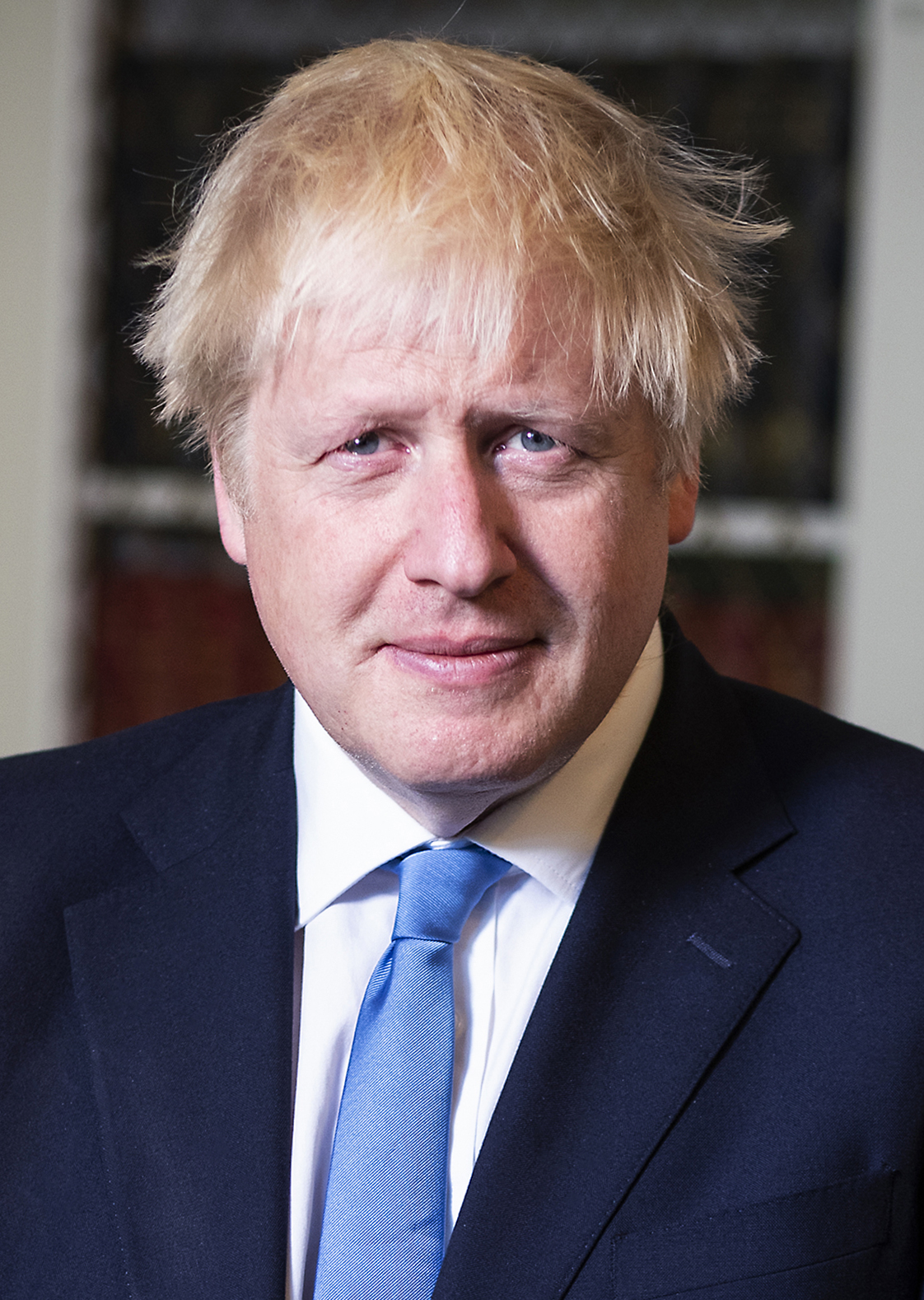


Early life and education
Johnson was born in New York and raised predominantly in Britain. He was educated at Eton College, one of the country's leading independent schools, and studied classics at Balliol College, Oxford. At Oxford he was active in student journalism and politics, editing the university's student newspaper and later joining national newspapers. His early education and experience at Oxford contributed to a public persona often characterised by classical references, comic timing and a high-profile media presence.
Journalism and early public profile
Before entering frontline politics Johnson established a career in journalism. He wrote for national newspapers and presented television programmes, gaining attention for a blend of opinion writing and colourful commentary. He also served as editor of the political magazine The Spectator, a role that raised his national profile and provided a platform from which he moved into electoral politics. His journalistic work helped him cultivate name recognition and a reputation for combative columns and distinctive turns of phrase.
Parliamentary career and Mayor of London
Johnson first entered Parliament as Member of Parliament for Henley in 2001. He left the Commons in 2008 to run for Mayor of London and won the mayoralty, serving two terms. As mayor he championed projects intended to improve transport and urban life in the capital, including the introduction of a public cycle hire scheme often associated with his name, policies on public transport, and involvement with London-wide events such as the 2012 Olympic legacy. During his mayoralty he combined high-profile public appearances with policy initiatives aimed at boosting London's infrastructure and international profile.
Return to the Commons, Foreign Office and Brexit
Johnson returned to the House of Commons in 2015 as MP for Uxbridge and South Ruislip. He was a prominent figure in the 2016 referendum campaign that advocated the United Kingdom's withdrawal from the European Union. After the referendum he was appointed Secretary of State for Foreign, Commonwealth and Development Affairs in July 2016. He resigned from that post in July 2018, citing disagreements with the government's approach to negotiating the country's departure from the EU. His role in the Brexit debate remained central to his later leadership platform.
Conservative leader and premiership
After Theresa May's resignation as party leader, Johnson won the 2019 Conservative leadership election and became Prime Minister on 24 July 2019. He led the Conservative Party to a decisive victory in the December 2019 general election, obtaining a parliamentary majority that he said would allow his government to 'get Brexit done'. As prime minister he negotiated and brought forward legislation to implement the United Kingdom's withdrawal from the European Union, and his government also faced the major public health and economic challenges of the COVID-19 pandemic. In April 2020 Johnson became seriously ill with COVID-19 and was treated in hospital; he subsequently returned to work and led pandemic responses that combined restrictions, vaccination efforts and economic support schemes.
Controversies, inquiries and resignation
Johnson's premiership was marked by several controversies and questions about standards of conduct. In 2021–2022 there were investigations and public criticism concerning gatherings at Downing Street during periods of COVID-19 restrictions, leading to formal inquiries and fines for some attendees and sustained media scrutiny. His government was also criticised over matters of appointments, lobbying and alleged breaches of ministerial standards. In mid-2022 he survived a vote of confidence among Conservative MPs, but a wave of ministerial resignations triggered by handling of a high-profile conduct scandal led him to announce his intention to resign as party leader on 7 July 2022; he remained in office in a caretaker role until a successor was chosen in September 2022.
Style, public image and personal life
Johnson has been widely recognised for a flamboyant rhetorical style, frequent use of humour and literary references, and a talent for attracting media attention. Supporters have described his approach as populist and pragmatic, able to connect with voters beyond traditional conservative bases. Critics have accused him of inaccuracy at times, evasiveness on certain issues, and lapses in standards expected of public office holders. Outside politics he has written books, continued public commentary and maintained a high public profile. He has been married more than once and has children; his family life and private conduct have at times attracted public interest and commentary.
Legacy and assessment
Assessments of Johnson's career differ. Supporters credit him with securing a clear electoral mandate in 2019 and ultimately delivering the United Kingdom's withdrawal from the European Union. Detractors point to governance controversies, questions about adherence to ethical standards, and the political turbulence of his later months in office. Historians and commentators often view his period as prime minister as consequential for Britain's constitutional and international orientation, even as debates continue over the long-term consequences of decisions made during his leadership.
Selected milestones and roles
- Early career as a national newspaper columnist and editor of The Spectator.
- Member of Parliament for Henley (2001–2008) and for Uxbridge and South Ruislip (from 2015).
- Mayor of London (2008–2016): two terms with a focus on transport and city events.
- Foreign Secretary (2016–2018) and prominent campaigner for Brexit.
- Leader of the Conservative Party and Prime Minister of the United Kingdom (2019–2022).
Further reading and sources
- Profile and biography — LINK_1
- Political career overview — LINK_2
- Journalism and media work — LINK_3
- Prime Ministerial tenure — LINK_4
- Context on the United Kingdom — LINK_5
- Conservative Party background — LINK_6
- Uxbridge and South Ruislip constituency — LINK_7
- Parliamentary constituencies explained — LINK_8
- Henley constituency details — LINK_9
- Mayor of London office — LINK_10
- Mayoral history — LINK_11
- UK House of Commons — LINK_12
- Foreign and Commonwealth Office role — LINK_13
- Contemporaries and colleagues — LINK_14
- Brexit negotiations context — LINK_15
- Key political rivals — LINK_16
- Conservative front bench history — LINK_17
- Backbench roles and functions — LINK_18
- David Cameron era politics — LINK_19
- Shadow Cabinet positions — LINK_20
- Selection as candidate in 2014 — LINK_21
- Opposition parties and figures — LINK_22
- Notable opponents: Sadiq Khan — LINK_23
- Brexit campaign involvement — LINK_24
- European Union relations — LINK_25
- Theresa May's government — LINK_26
- Cabinet and government structure — LINK_27
- 2019 general election results — LINK_28
- COVID-19 pandemic context — LINK_29
Questions and answers
Q: Who is Alexander Boris de Pfeffel Johnson?
A: Alexander Boris de Pfeffel Johnson is a British politician and journalist who was the Prime Minister of the United Kingdom, and the Leader of the Conservative Party from 23 July 2019 to 5 September 2022.
Q: What positions has he held?
A: Johnson has been the Member of Parliament for Uxbridge and South Ruislip since 2015, represented the constituency of Henley from 2001 to 2008, was elected as London's second Mayor in 2008, Secretary of State for Foreign and Commonwealth Affairs in 2016, Shadow Minister for Higher Education in 2005, editor of The Spectator from 1999-2005.
Q: When did he become Prime Minister?
A: He became Prime Minister on 24 July 2019.
Q: How did he become Prime Minister?
A: He became Prime Minister after winning the 2019 Conservative Party leadership election against Jeremy Hunt.
Q: What event caused him to resign as Prime Minister?
A: He resigned as Prime Minister on 5 September 2022 following his handling of a scandal involving Chris Pincher and many cabinet members resigning over it.
Q: Did Johnson run for office again after resigning as Prime Minister?
A: No, despite expectations that he would run again after Liz Truss resigned as PM following his resignation, he choose not to run again.
Related articles
Author
AlegsaOnline.com Boris Johnson: British politician, journalist and former prime minister Leandro Alegsa
URL: https://en.alegsaonline.com/art/115469
Sources
- bbc.co.uk : "Uxbridge & South Ruislip"
- apnews.com : "Boris Johnson chosen as new UK leader, now faces Brexit test"
- theguardian.com : "Brexit secretary David Davis resigns plunging government into crisis"
- standard.co.uk : "Boris Johnson declares he will stand in Uxbridge and South Ruislip"
- bbc.co.uk : "Boris Johnson confirms bid for Tory leadership"
- bbc.co.uk : "Johnson and Hunt left in Tory leader race"
- bbc.com : "PM Boris Johnson tests positive for coronavirus"
- theguardian.com : "Boris Johnson and Matt Hancock in self-isolation with coronavirus"
- books.google.com.hk : Just Boris: A Tale of Blond Ambition - A Biography of Boris Johnson
- telegraph.co.uk : Boris Johnson, by his mother Charlotte Johnson Wahl
- newstatesman.com : ""Who is Boris Johnson?""
- spectator.co.uk : "My dream for Turkey, by Boris’s great-grandfather",
- theguardian.com : "Phooey! One-man melting pot ready to take on King Newt"
- theyworkforyou.com : "European School, Culham: 20 Apr 2004: Westminster Hall debates"
- dailymail.co.uk : "Cameron's cronies in the Bullingdon class of '87"