
Barnum Brown: American Field Paleontologist and Discoverer of Tyrannosaurus rex
Barnum Brown (1873–1963) was a pioneering American field paleontologist for the AMNH, best known for uncovering the first documented Tyrannosaurus rex remains and assembling major fossil collections.
Overview
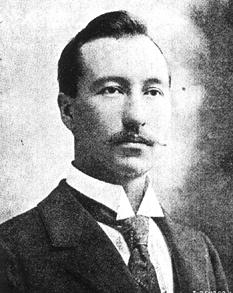
Barnum Brown (February 12, 1873 – February 5, 1963), commonly nicknamed "Mr. Bones," was a prominent American field paleontologist who worked for the American Museum of Natural History. He became widely known in the late 19th and early 20th centuries for locating, excavating, and shipping large vertebrate fossils from the western United States and elsewhere. His fieldwork and collecting techniques helped expand museum collections and public interest in prehistoric life.
Image gallery
4 Images

Field methods and working life
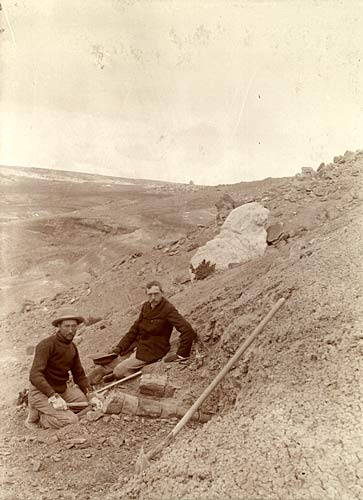
Brown made a career of long seasons in remote outcrops, coordinating crews, arranging transportation, and negotiating with landowners and local helpers to recover large skeletal material. He frequently traveled to classic fossil-bearing regions of the American West, including expeditions in Wyoming and to formations in the northern Great Plains. His practical field techniques — from site reconnaissance to large-scale excavation and stabilizing fragile bones for transit — were influential in shaping museum collecting practices of his era.
Major discoveries
Brown is best remembered for discovering and excavating the first documented remains of Tyrannosaurus rex in 1902 while working in the Hell Creek Formation of Southeastern Montana. Those specimens were central to the early scientific description and naming of the species by his museum colleagues. Earlier in his career he worked in the American West during the late Victorian era of paleontology, a time when museums were actively sponsoring field collectors to assemble public displays and research collections.
Relationship with institutions and colleagues
Brown acted as the principal field agent for museum leaders such as Henry Fairfield Osborn, sending assembled crates, field notes, and photographs back to the museum for preparation and study. The specimens he recovered contributed substantially to the holdings of the AMNH and to the museum’s ability to mount large displays that reached wide public audiences. His practice combined scientific collecting with the practical demands of transport and fundraising that characterized many institutional expeditions of the time.
Legacy and significance
Brown’s impact was not limited to one discovery. Over a long career he located numerous important fossils, trained or employed many field workers, and helped create public fascination with dinosaurs. His nickname "Mr. Bones" captured both his hands‑on role and his public persona as a tireless fossil hunter. Collections he helped assemble remain important for research, teaching, and exhibition.
Notable facts
- He discovered the first well-documented T. rex material in 1902 in the Hell Creek Formation.
- Brown worked extensively for the American Museum of Natural History and collaborated with museum leaders such as Henry Fairfield Osborn.
- His fieldwork included major efforts in Wyoming and Southeastern Montana, including the Hell Creek Formation.
- He is a representative figure of the era of museum-sponsored field collecting that followed the late Victorian era traditions of natural history exploration.
Brown continued to be associated with paleontology into his later years and died in 1963. His career illustrates the practical, adventurous, and collaborative nature of early modern vertebrate paleontology and the ways in which field collectors and museums worked together to build the scientific and public foundations for the study of dinosaurs and other ancient life.
Questions and answers
Q: Who was Barnum Brown?
A: Barnum Brown was an American field paleontologist who is often called Mr. Bones.
Q: What is Barnum Brown famous for?
A: Barnum Brown is famous for discovering the first documented remains of Tyrannosaurus rex.
Q: What museum sponsored Barnum Brown?
A: Barnum Brown was sponsored by the American Museum of Natural History (AMNH).
Q: Who was Barnum Brown's man in the field?
A: Barnum Brown's man in the field was Henry Fairfield Osborn.
Q: How did Barnum Brown collect fossils?
A: Barnum Brown collected fossils by bargaining and trading for them, and sometimes by sending money to have them shipped to the AMNH.
Q: Where did Barnum Brown lead an expedition to in 1902?
A: Barnum Brown led an expedition to the Hell Creek Formation of Southeastern Montana.
Q: What did Barnum Brown discover in 1902?
A: In 1902, Barnum Brown discovered and excavated the first documented remains of Tyrannosaurus rex.
Related articles
Author
AlegsaOnline.com Barnum Brown: American Field Paleontologist and Discoverer of Tyrannosaurus rex Leandro Alegsa
URL: https://en.alegsaonline.com/art/114856
Sources
- palaeoblog.blogspot.com : "PALAEOBLOG"
- strangescience.net : "Rocky Road: Barnum Brown"
- amnh.org : "Archived copy"