
Barbara McClintock — cytogeneticist and discoverer of transposable elements
Profile of Barbara McClintock, American cytogeneticist who mapped maize chromosomes and discovered mobile genetic elements; her work reshaped genetics and earned the 1983 Nobel Prize.
Overview
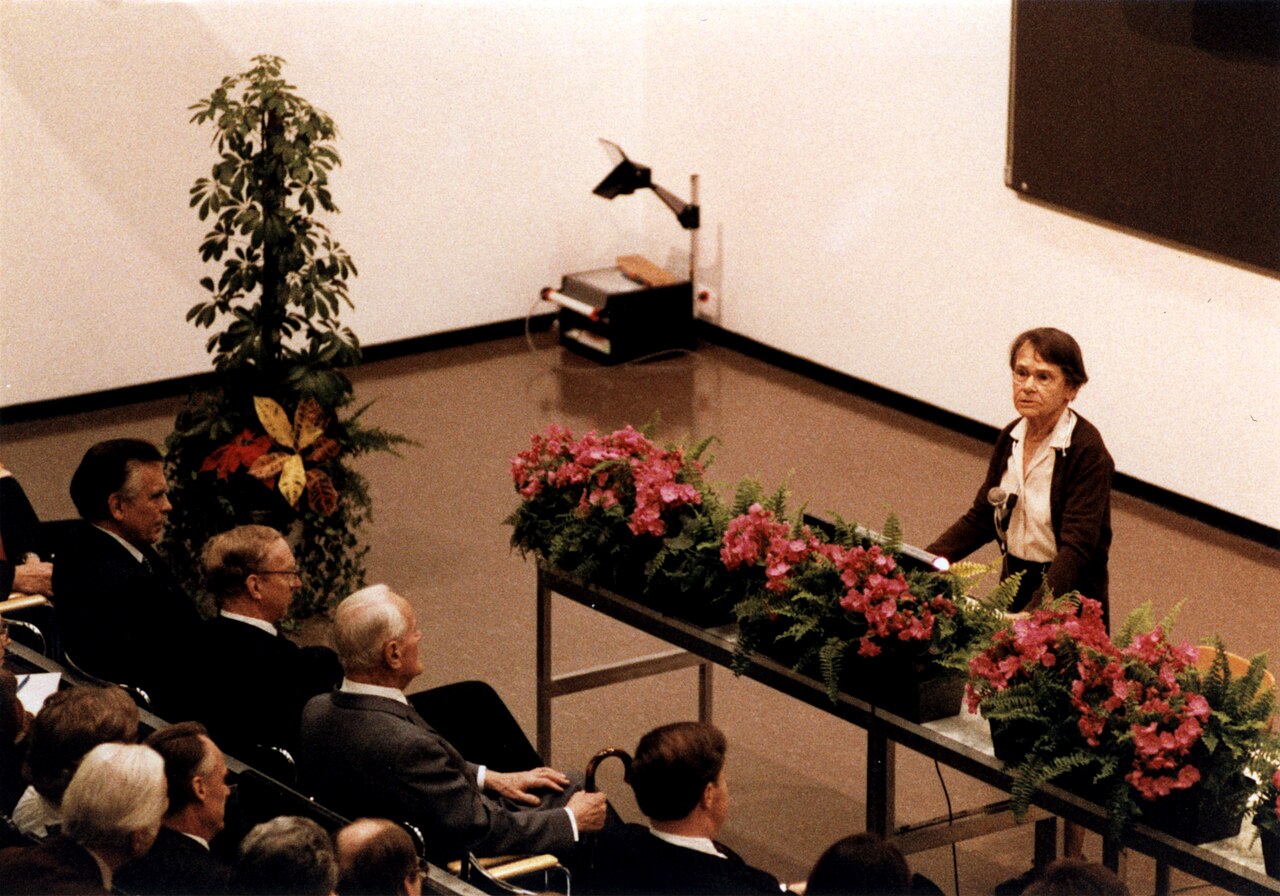
Barbara McClintock (1902–1992) was an American scientist whose careful studies of maize chromosomes changed how biologists understand heredity and genome plasticity. Trained as a botanist, she became a leading biologist and a distinguished cytogeneticist. Working largely with maize (Zea mays), she combined cytology and genetics to reveal how the physical behavior of chromosomes corresponds to inherited traits.
Image gallery
9 Images





Major contributions and discoveries
McClintock's laboratory work in the 1920s through the 1950s produced several foundational insights. She used microscopic observation of chromosomes to document meiotic processes and crossing-over, providing evidence for genetic recombination. Her techniques led to the first practical genetic map of maize chromosomes and clarified the roles of specialized chromosomal regions such as the telomere and centromere in maintaining genome stability.
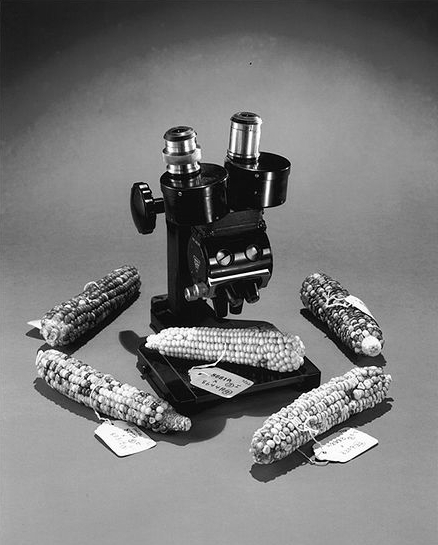
Her most famous discovery, made in the 1940s and 1950s, was the phenomenon of transposition—mobile DNA elements that can change position within the genome. Using mutant-pigmentation patterns in corn kernels, she showed how genes can be turned off and on by nearby movable elements, a mechanism that governs gene expression and can produce observable variation in successive plant generations.
Methods and approach
McClintock favored direct cytological observation and careful breeding experiments. By correlating visible chromosome structures with inherited traits, she demonstrated cause-and-effect relationships that were difficult to infer from genetics alone. Her persistence in detailed single-plant studies of different maize races and varieties from regions such as South America helped her detect patterns missed by broader surveys.
Career, recognition, and setbacks
After earning a doctorate in botany from Cornell University, McClintock spent decades focused on maize cytogenetics. She was elected to the National Academy of Sciences in the 1940s and received several fellowships and honors during her career. Despite strong experimental evidence, her ideas about movable genetic elements were initially met with skepticism; she curtailed publication of some results in the 1950s because the field was slow to accept them. Later molecular work vindicated her conclusions and integrated her insights into mainstream genetics.
Legacy and importance
When the broader scientific community elucidated the molecular basis of mobile elements in the 1960s and 1970s, McClintock's earlier observations were recognized as pioneering. In 1983 she was awarded the Nobel Prize in Physiology or Medicine for the discovery of transposable elements. This prize brought overdue attention to her career and to the concept that genomes are dynamic rather than fixed. She remains widely cited in discussions of gene regulation, genome evolution, and the relationship between chromosomal structure and function.
Selected facts and further reading
- PhD and early education — doctorate in botany and early maize studies.
- Cytogenetic techniques — combining staining, microscopy and breeding experiments.
- Chromosomal mapping — production of genetic maps for maize.
- Telomeres and centromeres — clarified their roles in chromosome behavior.
- Discovery of transposition — explanation of mutable loci in corn.
- Recognition — election to prestigious societies and later honors.
- Impact on gene regulation — influence on understanding of how genes are controlled.
- Legacy studies — subsequent molecular work confirming mobile elements.
For those seeking more, these anchors provide pathways to biographies, original papers, and modern interpretations of her work: biography, primary research summaries, maize research, chromosome studies, meiosis and recombination, genetic mapping, telomere research, centromere research, race surveys, education, methods, mapping history, chromosome regions, mutable loci, honors, gene regulation, later confirmations.
Note: This article summarizes broadly accepted aspects of McClintock's life and work and points to avenues for deeper study in genetics and the history of science.
Questions and answers
Q: When was Barbara McClintock born?
A: Barbara McClintock was born on June 16, 1902.
Q: What university did she attend?
A: She attended Cornell University and received her PhD in botany from there in 1927.
Q: What type of research did she focus on for the rest of her career?
A: For the rest of her career, she focused on maize cytogenetics.
Q: What did McClintock discover during the 1940s and 1950s?
A: During the 1940s and 1950s, McClintock discovered transposition which showed how genes are responsible for turning physical characteristics on or off.
Q: When was she elected a member of the National Academy of Sciences?
A: She was elected a member of the National Academy of Sciences in 1944.
Q: Why did McClintock stop publishing her data in 1953?
A: She stopped publishing her data in 1953 due to skepticism about her research and its implications.
Q: What award did she receive for her contributions to genetics research?
A; She received the 1983 Nobel Prize in Physiology or Medicine for her contributions to genetics research.
Related articles
Author
AlegsaOnline.com Barbara McClintock — cytogeneticist and discoverer of transposable elements Leandro Alegsa
URL: https://en.alegsaonline.com/art/114833
Sources
- nobel.se : Nobel Foundation biography
- profiles.nlm.nih.gov : .pdf
- nas.edu : "Barbara McClintock"
- nobelprize.org : "Facts on the Nobel Prize in Physiology or Medicine"
- wikidata.orgQ199654.html : wikidata.orgq199654.html
- catalogo.bne.es : XX5281979
- catalogue.bnf.fr : cb12278203r
- data.bnf.fr : (data)
- d-nb.info : 119046660
- isni.org : 0000 0000 8093 783X
- id.loc.gov : n82153492
- id.ndl.go.jp : 00621106
- aleph.nkp.cz : xx0223112
- uli.nli.org.il : 000090922
- data.bibliotheken.nl : 072492767