
Auguste Rodin: formative life, style, and legacy of a modern sculptor
Comprehensive overview of Auguste Rodin (1840–1917): life, techniques, principal works such as The Thinker and The Gates of Hell, reception in his lifetime, and his lasting influence on modern sculpture.
Overview
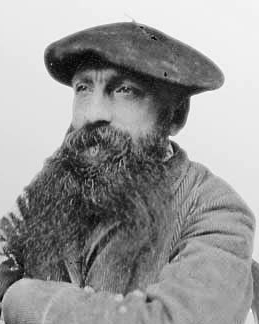
François-Auguste-René Rodin (12 November 1840 – 17 November 1917) was a French sculptor whose work helped define the transition to modern sculpture. Born in Paris, he trained in the traditional ateliers of the 19th century but developed a personal approach that emphasized expressive modelling of the human figure over academic idealization. Rodin did not set out to overturn the past in theory; rather, his experiments with form, surface and emotion gradually challenged prevailing tastes and transformed public expectations of sculpture.
Image gallery
10 Images


Style and techniques
Rodin is noted for his ability to model complex, textured surfaces in mediums such as clay and plaster, which were later cast in bronze or carved in stone. Rather than smoothing away toolmarks, he sometimes left them visible to convey energy and movement. This tactile, often rugged surface treatment heightened the impression of lived flesh and individual character, aligning Rodin with a realistic concern for physical truth while avoiding mere anatomical exactness. Critics and supporters alike described his approach as a new realism or expressive naturalism; he gave the body psychological presence more than did the purely allegorical traditions of the past (mythology, allegory).
Major works
Some of Rodin's sculptures became emblematic of his art and of modern sculpture more broadly. "The Thinker," originally conceived as part of a larger portal project, is widely recognized for its concentrated, inward pose and textured modelling; it is often cited as Rodin's signature composition and is referred to directly by the title The Thinker. "The Kiss" presents a more sensual, intimate side of his sculpture, while "The Gates of Hell" served as a long-term project containing many independent studies. His portrait sculpture and public memorials similarly emphasize character over idealized likeness.
- The Thinker: an emblem of intellectual intensity and one of Rodin's most reproduced figures.
- The Kiss: a study of passion and form with a polished surface in places and visible modelling in others.
- The Gates of Hell: a monumental ensemble from which many individual figures were extracted and finished as independent works.
- Monument to Balzac: commissioned for the literary society but initially rejected; later recast and reassessed as a pivotal statement in modern sculpture.
Career, commissions, and controversies
Rodin's career included both official commissions and private patrons. He was turned away from France's premier art school early in his life and met skepticism from critics when he presented innovations that broke with decorative or formulaic sculpture. A famous example is his statue of Honoré de Balzac, made for the Société des Gens de Lettres: its unconventional treatment prompted Rodin to return the commission and keep the model in his studio, where he continued to refine it. The bronze casting of Monument to Balzac took place after his lifetime but later gained recognition as a masterpiece. His international reputation grew after exhibitions such as the 1900 World's Fair, and collectors including the Japanese patron Matsukata Kojiro supported castings of major works like The Gates of Hell.
Reception and legacy
During his lifetime Rodin won increasing official and public acceptance; by the turn of the 20th century he was considered France's leading sculptor and enjoyed widespread acclaim and significant commissions. Nevertheless, some contemporaries continued to criticize his rough surfaces and fragmentary compositions. After his death in 1917 his reputation experienced fluctuations—periods of intense admiration were followed by relative neglect as tastes shifted—but his influence on modern art persisted. Later generations of sculptors built on his emphasis on expressive modelling, individual psychology, and the idea that fragments or partial figures could convey as much meaning as a complete, polished monument. Museums and collections worldwide now house major Rodin casts and studies, enabling renewed study of his process and impact on the development of twentieth-century sculpture.
Notable facts
Rodin maintained a lifelong partnership with Rose Beuret and married her only in the final year of their lives. He worked in multiple media but is best known through his bronze casts and original clay models. Several of his works, once controversial, now rank among the most recognizable images of modern art. For further reading and collections, refer to major museum catalogues and archival resources that document Rodin's practice and the casts made by patrons and foundries over time. Some online and print resources provide detailed catalogues of his works and their provenance; for institutional information see curated museum entries and scholarly studies (biographical resources, Parisian archives, studies of realism, Balzac references, sculptor, The Thinker).
Questions and answers
Q: Who was Auguste Rodin?
A: Auguste Rodin was a French sculptor born in Paris in 1840.
Q: What are some of his most famous works?
A: Some of his most famous works are 'The Thinker' and 'The Kiss'.
Q: How did Rodin approach his work?
A: Rodin took a craftsman-like approach to his work, but he was rejected three times from the foremost school of art in Paris. He had a unique ability to model complex surfaces in clay.
Q: How were Rodin's sculptures received during his lifetime?
A: Many of Rodin's sculptures were roundly criticized during his lifetime as they clashed with traditional sculpture themes that were decorative, formulaic, or highly thematic.
Q: What happened after the criticism of one of his statues?
A: After the criticism of one of his statues, Monument to Balzac, rather than try to convince skeptics of its merit, Rodin repaid the commission and moved it to his own garden. He then refused any further public commissions.
Q: When did people start recognizing him as an artist?
A: By 1900, he had become world-renowned and private clients sought out his work after an exhibit at the World's Fair that year.
Q: Who did he marry at the end of their lives?
A: At the end of their lives, he married Rose Beuret who had been a lifelong companion.
Related articles
Author
AlegsaOnline.com Auguste Rodin: formative life, style, and legacy of a modern sculptor Leandro Alegsa
URL: https://en.alegsaonline.com/art/114712
Sources
- books.google.com : The Floating World, p. 244.