
Anton Webern
Overview of Anton Webern (1883–1945), Austrian composer of the Second Viennese School, known for concise twelve‑tone works, transparent textures, and major influence on mid‑20th century serialism.
Overview
Anton Webern (born 3 December 1883 in Vienna; died 15 September 1945 in Mittersill) was an Austrian composer and conductor whose compact, rigorously constructed music became a touchstone of 20th‑century modernism. As one of Arnold Schoenberg's most important pupils, Webern helped to consolidate the musical language known as the Second Viennese School. His pieces are widely admired for their economy, attention to timbre and dynamics, and careful application of the twelve‑tone method.
Image gallery
10 Images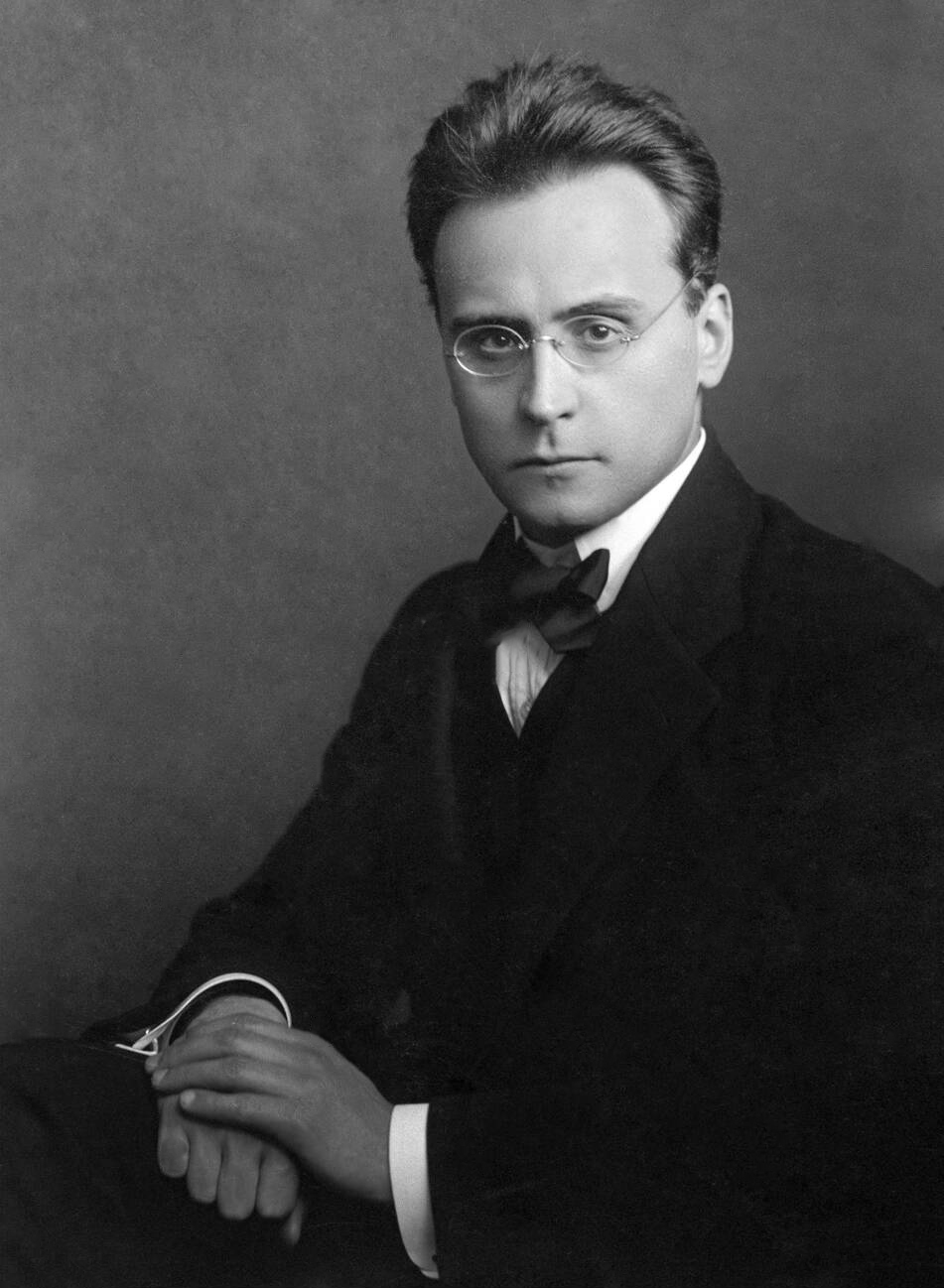





Training and career
Webern studied composition under Arnold Schoenberg and developed alongside contemporaries such as Alban Berg. His early works show an evolution from late Romantic influences toward a more abstract, tightly organized idiom. Although he wrote in several genres — songs, chamber music, and orchestral pieces — most of his scores are concise, often lasting only a few minutes. Webern's professional life mixed composition with conducting and other musical duties, but his reputation rests chiefly on his compositional output.
Musical characteristics
Webern is frequently associated with the twelve‑tone technique, which he adopted and often applied with extreme strictness. His music is characterized by extreme concentration: short durations, sparse textures, isolated gestures, and frequent use of silence. Timbre and register are treated as structural elements, producing what listeners describe as pointillistic or crystalline soundscapes. Dynamics and articulation are precisely notated, and melodic lines are often fragmented into small, interlocking cells.
Influence and reception
During and after World War II Webern's music attracted intense interest from younger composers who sought rigorous methods for organizing pitch, rhythm and instrumentation. Figures associated with the post‑war avant garde and serialism cited Webern as an important precursor. His work was suppressed in the 1930s and early 1940s by the cultural policies of National Socialism but experienced renewed attention in the 1950s as scholars and performers reintroduced his scores to a wider audience.
Works, performance and notable facts
Webern's catalogue includes orchestral miniatures, chamber pieces, and many Lieder (songs). Performers often emphasize clarity of line, extreme dynamic contrasts and precise ensemble balance to reveal the internal architecture of his brief scores. Notable aspects of his legacy include the importance placed on color and registration, the use of very short forms, and his influence on serial composers such as Karlheinz Stockhausen and Pierre Boulez. Webern's death in 1945 was the result of an accidental shooting by an occupying soldier; this tragic event curtailed a career whose influence kept growing after his passing.
Further reading and resources
- General biography and overview
- Detailed chronology and life events
- Catalogue of works and recordings
- Discussion of the Second Viennese School
- Resources on Schoenberg and his pupils
- Analyses of Webern's compositional techniques
- Articles on Webern's reception in the 20th century
- Materials on serialism and post‑war music
- Influence on later composers
- Discographies and recommended recordings
Note: This article provides a concise synthesis of well‑established facts about Webern's life and music. For score study, critical editions and primary documents consult specialist collections and scholarly editions linked above.
Questions and answers
Q: Who was Anton Webern?
A: Anton Webern was an Austrian composer born in Vienna on December 3rd, 1883.
Q: Who were Webern's famous pupils?
A: Webern's famous pupils were Alban Berg and Arnold Schoenberg.
Q: What style of composition is often referred to as the Second Viennese School and who invented it?
A: The Second Viennese School is often referred to as the style of composition that Arnold Schoenberg, Webern's teacher, invented.
Q: How did Webern use the twelve tone system in his music?
A: Webern used the rules of the twelve tone system very strictly in his music.
Q: Who were some of the composers of the mid-20th century who were influenced by Webern's compositions?
A: Karlheinz Stockhausen and Pierre Boulez were among the composers of the mid-20th century who were interested in serialism and influenced by Webern's compositions.
Q: How would you describe Webern's compositions in terms of length?
A: Most of Webern's compositions are very short.
Q: When did Anton Webern die and where did he pass away?
A: Anton Webern passed away on September 15th, 1945, in Mitterill.
Related articles
Author
AlegsaOnline.com Anton Webern Leandro Alegsa
URL: https://en.alegsaonline.com/art/114479