
Anthony Eden: British statesman, foreign secretary and prime minister
Profile of Robert Anthony Eden (1897–1977): his education, diplomatic career, two terms as Foreign Secretary, premiership (1955–57), the Suez Crisis, health issues and historical reputation.
Overview
Robert Anthony Eden (12 June 1897 – 14 January 1977) was a leading British Conservative politician of the mid‑20th century who served as Foreign Secretary across three periods and as Prime Minister of the United Kingdom from 1955 to 1957. Widely regarded in his earlier career as an able diplomat and closet statesman, his premiership is most often remembered for the Suez Crisis of 1956, which overshadowed much of his public standing.
Image gallery
10 Images




Early life and education
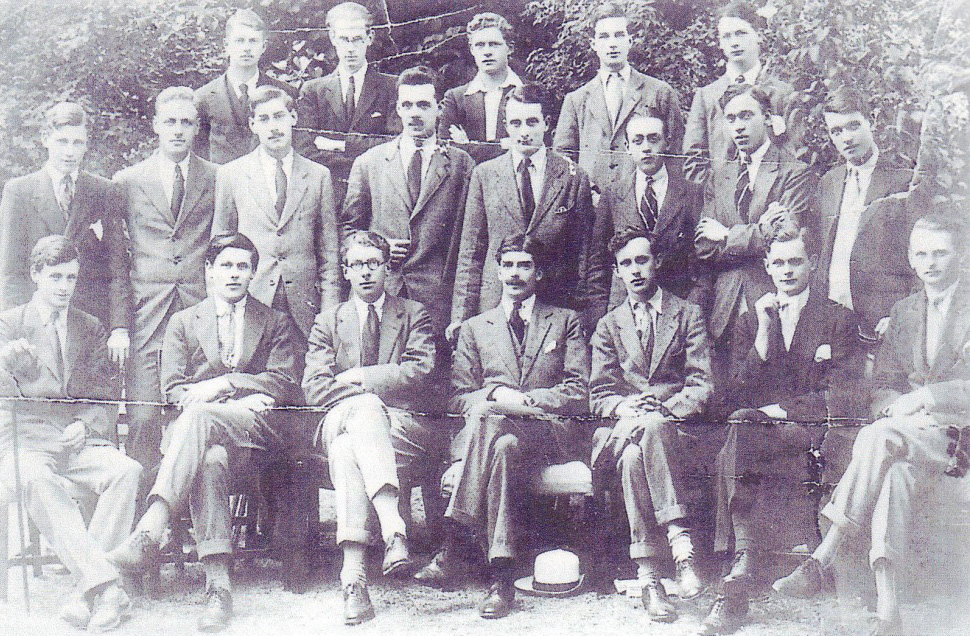
Eden came from a family with a tradition of public service and was educated at Eton College and Christ Church, Oxford. His formative years prepared him for a career in the Conservative Party where he quickly attracted attention for his fluency in foreign affairs and his polished public manner. He entered Parliament and rose through ministerial ranks in the interwar years.
Political career and offices
Eden first became a senior figure in foreign policy when he was appointed Foreign Secretary in 1935. He resigned in 1938 in public protest against the appeasement policies of Neville Chamberlain and the concessions to Adolf Hitler associated with the Munich settlement — a stance that defined his reputation as critical of capitulation to aggression.
- He returned as Churchill's Foreign Secretary during World War II, helping to manage alliances and wartime diplomacy.
- He served again as Foreign Secretary after the Conservatives returned to power in 1951 and became Prime Minister upon Churchill's retirement in 1955.
The Suez Crisis and resignation
The defining episode of Eden's premiership was the 1956 crisis following the nationalisation of the Suez Canal by Egypt's leader. Britain coordinated a military response with France and Israel in an attempt to regain control and to remove the Egyptian command. The operation met strong international opposition, including diplomatic and financial pressure from the United States, and a United Nations response that made continued combat untenable. The political fallout from Suez, together with persistent health problems, led Eden to step down as Prime Minister in 1957 and to be succeeded by Harold Macmillan.
Health, personal life and later years
Eden's later political effectiveness was harmed by medical complications following an operation to remove gallstones in 1953; the surgery and its aftermath left him in frequent pain and dependent on sedatives and painkillers. Accounts of his growing physical fragility are often cited when historians examine the challenges he faced during Suez. He died in 1977 of liver cancer. His wife, Clarissa Eden, born in 1920 and related to Winston Churchill, survived him and later wrote and spoke about their life together.
Assessment and legacy
Eden's reputation remains mixed. For many years he was celebrated as an able diplomat who could represent Britain effectively on the world stage; his protest over the policy of appeasement in 1938 is often cited as a principled stand. Yet Suez is widely treated as a major foreign policy failure that marked the end of Britain’s role as a unilateral global power. Biographers and historians continue to debate how much his health difficulties and the international context constrained his options. Some later works have sought to place his achievements and failures in a more balanced context.
Further reading and resources
For more detailed material about Eden's life and career see a conservative outline or archival profiles: prime ministerial summary, a general biography entry at appeasement context, wartime records at medical and military files, and documentaries or essays accessible via historical collections and Churchill era studies. Additional analyses can be found in specialized studies at European diplomacy, memoirs and modern reassessments at foreign office histories, and comparative political accounts at academic resources and contemporary commentaries. For archival photographs and speeches look for curated repositories noted at wartime archives and private papers at college collections.
Notable facts: he once resigned in protest over government policy, he served three times as foreign secretary, and his premiership is closely associated with the Suez operation and its international consequences. These elements continue to shape public and scholarly evaluations of his life and career.
Questions and answers
Q: Who was Robert Anthony Eden?
A: Robert Anthony Eden was the Prime Minister of the United Kingdom. He was also known as Sir Anthony Eden.
Q: Where did he receive his education?
A: Robert Anthony Eden received his education at Eton College and Christ Church, Oxford.
Q: What is he best remembered for?
A: Robert Anthony Eden is best remembered for being appointed Foreign Secretary in 1935 by Prime Minister Neville Chamberlain and resigning in 1938 in protest at Chamberlain's appeasement of Adolf Hitler. He is also remembered for being Winston Churchill's Foreign Secretary during World War II, and again in 1951-1955.
Q: What happened to him in 1953?
A: In 1953, Robert Anthony Eden had an operation to remove gallstones which went wrong and ruined his health.
Q: When did he become Prime Minister?
A: Robert Anthony Eden became Prime Minister when Winston Churchill retired in 1955.
Q: When did Harold Macmillan replace him as Prime Minister?
A: Harold Macmillan replaced Robert Anthony Eden as Prime Minister in 1957.
Q: How has his life been described?
A: His life has been described as having two halves; the first half, from the 1930s to wartime, being brilliant while he is often ranked among the least successful British Prime Ministers of the 20th century after the Suez Crisis of 1956 led up to his resignation as Prime Minister.
Related articles
Author
AlegsaOnline.com Anthony Eden: British statesman, foreign secretary and prime minister Leandro Alegsa
URL: https://en.alegsaonline.com/art/114370
Sources
- mori.com : Rating British Prime Ministers
- news.bbc.co.uk : Churchill 'greatest PM of 20th Century'