
Anne Boleyn: Queen consort, mother of Elizabeth I, and catalyst of religious change
Anne Boleyn (c.1501/1507–1536) was Henry VIII’s second wife, mother of Elizabeth I, and a central figure in the events that led to England’s break with Rome. She remains a contested and influential historical figure.
Overview
Anne Boleyn (born c.1501 or c.1507; executed 19 May 1536) was queen consort of England from 1533 to 1536 as the second wife of King Henry VIII and the mother of Elizabeth I. Her relationship with Henry helped precipitate the king’s break with the Roman Catholic Church and the creation of a national church under royal supremacy. Her rapid rise, fall, trial, and execution have made her one of the most studied figures of the Tudor period. For introductory accounts, see further reading.
Image gallery
10 Images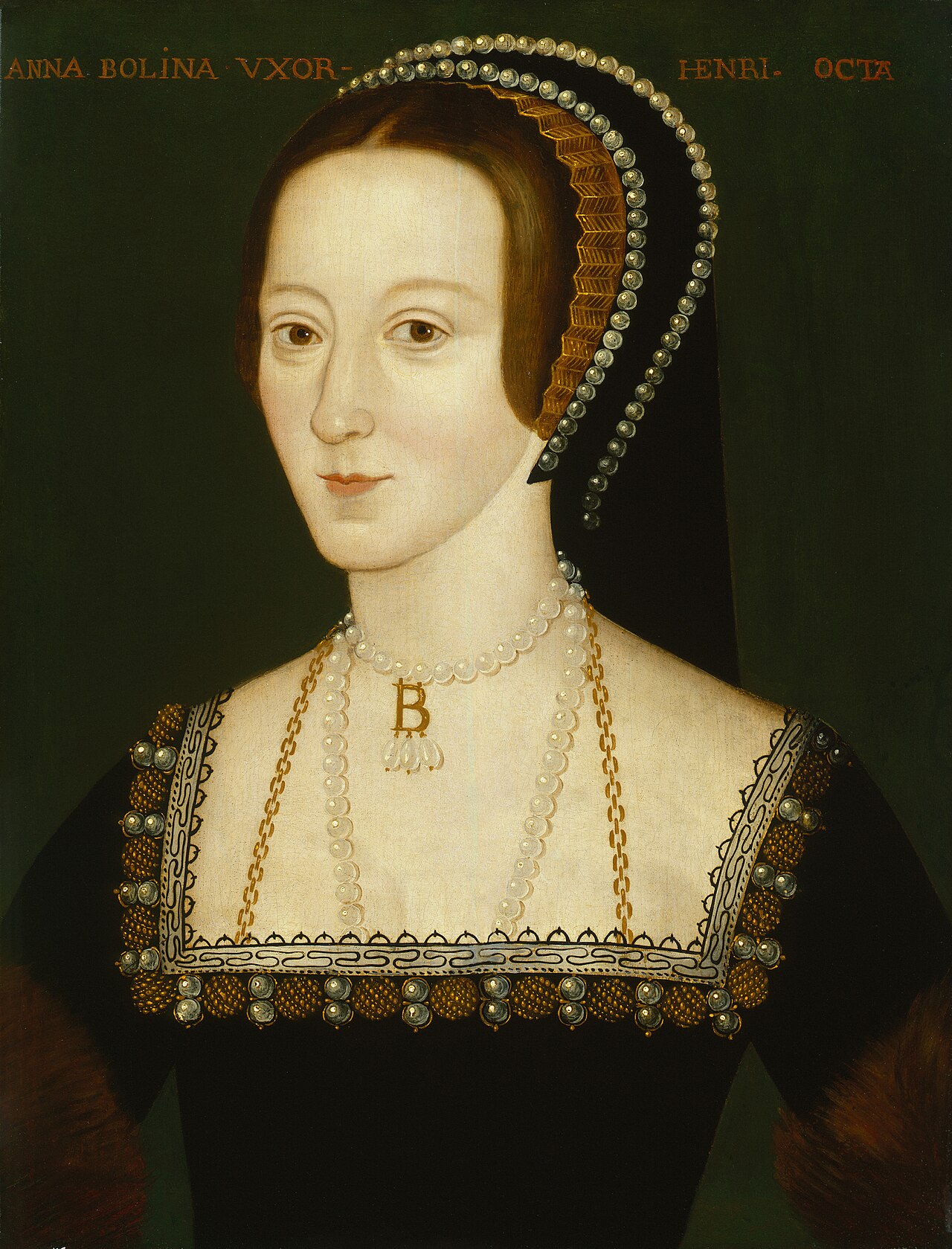


Early life and education
Anne was born into the Boleyn family, a gentry household with growing influence at court. She spent part of her youth in the Netherlands and later at the French court, where she served noble households and acquired a continental education in languages, courtly manners, and aspects of Renaissance culture. These experiences shaped her behavior and reputation at the English court. Background on the family and their role in Tudor patronage is available from family and court sources.
Rise to prominence and queenship
After returning to England she became a prominent figure at Henry VIII’s court. Henry sought an annulment of his first marriage, and after a prolonged political and ecclesiastical struggle the marriage was set aside. Anne and Henry married in 1533, she was crowned that year, and later in 1533 she gave birth to the future queen Elizabeth. Before marriage Henry had created her Marchioness of Pembroke, a step that signalled her unusual status. Contemporary accounts and ceremonial records offer details of the marriage and coronation; see accounts of the marriage and coronation and complementary material at related studies.
Religious and political influence
Although Anne did not hold official governmental office, she exercised influence as a patron and ally of reform-minded clerics and intellectuals. Historians debate how far she shaped theological policy, but her presence is commonly linked to appointments and a climate sympathetic to ecclesiastical reform. Her position helped accelerate controversies that led to the severing of ties with Rome and the establishment of royal supremacy over the English church. For perspectives on her influence in religious change see religious studies.
Downfall, trial, and execution
In 1536 Anne was arrested and accused of adultery, incest, and high treason. Several men, including her brother George Boleyn, were tried and executed alongside her. The trials were brief and have long been regarded by many historians as politically motivated; modern scholarship often treats key charges as unproven or fabricated. She was condemned and executed by beheading on 19 May 1536 at the Tower of London. Scholars investigating the legal proceedings and the political context include work collected at trial records and historical studies.
Legacy and historical significance
Anne Boleyn’s legacy is complex. She was the mother of Elizabeth I, whose reign shaped English history for decades. Anne is also remembered as a symbol of courtly ambition and the human consequences of dynastic struggle. Interpretations of her character and motives vary: some historians emphasize her political acumen and religious sympathies, others stress the precariousness and factionalism of Tudor politics. Her life has inspired countless biographies, plays, novels, and films, and she remains a focal point in discussions of gender, power, and religion in early modern England.
Notable facts
- Birth date uncertain: commonly cited as c.1501 or c.1507.
- Queen consort from 1533 until her execution in 1536; mother of Elizabeth I (born 1533).
- Her marriage to Henry VIII and the search for an annulment were central to England’s break with Rome.
- Accused of adultery, incest, and treason; many historians consider the accusations politically driven.
Anne Boleyn remains a prominent subject for research and public interest. Her life illustrates the intertwining of personal relationships, dynastic ambition, and major institutional change in Tudor England. For wider context and primary materials consult the sources and collections referenced above.
Questions and answers
Q: Who was Anne Boleyn?
A: Anne Boleyn was the second wife of King Henry VIII of England and queen consort from 1533 until 1536.
Q: Who was her daughter?
A: Her daughter was Elizabeth I of England.
Q: What was her influence as a queen consort?
A: Anne Boleyn has been called "the most influential and important queen consort England has ever had."
Q: Why did Henry VIII divorce Catherine of Aragon?
A: It was because of Anne Boleyn that Henry VIII divorced Catherine of Aragon, and became independent from the Roman Catholic Church.
Q: Why was Anne Boleyn executed?
A: Anne Boleyn was falsely accused of adultery, incest and high treason, which led to her execution.
Q: What year did Anne Boleyn die?
A: Anne Boleyn died in 1536.
Q: How is Anne Boleyn remembered in history?
A: Anne Boleyn is remembered as an influential figure who played a significant role in England's break from the Roman Catholic Church, and as a victim of false accusations and execution.
Related articles
Author
AlegsaOnline.com Anne Boleyn: Queen consort, mother of Elizabeth I, and catalyst of religious change Leandro Alegsa
URL: https://en.alegsaonline.com/art/114301
Sources
- wikidata.orgQ80823.html : wikidata.orgq80823.html
- authority.bibsys.no : 90098450
- bncatalogo.cl : 000697432
- catalogue.bnf.fr : cb13977076h
- data.bnf.fr : (data)
- biografischportaal.nl : 58481509
- cantic.bnc.cat : a1125399x
- d-nb.info : 118649442
- isni.org : 0000 0000 9637 1375
- id.loc.gov : n79063685
- musicbrainz.org : ffb7d2d7-d687-47f0-9fa3-859fe654b7a1
- id.ndl.go.jp : 00620267
- aleph.nkp.cz : jn20000700056
- nla.gov.au : 49513873
- uli.nli.org.il : 000010556