
Anna Freud: Pioneer of Child Psychoanalysis and Ego Psychology
A concise overview of Anna Freud (1895–1982), her life, major contributions to child psychoanalysis and ego psychology, methods, institutions she led, and her lasting influence on mental health practice.
Anna Freud (3 December 1895 – 9 October 1982) was an Austrian-born psychoanalyst best known for adapting and extending her father Sigmund Freud's ideas to the study and treatment of children and to the functioning of the ego. Born in Vienna, she trained within the psychoanalytic movement and developed a systematic approach to childhood development, clinical technique, and the concept of defence mechanisms.
Image gallery
6 Images
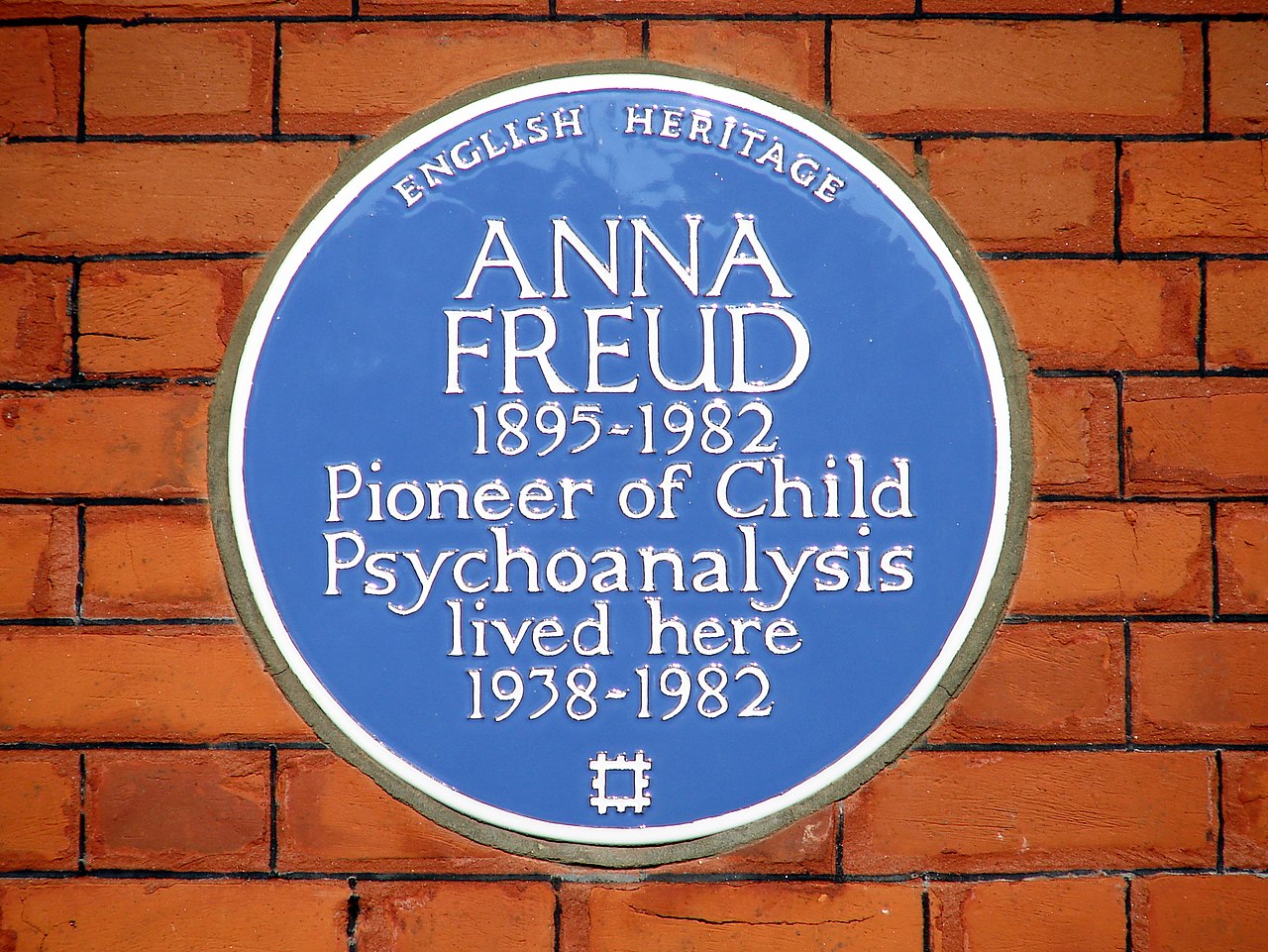


Contributions and concepts
Anna Freud emphasized the active role of the ego in mediating between instinctual drives, external reality, and moral demands. She brought attention to how children cope with anxiety and conflict and introduced a clearer taxonomy of defensive operations used by the ego. Her work helped shift some clinical focus from purely intrapsychic drives to adaptive and developmental processes.
- Defence mechanisms: detailed descriptions of repression, projection, displacement, regression and others as normal and pathological processes.
- Child analysis: tailored techniques for observing play and behaviour rather than relying exclusively on verbal free association.
- Developmental perspective: emphasis on stages of maturity and on how the environment and caregiving shape adaptation.
Methods and practice
Unlike many adult analytic settings, Anna Freud's child work relied heavily on careful observation, parent interviews, and play as a medium of communication. She advanced practical techniques for working with disturbed children in schools, hospitals and special nurseries, stressing the importance of supporting the child's ego functions and strengthening coping skills. Her clinical writing aimed to make psychoanalytic ideas usable in therapeutic and educational contexts.
Institutions, collaboration and history
Born into the Freud family, she was shaped by the Vienna psychoanalytic circle and later continued her work in English-speaking professional communities after relocating from Vienna. She collaborated and sometimes contested views with contemporaries such as Melanie Klein, contributing to debates about technique and developmental theory. She also maintained links to her father's legacy; see Sigmund Freud and the broader tradition of psychoanalysis.
Influence, distinctions and legacy
Anna Freud's emphasis on the ego and on observable behavior in children helped to professionalize child psychotherapy and to integrate psychoanalytic ideas into child welfare, education and forensic settings. Her approach differs from Kleinian child analysis in technique and developmental emphasis, a distinction often explored in histories of the British psychoanalytic movement. Her work remains influential in psychotherapy training, in clinical descriptions of defence mechanisms, and in programmes that support children's emotional survival in adverse circumstances.
For further context on her life and milieu, see materials about Vienna's cultural setting (Vienna) and overviews of the foundations of child psychology. These resources outline how her theoretical refinements and practical methods fit within twentieth-century developments in mental health care.
Questions and answers
Q: Who was Anna Freud?
A: Anna Freud was the sixth and last child of Sigmund Freud and his wife Martha Bernays Freud. She was born in Vienna, and she followed the path of her father by contributing to the field of psychoanalysis.
Q: What did Anna Freud contribute to?
A: Anna Freud contributed to the field of psychoanalysis, particularly in psychoanalytic child psychology.
Q: How did her father describe her work?
A: Her father described her work as giving "a powerful impetus" to child analysis.
Q: What did Anna Freud emphasize in her work?
A: In her work, Anna Freud emphasized the importance of the ego and its ability to be trained socially.
Q: When was Anna Freud born?
A: Anna Freud was born on 3 December 1895.
Q: When did she die?
A: She died on 9 October 1982.
Related articles
Author
AlegsaOnline.com Anna Freud: Pioneer of Child Psychoanalysis and Ego Psychology Leandro Alegsa
URL: https://en.alegsaonline.com/art/114262
Sources
- books.google.com : 276
- wikidata.orgQ78485.html : wikidata.orgq78485.html
- authority.bibsys.no : 90097419
- catalogo.bne.es : XX1087259
- catalogue.bnf.fr : cb119035824
- data.bnf.fr : (data)
- cantic.bnc.cat : a12360405
- d-nb.info : 118535307
- isni.org : 0000 0001 2118 4716
- id.loc.gov : n79056228
- id.ndl.go.jp : 00440155
- aleph.nkp.cz : jn20000700562
- nla.gov.au : 35805966
- uli.nli.org.il : 001786729
- nl.go.kr : KAC201507316