
Angela Davis: activist, scholar, and proponent of prison abolition
Profile of Angela Davis, an American political activist, scholar, and prison abolitionist known for 1960s–70s Black Power involvement, CPUSA membership, a high‑profile trial, and decades of writing and teaching.
Overview
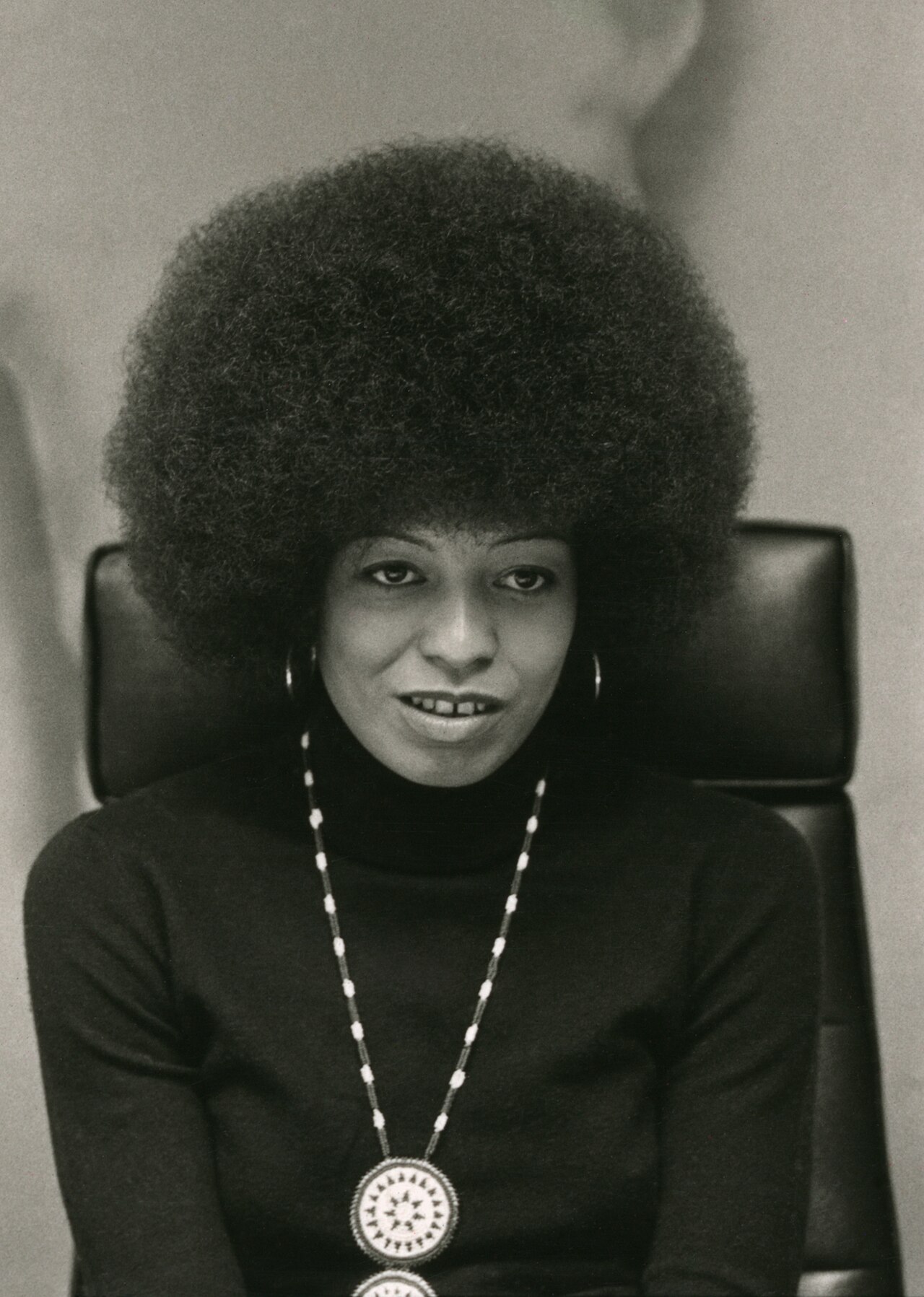
Angela Yvonne Davis (born January 26, 1944) is an American political activist, scholar and author whose work spans civil rights, feminism, critical theory and prison abolition. Born in Birmingham, Alabama, she rose to national and international prominence in the 1960s and 1970s as a visible member of the Communist Party and an advocate associated with the Black Power era. Over the following decades Davis has published books and essays, lectured widely, and held academic posts while remaining active in movements that challenge mass incarceration and racialized state violence.
Image gallery
10 Images




Early life and education
Davis was raised in the segregated South and became politically active as a young woman. She attended Brandeis University for undergraduate study and later enrolled at the University of California, San Diego for graduate work. Pursuing advanced study in philosophy and critical theory, she completed doctoral work in Germany and earned a Doctor of Philosophy degree before returning to the United States to teach as a professor. Her intellectual influences include Marxism, feminism, and continental philosophy, and she has been identified with the broader tradition of African American radical thought.
Activism, affiliation, and the 1970–1972 trial
In the late 1960s Davis became a recognizable public figure because of her membership in the Communist Party and her connections to prison reform and Black liberation organizing. In 1969 she was dismissed from a university post because of her political affiliations; a later court ruling found that firing unlawful and she returned to academic work. In 1970 she was placed under arrest in connection with an armed incident at a courthouse in Marin County, California. Authorities alleged that she had purchased a firearm later used in the episode that resulted in the deaths of several people, including a judge. Davis maintained her innocence throughout the prosecution and was acquitted of the charges in 1972. The episode provoked a highly polarized public response: some political leaders wanted her removed from teaching, while artists and activists rallied on her behalf — a notable example being the song "Sweet Black Angel" dedicated to her by the English rock band The Rolling Stones on their album Exile on Main St.
Academic career and writing
Following the trial, Davis continued to combine scholarship and activism. She has taught at institutions in the University of California system, including a long association that led to her designation as Distinguished Professor Emerita at the University of California, Santa Cruz. Her published work ranges from historical and theoretical analyses of gender and race to polemical essays on punishment and reform. Important titles include studies that address the intersections of race, class and gender, and critiques of how social institutions reproduce inequality. Her writing draws on feminist thought (feminism) and critical theory while addressing concrete policy issues.
Prison abolition, Critical Resistance, and later activism
In the 1990s Davis shifted much of her public focus toward the growth of incarceration in the United States. She helped popularize the phrase "prison–industrial complex" to describe the expanding network of prisons, law enforcement, private contractors and political incentives that, she argues, shape national policy. In 1997 she helped found Critical Resistance, an organization committed to dismantling the prison system and developing community-based alternatives. Davis has characterized the contemporary U.S. carceral system as a social structure that disproportionately targets and confines poor people and communities of color, likening some aspects of its operation to historic systems of bondage and exploitation (slavery). She has argued that the rapid growth of incarceration has economic drivers and that fear of youth of color is often exploited to expand a lucrative industry that has come to figure in the national economy.
Political positions, legacy and distinctions
Davis's political trajectory includes membership in the Communist Party of the United States and later efforts to work across movements. Though she once left the Communist Party in the 1990s, she has continued to engage in public debates and to support candidates and reforms within mainstream politics at times, including endorsements of prominent Democrats such as Barack Obama, Hillary Clinton and Joe Biden in different contexts. Her prominence has produced both praise and controversy: public officials such as Ronald Reagan once urged that she be barred from teaching, while cultural figures and human rights advocates have acknowledged her influence. Beyond formal politics, Davis remains known for her lectures, books and public interventions and for advancing discussions about race, gender and punishment worldwide.
- Notable themes: race, gender, class, incarceration, and international solidarity.
- Major organizational work: founding member of prison abolition initiatives like Critical Resistance.
- Cultural impact: inspired songs, art and international debates about criminal justice reform.
For further reading on Davis's life and work, see academic summaries, biographies and her own collected essays. Her career illustrates how scholarship, public persuasion and grassroots organizing can intersect in debates over justice, policing and equality. Additional context and primary sources can be consulted via institutional archives and public interviews for a deeper account of particular episodes in her life.
Birthplace | Identity | Political activism | Black Power | University of California | Feminism | Brandeis University | UC San Diego | PhD | Professor | Race of judge | Judge | Marin County | Police | Murder | Ronald Reagan | English | The Rolling Stones | Exile on Main St. | Economy | Industry | Slavery | Democrats | Barack Obama | Hillary Clinton | Joe Biden
Questions and answers
Q: Who is Angela Yvonne Davis?
A: Angela Yvonne Davis is an African American political activist and author who first became famous for being a prominent member of the Communist Party of the United States (CPUSA) and was involved in Black Power movements in the 1960s and 1970s.
Q: What kind of research has she done?
A: She has done research in the areas of feminism and critical theory.
Q: How did she become famous?
A: She became famous because she was a prominent member of the Communist Party of the United States (CPUSA) and was involved in Black Power movements in the 1960s and 1970s.
Q: Where did Angela Yvonne Davis grow up?
A: Angela Yvonne Davis grew up in Alabama.
Q: What happened when she joined the Communist Party?
A: When she joined the Communist Party, she was fired from teaching at a university but eventually hired back after it was determined to be an illegal firing.
Q: What did Ronald Reagan say about her?
A: Ronald Reagan said that she should never be allowed to teach at a California university.
Q: What is her current focus as an activist?
A: Her current focus as an activist is on prisons, with her advocating for prison abolitionism through her organization Critical Resistance.
Related articles
Author
AlegsaOnline.com Angela Davis: activist, scholar, and proponent of prison abolition Leandro Alegsa
URL: https://en.alegsaonline.com/art/114197