
Andrew Wiles: Life and Work of the Mathematician Who Proved Fermat's Last Theorem
Biography and overview of Sir Andrew Wiles, his proof of Fermat's Last Theorem, main ideas and methods, career highlights, honours and influence on modern number theory.
Overview: Sir Andrew John Wiles (born 11 April 1953 in Cambridge) is a British mathematician best known for proving Fermat's Last Theorem. Working at the intersection of number theory and algebraic geometry, his solution resolved a problem that had stood for more than three centuries and reshaped parts of modern arithmetic research. For summaries and honours see official profile.
Image gallery
4 Images


Early life and education
Wiles showed an early interest in mathematics and pursued it through university and doctoral study. His training combined classical number theory with newer tools from algebraic geometry and the theory of modular forms. For background on his formative years and influences, consult biographical sources.
Fermat's Last Theorem and the proof
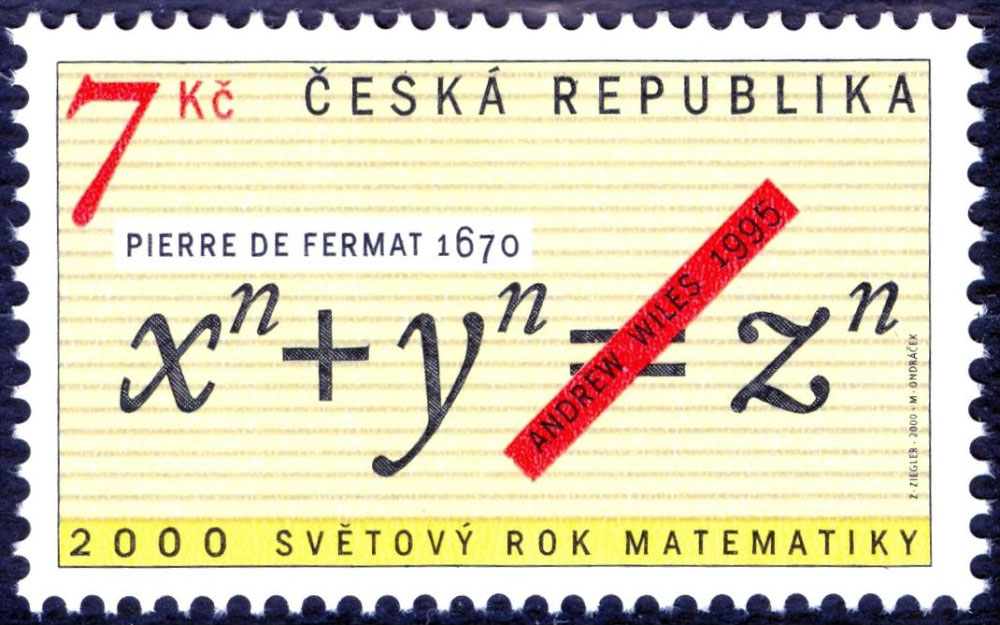
Fermat's Last Theorem states that no three positive integers a, b, c satisfy a^n + b^n = c^n for integer n greater than 2. Wiles approached the problem by connecting it to the modularity conjecture for elliptic curves (a form of the Taniyama–Shimura–Weil conjecture). By proving the modularity for a broad class of elliptic curves (the semistable case), he showed that any hypothetical counterexample would contradict deep results about modular forms, thereby eliminating all possibilities. His initial announcement in 1993 contained a gap that he, with Richard Taylor, closed the following year; the final work appeared in the mid-1990s. For the award citation and context see Abel Prize citation and related accounts.
Methods and mathematical significance
Wiles's proof combined ideas from several advanced areas: Galois representations, deformation theory, arithmetic geometry, and the theory of modular forms. Rather than an elementary manipulation of numbers, the argument demonstrated how abstract structures control Diophantine equations. This approach has had lasting repercussions, leading to new lines of research and techniques now central to modern number theory. For technical overviews, see mathematical summaries and introductions to number theory.
Career, honours and distinctions
Wiles has held academic positions at several leading institutions and is a Royal Society Research Professor at the University of Oxford. His achievements have been recognized widely: he has been elected to national academies, received major awards and honours, and was knighted. Notable recognitions include membership of the United States National Academy of Sciences and major prizes in mathematics. For more information on his honours and memberships see honours list.
Legacy and broader importance
The resolution of Fermat's Last Theorem brought public attention to pure mathematics and illustrated how abstract theories can solve classical problems. Wiles's work also strengthened the connections between different branches of mathematics and inspired further progress on the modularity conjecture and related questions. His proof is often cited as an example of persistence, creativity, and the power of modern mathematical methods.
- Key topics: elliptic curves, modular forms, Galois representations.
- Notable collaborations: Richard Taylor (resolution of the remaining gap).
- Further reading: introductory surveys and historical accounts are available; see official profile and other resources such as award citations.
For deeper study, readers may follow the technical literature on modularity theorems and arithmetic geometry or consult general historical treatments of Fermat's Last Theorem. Additional resources and interviews can be found via institutional pages and curated expositions at biographical sites and specialist summaries at topic pages.
Questions and answers
Q: Who is Sir Andrew Wiles?
A: Sir Andrew Wiles is a British mathematician and a Royal Society Research Professor at Oxford University.
Q: What is his area of expertise?
A: He specializes in number theory.
Q: What is his most famous achievement?
A: His most famous achievement is proving Fermat's Last Theorem.
Q: Has he received any accolades for his work?
A: Yes, he has won the Abel Prize in mathematics and is a fellow of the Royal Society.
Q: Is he a member of any international scientific organization?
A: Yes, he is a foreign member of the United States National Academy of Sciences since 1996.
Q: When was he born and where?
A: He was born on April 11, 1953, in Cambridge, England.
Q: What is his full name and title?
A: His full name is Sir Andrew John Wiles, KBE, FRS.
Related articles
Author
AlegsaOnline.com Andrew Wiles: Life and Work of the Mathematician Who Proved Fermat's Last Theorem Leandro Alegsa
URL: https://en.alegsaonline.com/art/114145
Sources
- pbs.org : "NOVA Online: The Proof"