
Andrew Huxley (1917–2012): Nobel-winning physiologist and biophysicist
Sir Andrew Huxley was an English physiologist and biophysicist who, with Alan Hodgkin, produced the quantitative Hodgkin–Huxley description of the nerve action potential, reshaping modern neuroscience.
Overview
Sir Andrew Fielding Huxley (22 November 1917 – 30 May 2012) was a British physiologist and biophysicist whose experimental precision and mathematical analysis clarified how excitable cells produce rapid electrical signals. He was born in Hampstead, London, the youngest son of the writer and editor Leonard Huxley and Rosalind Bruce. He belonged to a prominent intellectual family and was a half-brother of the writer Aldous Huxley and related to the biologist Julian Huxley; he was also a descendant of the naturalist T. H. Huxley.
Image gallery
2 Images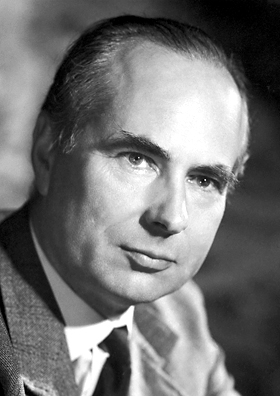

Education and early career
Huxley read Natural Sciences at Trinity College, Cambridge, where he developed an approach combining careful laboratory measurement with mathematical description. Early in his scientific life he gained a reputation as both an experimentalist and a theoretician, bringing quantitative methods to physiological problems and encouraging the use of rigorous instrumentation and analysis in cellular physiology.
Hodgkin–Huxley research and the action potential
In a long collaboration with Sir Alan Hodgkin, Huxley used the squid giant axon and the voltage-clamp technique to measure ionic currents across the nerve membrane. Their experiments showed how changes in membrane permeability to specific ions produce the rapid depolarization and repolarization that constitute the action potential. Their mathematical formulation, now known as the Hodgkin–Huxley model, provides equations that quantitatively relate membrane conductances and membrane potential to generate the characteristic nerve impulse that transmits signals through the central nervous system.
Their work, recognised by the 1963 Nobel Prize in Physiology or Medicine shared with Sir John Eccles, also led them to propose the existence of selective membrane pores—what came to be called ion channels. Although the molecular structures of many channels were identified decades later, the conceptual framework proposed by Hodgkin and Huxley anticipated those discoveries and guided subsequent experimental efforts.
Methods and contributions
- Development and application of the voltage-clamp method to separate and characterise ionic currents through membranes.
- Derivation of a quantitative model that links ion conductances to membrane potential dynamics and reproduces the time course of action potentials.
- Demonstration of how combining experiment with mathematical description can produce mechanistic insight, influencing the emergence of computational neuroscience.
- Application of electrophysiological concepts across excitable tissues, influencing fields such as cardiac electrophysiology and the study of inherited ion channel disorders.
Later roles, honours and leadership
Huxley was elected a Fellow of the Royal Society in 1955 and later served as its President from 1980 to 1985. He was Master of Trinity College, Cambridge, from 1984 to 1990. He was knighted in 1974 by Queen Elizabeth II and appointed to the Order of Merit in 1983. Across these roles he influenced science administration, higher education and the direction of physiological research in the United Kingdom and beyond.
Impact, legacy and mentorship
The Hodgkin–Huxley framework remains a foundational tool in neuroscience and biophysics. It provided a common language for describing how ionic flows produce electrical signals and how those signals may be modified by drugs, mutations or disease. This conceptual advance opened the way to systematic studies of so-called channelopathies, the pharmacology of ion channels and the computational modelling of neurons and neural circuits. Huxley trained and inspired a generation of investigators who extended quantitative electrophysiology into new tissues and scales.
Sir Andrew Huxley exemplified the productive union of experiment and theory: precise measurement guided mathematical modelling, and mathematical models suggested new experiments. He continued to publish summaries and reviews explaining the significance of quantitative approaches to physiology. He died in 2012, leaving a durable intellectual legacy that continues to shape neuroscience and related fields.
For authoritative accounts of his life and work, consult biographies, collected papers and reviews that document the experiments and analysis behind the Hodgkin–Huxley model and its later influence. Additional context about his scientific collaborators and honours can be found by following dedicated institutional and historical resources for physiology and the history of science: biographical summaries, family histories, archival material, literary references, scientific societies, academic records, historical overviews, educational sources, college information, primary papers, related Nobel citations, neuroscience reviews, ion channel literature, honours lists, royal records, and orders and memberships.
Questions and answers
Q: What was Sir Andrew Huxley's profession?
A: Sir Andrew Huxley was an English physiologist and biophysicist.
Q: Where was he born?
A: He was born in Hampstead, London.
Q: Who were his siblings?
A: His siblings were writer Aldous Huxley and fellow biologist Julian Huxley.
Q: What university did he attend?
A: He attended Trinity College, Cambridge where he studied Natural Sciences.
Q: What did he win the Nobel Prize for in 1963?
A: He won the Nobel Prize in Physiology or Medicine with Alan Hodgkin and John Eccles for his experimental and mathematical work with Alan Hodgkin on the basis of nerve action potentials.
Q: When was he knighted by Queen Elizabeth II? A: He was knighted by Queen Elizabeth II on 12 November 1974.
Q: When did he become President of the Royal Society? A:He became President of the Royal Society from 1980 to 1985.
Related articles
Author
AlegsaOnline.com Andrew Huxley (1917–2012): Nobel-winning physiologist and biophysicist Leandro Alegsa
URL: https://en.alegsaonline.com/art/114121
Sources
- telegraph.co.uk : Telegraph obituary
- guardian.co.uk : "Sir Andrew Huxley | Science"
- trin.cam.ac.uk : The Master of Trinity