
Andrew Fire
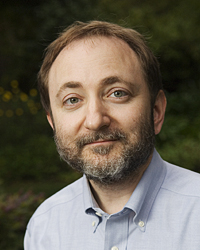
Andrew Z. Fire, American molecular geneticist awarded the 2006 Nobel Prize for discovering RNA interference and for pioneering gene-silencing techniques used across biology and medicine.
Overview: Andrew Zachary Fire (born April 27, 1959) is an American scientist known for foundational discoveries in gene regulation. He is a long‑time faculty member and professor with appointments in pathology and genetics at the Stanford University School of Medicine. Fire received the 2006 Nobel Prize in Physiology or Medicine for work that revealed how double‑stranded RNA can silence genes, a phenomenon now called RNA interference.
Image gallery
2 Images
Key discovery and mechanism
In a landmark 1998 paper, Fire and colleagues reported that introducing double‑stranded RNA into the nematode Caenorhabditis elegans triggers a potent and specific reduction in expression of matching genes. This result changed how scientists view cellular control of genetic information: rather than being merely passive carriers, short RNA molecules can guide protein complexes to degrade or block messenger RNA. The effect provided both a conceptual advance and a practical method to silence genes experimentally.
Career and research context
Much of the Nobel‑winning research was carried out while Fire was associated with the Carnegie Institution for Science and later continued in university laboratories. His work spans genetics, development and molecular biology, using model organisms to probe how genes are regulated in space and time. He was born in Palo Alto, California, and established collaborations that helped translate a basic finding into widely used techniques.
Applications and importance
- Research tool: RNA interference (RNAi) enables rapid loss‑of‑function experiments to test gene roles in cells and organisms.
- Drug development: small interfering RNAs inspired therapeutic approaches aimed at reducing harmful gene products.
- Biotechnology and agriculture: gene‑silencing strategies are used to study and sometimes to modulate traits in various species.
Recognition and legacy
The 2006 Nobel Prize was shared with Craig C. Mello in recognition of their combined contributions to understanding and applying RNA‑guided gene silencing. Beyond the prize, Fire's work reshaped experimental genetics, spawning new subfields (including the study of microRNAs and RNAi‑based therapeutics) and providing researchers with precise tools to dissect gene function.
For more information about the discovery, its implications, and Fire's career, see linked resources and institutional profiles.
Questions and answers
Q: Who is Andrew Zachary Fire?
A: Andrew Zachary Fire is an American biologist and a professor of pathology and genetics at Stanford University School of Medicine.
Q: When was Andrew Zachary Fire born?
A: Andrew Zachary Fire was born on April 27, 1959 in Palo Alto, California.
Q: What did Andrew Zachary Fire discover?
A: Andrew Zachary Fire discovered RNA interference.
Q: When was Andrew Zachary Fire awarded the Nobel Prize in Physiology or Medicine?
A: Andrew Zachary Fire was awarded the Nobel Prize in Physiology or Medicine in 2006.
Q: Where was the research on RNA interference conducted?
A: The research on RNA interference was conducted at Carnegie Institution for Science.
Q: When was the research on RNA interference published?
A: The research on RNA interference was published in 1998.
Q: What is the significance of the discovery of RNA interference?
A: The discovery of RNA interference is significant as it can be used to silence genes, which has potential applications in treating diseases.
Related articles
Author
AlegsaOnline.com Andrew Fire Leandro Alegsa
URL: https://en.alegsaonline.com/art/114113
Sources
- med.stanford.edu : "Andrew Fire shares Nobel Prize for discovering how double-stranded RNA can switch off genes - Nobel Prize - Featured Topics - Stanford University School of Medicine"
- web.mit.edu : "MIT alum shares Nobel Prize in physiology"
- news.bbc.co.uk : "Nobel prize for genetic discovery"
- wikidata.orgQ202152.html : wikidata.orgq202152.html
- catalogue.bnf.fr : cb150754238
- data.bnf.fr : (data)
- dblp.org : 70/1757
- isni.org : 0000 0000 0200 6140
- id.loc.gov : n85812344
- idref.fr : 085755419
- viaf.org : 16235715
- worldcat.org : lccn-n85812344