
Al Smith (1873–1944) — New York governor and 1928 Democratic nominee
Al Smith (1873–1944) was a four-term New York governor and the 1928 Democratic presidential nominee. A progressive reformer linked to Tammany Hall, he opposed Prohibition and helped reshape urban, immigrant politics.
Overview
Alfred E. Smith was a prominent figure in early twentieth-century American politics. Rising from a working-class Manhattan background, he served four terms as governor of New York in the 1920s and was the Democratic nominee for president in 1928. Smith combined reformist impulses with strong ties to urban political organizations and to immigrant communities. His career highlighted tensions over religion, Prohibition, machine politics and the modern role of government in social welfare.
Image gallery
10 Images



Early life and political rise
Born and raised in New York City, Smith entered public service through local jobs and community institutions before winning elective office in the state legislature and in city government. He developed a reputation for practical administration and an ability to manage large municipal systems. His long association with Tammany Hall shaped both his political support and the criticisms leveled against him: he drew on the machine's organization while also promoting professional reforms in government.
Governorship and policy agenda
As governor during the 1920s, Smith pursued a broad program that reflected Progressive-era priorities and the needs of a rapidly expanding state. He championed administrative reorganization to make state agencies more efficient, extended regulatory oversight of workplaces, and supported measures to improve public health and education. His administration promoted public works and infrastructure improvements, including support for roads, schools and housing projects aimed at growing urban populations.
- Administration: civil service expansion and reorganization to reduce patronage and improve management.
- Labor and safety: strengthened factory inspections, workplace safety measures and attention to child labor concerns of the era.
- Social programs: steps to coordinate relief and charitable work and to modernize welfare administration.
- Urban policy: initiatives shaped by large immigrant communities and the needs of cities such as New York.
1928 presidential campaign
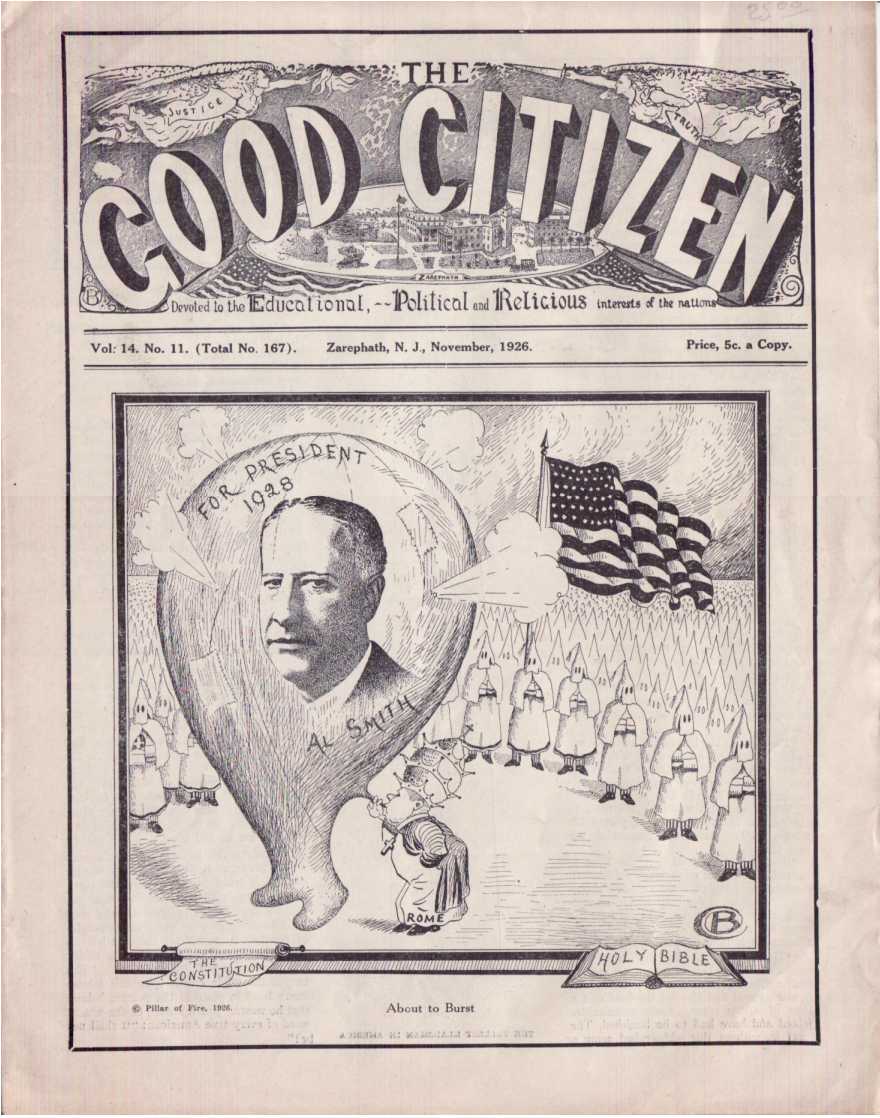
Smith's 1928 presidential campaign brought urban and religious issues to the national stage. As the first Roman Catholic nominated by a major party, he mobilized strong support among many immigrant and ethnic voters in cities, particularly among Catholics. At the same time, his religion and his association with urban politics provoked deep prejudice and organized opposition in some Protestant and rural areas. Smith's clear opposition to Prohibition also reshaped his appeal, aligning him with voters who wanted repeal or modification of national alcohol restrictions.
Running in a period of Republican dominance and general economic prosperity, Smith was defeated by the Republican nominee, Herbert Hoover. Though he lost decisively, his candidacy altered Democratic coalitions and helped set the stage for later shifts in national voting patterns.
Relationship with Franklin D. Roosevelt and later politics
Smith sought the Democratic nomination again in 1932 but was outmaneuvered by his one-time ally Franklin D. Roosevelt, who went on to lead the party in a new direction. In the 1930s Smith became an outspoken critic of aspects of Roosevelt's New Deal, arguing at times for more limited government intervention and for policies he believed better protected business and traditional fiscal practices. He returned to business and public advocacy in New York while remaining a visible national figure and an influential voice among many urban Democrats.
Honors, death and legacy
In recognition of his standing in the Catholic community, Smith received papal honors, including appointment as a Papal Chamberlain. His final years were marked by continued public activity and commentary on national affairs. Smith died on October 4, 1944 at the Rockefeller Institute Hospital after suffering a heart attack. He was buried at Calvary Cemetery.
Historical significance
Historians view Al Smith as a pivotal figure who bridged machine-era urban politics and the later New Deal coalition. He is remembered both as a reformer who professionalized parts of state government and as a politician rooted in the practical networks of city machines. His 1928 campaign brought questions of religion, immigration, and urban policy into national debate and helped reshape the Democratic Party's relationship with ethnic communities. Smith's life illustrates the complexities of American modernization in the early twentieth century and the contested boundaries between reform, party organization and popular politics.
Assessments of Smith emphasize several enduring themes: the integration of large immigrant populations into national politics, the tensions between progressive reform and political organization, and the ways in which cultural and religious identity can influence electoral coalitions. While his presidential bid was unsuccessful, Smith's influence persisted in the evolving alignments of the American party system.
Questions and answers
Q: Who was Al Smith?
A: Al Smith was an American statesman who was elected the 42nd Governor of New York four times, and was the Democratic US presidential candidate in 1928. He was a leader of the Progressive Movement, and noted for making a wide range of reforms as governor in the 1920s.
Q: What did he oppose?
A: He opposed prohibition and was linked to the Tammany Hall machine that controlled Manhattan politics.
Q: Why did he lose his presidential election bid?
A: He lost his presidential election bid due to opposition from Southern Baptists and German Lutherans who feared that the pope would dictate his policies. It also didn't help that it was a time of national prosperity, which made Herbert Hoover more appealing to voters than Smith.
Q: Did he try for another nomination after this loss?
A: Yes, he tried for the 1932 nomination but was defeated by his former ally Franklin D. Roosevelt.
Q: What did Smith do after this defeat?
A: After this defeat, Smith entered business in New York City and became an increasingly vocal opponent of Roosevelt's New Deal.
Q: What honor did he receive from the Papacy? A: In 1939 he received a Papal Chamberlain of the Sword and Cape, one of the highest honors bestowed on a layman by the Papacy which today is styled as Gentlemen of His Holiness.
Q: How did Smith die? A:Smith died at Rockefeller Institute Hospital on October 4, 1944 due to a heart attack at age 70 following his wife's death from cancer five months earlier.
Related articles
Author
AlegsaOnline.com Al Smith (1873–1944) — New York governor and 1928 Democratic nominee Leandro Alegsa
URL: https://en.alegsaonline.com/art/113923
Sources
- dol.gov : "U.S. Department of Labor - Labor Hall of Fame - Alfred E. Smith"