
Ali Abdullah Saleh (1942–2017)
Yemeni military officer and politician who led North Yemen and then unified Yemen from 1978 until 2012; a long-serving, controversial figure whose alliances and death shaped Yemen's civil war.
Ali Abdullah Saleh (Arabic: علي عبدالله صالح; 21 March 1942 – 4 December 2017) was a Yemeni political leader and military officer who ruled first the Yemen Arab Republic (North Yemen) and then the unified Republic of Yemen. He came to national prominence in the 1970s and became president of North Yemen in 1978. After the 1990 unification of North and South Yemen he served as the first president of the unified state and remained a central figure in Yemeni politics for decades, often described as the country's longest-serving head of state.
Image gallery
5 Images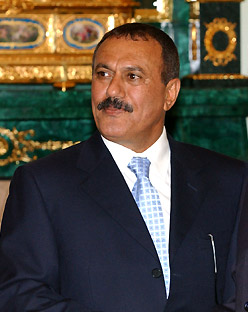
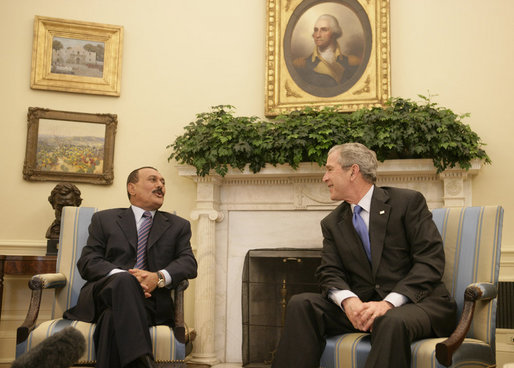

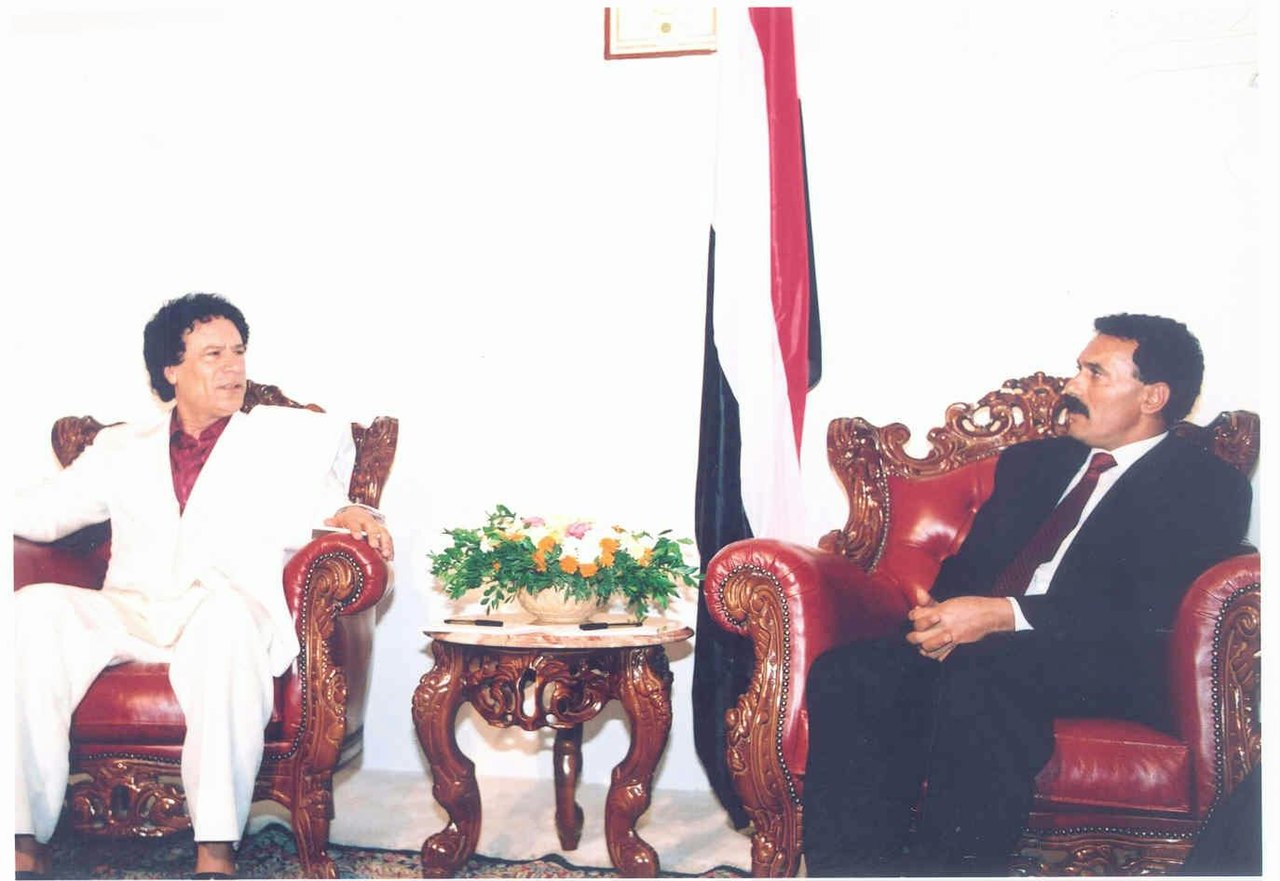

Background and rise to power
Saleh was born into a tribal family near Sanaa and entered military service in the newly republican North Yemen. He advanced through the armed forces and built alliances with tribal leaders, security officials and political figures. His ascent reflected the combination of military influence and tribal patronage that characterized Yemen's governance after the 1962 revolution. In 1978 he became president of the Yemen Arab Republic and consolidated control by balancing tribal loyalties with a growing civilian party organization.
Governance, party and policies
During his rule Saleh led the General People's Congress (GPC), a broad party that served as the main vehicle of power and state patronage. His administration mixed pragmatic regional diplomacy with centralized domestic control. Observers commonly criticized his style as authoritarian and clientelist: power was distributed through personal networks, security services and tribal intermediaries rather than through institutional checks. Economically, Yemen under Saleh struggled with underdevelopment, unemployment and reliance on dwindling oil revenues; international partners often pressed for reform while also engaging with his government for stability.
Unification, conflict and transition
Saleh played a key role in the 1990 unification of North and South Yemen and thereafter survived a brief 1994 civil war that tested central authority. His long tenure began to face major challenges during the regional unrest of 2011. Large public protests, inspired by the Arab Spring, demanded political change and an end to corruption. Facing mass demonstrations and pressure from regional mediators, Saleh agreed to a Gulf Cooperation Council–brokered transition that led to his formal transfer of power to his vice president, Abdrabbuh Mansur Hadi, in early 2012 while Saleh retained influence as GPC leader.
Later years, shifting alliances and death
After stepping down Saleh remained a pivotal and sometimes unpredictable actor. He navigated alliances with a range of forces including regional powers and insurgent groups. In 2014–2015 the Houthi movement took control of Sanaa and much of northern Yemen; Saleh initially cultivated working arrangements with them and other actors when it served his political interests. In late 2017 he broke with the Houthis and signaled openness to reconciliation with rivals, a move that preceded intense fighting in the capital. He was killed on 4 December 2017 during clashes in and around Sanaa; the circumstances were contested and contributed to further fragmentation in the ongoing civil conflict. The Houthis publicly accused outside actors of responsibility, a claim that added to regional tensions and debate over his death. Sanaa was the center of these events and remains central to the conflict.
Legacy and significance
Saleh's legacy is complex and contested. Supporters credit him with keeping a fragile state intact for decades and negotiating unification. Critics point to entrenched corruption, weak institutions and the personalization of power that left Yemen vulnerable to political collapse after his departure. His long rule, shifting alliances and eventual violent death helped shape the protracted humanitarian and security crisis in Yemen. Analyses of the war and of Yemeni politics frequently cite Saleh's career as central to understanding both the country's modern state structures and the dynamics that produced the present conflict.
- Born: 21 March 1942; Died: 4 December 2017.
- President of North Yemen: 1978–1990; President of unified Yemen: 1990–2012.
- Leader of the General People's Congress and a dominant political figure until his death.
For further reading and source materials, see contemporary coverage and profiles that document his career, the 2011 transition and subsequent events in Yemen. Profile source, historical overview, and regional analyses are available from multiple outlets that examine his political strategies and the consequences for Yemen. Regional actors and international commentators also debated his role; some linked developments to external influence and the policies of neighboring states such as the United Arab Emirates and other Gulf countries. Arabic-language sources and local reporting provide additional context.
Note: This account summarizes widely reported facts about a public figure whose actions and the events surrounding them have been subject to differing interpretations and contested narratives.
Questions and answers
Q: Who was Ali Abdullah Saleh?
A: Ali Abdullah Saleh was a Yemeni politician who was the first President of the Republic of Yemen.
Q: What was Saleh's role before becoming the President of the Republic of Yemen?
A: Saleh served as the President of the Yemen Arab Republic (North Yemen) from 1978 until 1990.
Q: When did Saleh assume the office of chairman of the Presidential Council of the Republic of Yemen?
A: Saleh assumed the office of chairman of the Presidential Council of the Republic of Yemen in 1990.
Q: How long did Saleh rule Yemen?
A: Saleh was the longest-serving president of Yemen, ruling since 1978.
Q: When did Saleh announce that he would step down?
A: Saleh announced that he would step down in 2013 on February 2, 2011.
Q: Who did Saleh side with before his death in 2017?
A: Saleh did not support the Houthis and instead sided with his former enemies – Saudi Arabia and President Hadi.
Q: How did Saleh die?
A: Saleh was killed by a Houthi sniper while attempting to leave the capital city of Sana'a amidst the ongoing battle on December 4, 2017.
Related articles
Author
AlegsaOnline.com Ali Abdullah Saleh (1942–2017) Leandro Alegsa
URL: https://en.alegsaonline.com/art/113832
Sources
- presidentsaleh.gov.ye : "President Ali Abdullah Saleh Web Site"
- online.wsj.com : "Yemeni President Won't Run Again"
- aljazeera.com : "Yemen: Ex-President Ali Abdullah Saleh killed"
- rt.com : "Houthis claim takeover of Yemeni capital, president calls for 'all people' to rise against them"
- aljazeera.com : "Analysis: Yemen's ex-president Saleh's killing was 'revenge'"
- cnn.com : "Yemen's former President Saleh killed in Sanaa"
- almasirah.net : "ناطق أنصار الله: الإمارات أوصلت زعيم ميليشيا الخيانة إلى هذه النهاية المخزية ولا مشكلة مع المؤتمر"