
Alicia Markova (1910–2004) — British prima ballerina, director and teacher
Alicia Markova was an English ballerina who helped establish British professional ballet, co‑founding major companies, teaching and directing; she was one of the first British dancers to achieve international prominence.
Alicia Markova (born Lilian Alicia Marks, 1 December 1910 – 2 December 2004) was an English ballerina, choreographer, director and teacher who played a central role in establishing professional ballet in Britain. Celebrated as one of the first British‑born dancers to reach international prominence, she is widely regarded as the first British prima ballerina of a ballet company. Markova had a long and varied career that encompassed performance with leading international ensembles, company founding and leadership, and decades of teaching and mentorship.
Image gallery
6 Images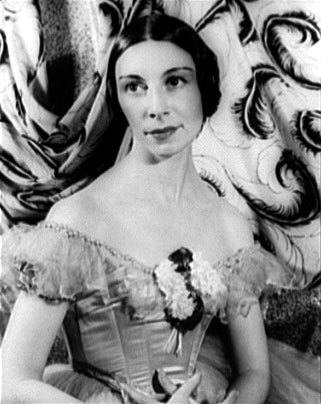


Early life and training
Markova was born and raised in London. From an early age she showed talent for dance and received formal instruction in classical technique typical of the period, combining the influence of Russian‑trained teachers in the city with the British theatrical tradition. As a teenager she attracted the attention of established artists and was invited to perform with touring and international companies. That early mixture of strict classical training and stage experience prepared her to join prominent ensembles and to adapt to a wide range of choreographic styles.
Career and major associations
Markova's professional life included key associations that helped shape the development of British ballet. Early in her career she danced with Sergei Diaghilev's Ballets Russes, an experience that exposed her to leading choreographers and designers and raised her international profile. In the 1930s she was a founder dancer with Ballet Rambert and with what became the Vic‑Wells Ballet, an antecedent of The Royal Ballet. She also formed the Markova‑Dolin Company with her frequent partner Anton Dolin and spent seasons with major international groups, including the company known today as American Ballet Theatre.
After the Second World War she toured with Dolin and later helped found and direct the London Festival Ballet, which later evolved into the English National Ballet. Throughout these years she frequently combined performing with administrative and teaching duties, acting as a bridge between the older European traditions and the emerging British institutions that would sustain ballet in the United Kingdom. She announced her retirement from professional dancing in January 1963, at the age of fifty‑two, though she continued to teach and advise companies for many years afterwards.
Artistic style and repertoire
Markova was admired for a lyrical, refined style that emphasized musical sensitivity, purity of line and expressive clarity. Rather than relying solely on virtuosic bravura, she brought a distinct musicality and theatrical intelligence to roles in both the 19th‑century classical canon and in 20th‑century works created for her and her partners. Her frequent collaboration with Anton Dolin produced many memorable partnerships noted for their nuanced partnering and dramatic coherence. In later decades she devoted much energy to passing on these stylistic values to new generations of dancers.
Teaching, direction and later activity
Beyond the stage, Markova made significant contributions as a teacher and director. She taught technique and stagecraft to younger dancers and served in artistic and administrative roles for companies she had helped to found. Her guidance influenced company standards, repertoire choices and approaches to training at a formative time for British ballet institutions. She continued to give classes, lectures and occasional public appearances well after retiring from regular performance.
Legacy and recognition
Markova's influence on British ballet is felt through the companies she helped establish, the dancers she taught and the standards of performance she championed. She was honored by her country with the title of Dame (DBE) for her services to dance, a recognition of her long public contribution. Her long career as a performer, teacher and director left a lasting imprint on the repertory and institutions of ballet in Britain and beyond.
Notable facts and timeline
- Born Lilian Alicia Marks in London in 1910; adopted the stage name Alicia Markova.
- Early touring and an association with the Ballets Russes brought international attention.
- Founder or founding dancer in key British companies: Ballet Rambert, Vic‑Wells antecedents and the Markova‑Dolin Company.
- Appeared with American and British companies in the 1940s and helped establish the London Festival Ballet (later English National Ballet).
- Retired from the professional stage in January 1963 but continued teaching and advising; awarded the title of Dame (DBE) for services to dance.
- Died in Bath, Somerset, on 2 December 2004 after suffering a stroke.
For further biographical summaries, company histories and archival material consult these entries and resources: biographical overview, company histories, teaching and legacy notes, performance archives, early life and training, American engagements, later career and honors, obituary and tributes.
Questions and answers
Q: Who was Alicia Markova?
A: Alicia Markova was an English ballerina, choreographer, director, and teacher.
Q: What was her achievement as a British dancer?
A: She was the first British dancer to become the prima ballerina of a ballet company.
Q: When and where was she born and raised?
A: She was born and raised in London, on 1 December 1910.
Q: What were some ballet companies she was involved in?
A: She was a founder dancer of the Ballet Rambert, the Vic-Wells Ballet, the Markova-Dolin Company, danced for the American Ballet Theatre, and was co-founder and director of the English National Ballet.
Q: When did she retire from professional dancing and how old was she?
A: She retired from professional dancing in January 1963, at fifty-two years old.
Q: How did Alicia Markova pass away?
A: Alicia Markova passed away in Bath, Somerset, at the age of ninety-four, due to a stroke.
Q: Was Alicia Markova involved in teaching ballet?
A: Yes, Alicia Markova was also involved in teaching ballet.
Related articles
Author
AlegsaOnline.com Alicia Markova (1910–2004) — British prima ballerina, director and teacher Leandro Alegsa
URL: https://en.alegsaonline.com/art/113808