
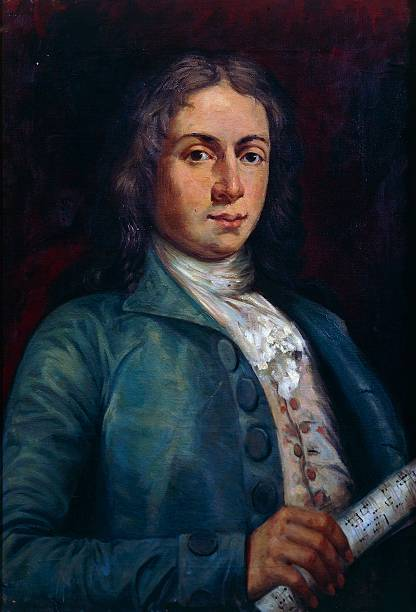
Alessandro Scarlatti (1660–1725), Italian Baroque composer
Italian Baroque composer celebrated for his operas and chamber cantatas; a leading figure in the Neapolitan school and the father of Domenico Scarlatti, influential in vocal and dramatic music.
Overview
Alessandro Scarlatti was an Italian composer born in Palermo on 2 May 1660 and who died in 1725. Working during the Baroque era, he became best known for his stage works and his extensive output of vocal music. He is widely regarded as a central figure in the development of the Neapolitan school and as an influential teacher and model for later composers. He was also the father of the harpsichord composer Domenico Scarlatti.
Image gallery
4 Images


Musical style and contributions
Scarlatti's music is marked by clear melodic lines, expressive vocal writing and a concern for dramatic pacing. In his operas and cantatas he developed sectional aria structures that helped shape early 18th-century opera. He wrote both secular and sacred pieces; his church music and oratorios demonstrate contrapuntal skill alongside the lyricism typical of Italian vocal music of the time. Many historians credit him with refining the alternation of recitative and aria that became standard in Neapolitan opera practice.
Career and historical context
During his career Scarlatti held posts at courts and in churches, moving between cities that included Rome and Naples. He composed for aristocratic patrons and public theatres, producing works that met the tastes of both ceremonial and popular audiences. His activity coincided with a period when opera was becoming more formally codified, and his teachers and pupils helped spread the Neapolitan approach across Europe.
Works and genres
Scarlatti's surviving output covers several genres: operas, chamber cantatas, oratorios, masses and instrumental pieces. He is noted for the dramatic expressiveness of his arias and the inventiveness of his vocal ensembles. Typical items in his catalogue include short solo cantatas for voice and continuo and larger-scale stage works that employ overtures and ensemble finales.
Legacy and influence
Scarlatti's influence lies in both his compositions and his role as a teacher and exemplar of the Neapolitan style. Later composers borrowed his approaches to formal balance, harmonic clarity and vocal declamation. He helped establish practices that shaped opera in the 18th century and left a pedagogical lineage through pupils and his own family.
Notable facts
- Born in Palermo and associated especially with Naples and Rome during his working life.
- Remembered for both stage music and numerous intimate vocal works such as chamber cantatas.
- Considered a founder or principal architect of the Neapolitan operatic tradition.
- Often cited in surveys of the Baroque period and its evolution of opera and sacred music.
- Father of the composer Domenico Scarlatti, who became well known for his keyboard sonatas.
For concise reference or further reading on his works and influence, consult specialist music histories or catalogues that list his operatic and vocal compositions; many recordings and editions continue to explore his contribution to Baroque music. See also entries on Italian opera, Baroque vocal forms and the broader Neapolitan tradition for context.
Questions and answers
Q: Who was Alessandro Scarlatti?
A: Alessandro Scarlatti was an Italian composer who lived in the Baroque period.
Q: What was Alessandro Scarlatti famous for?
A: Alessandro Scarlatti was especially famous for his operas and chamber cantatas.
Q: What is the Neapolitan school of opera?
A: The Neapolitan school of opera refers to a style of opera that originated in Naples, Italy in the 18th century.
Q: Is Alessandro Scarlatti considered the founder of the Neapolitan school of opera?
A: Yes, Alessandro Scarlatti is considered the founder of the Neapolitan school of opera.
Q: When was Alessandro Scarlatti born and when did he pass away?
A: Alessandro Scarlatti was born on May 2, 1660, and passed away on October 24, 1725.
Q: Who was Domenico Scarlatti?
A: Domenico Scarlatti was a famous composer and the son of Alessandro Scarlatti.
Q: What period did Alessandro Scarlatti live in?
A: Alessandro Scarlatti lived in the Baroque period.
Related articles
Author
AlegsaOnline.com Alessandro Scarlatti (1660–1725), Italian Baroque composer Leandro Alegsa
URL: https://en.alegsaonline.com/art/113633