
Alec Jeffreys (geneticist)
British geneticist who developed DNA fingerprinting and DNA profiling; his work transformed forensic science, paternity testing and identification practices worldwide.
Overview
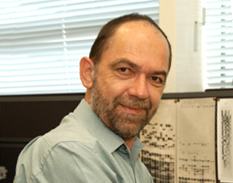
Sir Alec John Jeffreys (born 9 January 1950) is a British geneticist best known for inventing techniques known as genetic fingerprinting and DNA profiling. While working at the University of Leicester he discovered patterns of variation in human DNA that could be used to distinguish individuals. That discovery rapidly became a foundational tool in forensic investigations, in family relationship testing, and in other areas that require reliable human identification.
Image gallery
2 Images
Method and characteristics
Jeffreys' approach exploited highly variable regions of the genome where short sequences repeat a different number of times in different people. By analysing several such loci together it became possible to generate a profile with a high degree of discrimination between unrelated individuals. Over time the laboratory methods evolved from the original autoradiography-based assays to polymerase chain reaction (PCR) amplification of short tandem repeats (STRs), improving speed, sensitivity and suitability for degraded samples. These technical advances preserved the core idea: comparing multiple genetic markers produces a profile useful for identification.
Discovery and early development
The core insight emerged in the 1980s while Jeffreys and his team were studying DNA variation. The technique's first applications addressed legal and civil questions where reliable identification mattered. Early cases demonstrated its power to resolve disputed paternity and to settle immigration questions by establishing biological relationships. The method also proved decisive in criminal investigations, including high-profile inquiries in the United Kingdom in the decade after the discovery.
Applications and importance
Today DNA-based identification is standard practice in many fields. Forensic laboratories use DNA profiles to link or exclude suspects in criminal cases, to identify human remains, and to assist in missing-person inquiries. Family courts and immigration authorities use DNA testing for relationship verification. Conservation biologists and animal breeders also apply related techniques for pedigree analysis and population studies. The widespread adoption of DNA profiling transformed investigative procedures and courtroom evidence standards worldwide.
Positions, honours and legacy
Jeffreys has been a long-standing professor of genetics at the University of Leicester. His contributions have been recognised with numerous honours: he was made an honorary freeman of the City of Leicester, received fellowship in learned societies including the Royal Society, and was knighted for services to genetics (knighthood). The techniques he developed underpin modern forensic science and are central to processes such as immigration family verification and routine DNA profiling.
Notable distinctions
- Introduced the concept of a DNA-based personal profile for identification.
- Laid groundwork for international standards in genetic evidence handling and interpretation.
- His work prompted new ethical, legal and policy discussions about privacy, databasing and consent.
Jeffreys' discovery is an example of how a laboratory insight can reshape multiple applied disciplines, from criminal justice to public health and conservation, while also raising important societal questions about the use and governance of genetic information.
Questions and answers
Q: Who is Alec Jeffreys?
A: Alec Jeffreys is a British geneticist who developed techniques for genetic fingerprinting and DNA profiling.
Q: What are the applications of Jeffreys' techniques?
A: Jeffreys' techniques are now used worldwide in forensic science to help police detective work and solve paternity and immigration disputes.
Q: Where does Alec Jeffreys work?
A: Alec Jeffreys is a professor of genetics at the University of Leicester.
Q: What honor did Alec Jeffreys receive from the City of Leicester?
A: Alec Jeffreys became an honorary freeman of the City of Leicester on 26 November 1992.
Q: When was Alec Jeffreys knighted?
A: Alec Jeffreys was knighted for services to genetics in 1994.
Q: What is genetic fingerprinting?
A: Genetic fingerprinting is a technique developed by Alec Jeffreys that analyzes DNA to create a unique genetic profile for an individual.
Q: Why is DNA profiling important in forensic science?
A: DNA profiling is important in forensic science because it can be used to identify suspects and link them to crime scenes, as well as in paternity and immigration disputes to determine familial relationships.
Related articles
Author
AlegsaOnline.com Alec Jeffreys (geneticist) Leandro Alegsa
URL: https://en.alegsaonline.com/art/113600
Sources
- doi.org : 10.1042/bst0150309
- people.embo.org : "Find people in the EMBO Communities"
- leicestermercury.co.uk : "Leicester University Professor Sir Alec Jeffreys wins science's oldest prize"
- culture24.org.uk : "The DNA of a King: Dr Turi King on the genome sequencing of Richard III - Culture24"
- news.bbc.co.uk : DNA pioneer's 'eureka' moment
- doi.org : 10.1073/pnas.0603953103
- le.ac.uk : "Staff pages: Professor Sir Alec J. Jeffreys FRS"
- leicester.gov.uk : "List of persons upon whom the honorary freedom of the city has been conferred"
- doi.org : 10.1186/2041-2223-4-21
- news.bbc.co.uk : "Jeffreys reflects on DNA finding"