
Alban Berg: Austrian composer of the Second Viennese School
Alban Berg (1885–1935), Austrian composer who blended late-Romantic expressivity with atonal and twelve-tone techniques; best known for the operas Wozzeck and Lulu and the Violin Concerto.
Overview
Alban Berg (born Vienna, 9 February 1885; died Vienna, 24 December 1935) was an Austrian composer associated with the Second Viennese School. A pupil of Arnold Schoenberg, Berg helped to extend the boundaries of musical language in the early 20th century by combining the formal innovations of atonality and twelve-tone technique with a strong sense of melody, drama and orchestral colour. He is remembered especially for his operas Wozzeck and Lulu and for his Violin Concerto, works that have secured a central place in the modern repertoire.
Image gallery
4 Images


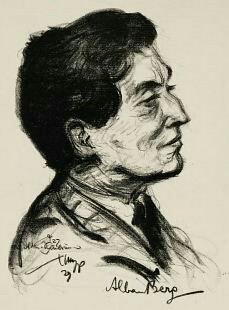
Life and education
Berg grew up in Vienna and studied chemistry briefly before devoting himself to music. He became Schoenberg's student and entered a close artistic circle that also included Anton Webern. His development as a composer took place against a backdrop of rapid cultural change: late-Romantic traditions, the upheavals of World War I and the emergence of modernist currents in literature and visual art. Personal friendships, literary interests and exposure to contemporary theatre influenced the expressive intensity of his large-scale works.
Style and technique
Berg's music bridges two aesthetic tendencies. On one side he adopted Schoenberg's theoretical advances—the move away from conventional tonal centres, exploration of free atonality and, later, the twelve-tone method in which all twelve pitch classes of the chromatic octave are treated with equal importance. On the other side he maintained a lyricism and dramatic warmth often associated with late Romanticism. This combination makes many of his works appear more immediately expressive and theatrical than comparable compositions by some of his contemporaries.
Major works
- Wozzeck: Premiered in the late 1920s, this opera is an expressionist adaptation of a play by Georg Büchner. Berg uses a mixture of atonal writing and traditional forms (such as sonata-like scenes and dance forms) to underscore psychological tension and social critique.
- Lulu: An ambitious drama drawn from Frank Wedekind's plays. Left incomplete at Berg's death, Lulu was later finished and staged from surviving materials. The score is notable for its economy of motive, compact ensemble writing and sophisticated use of serial procedures alongside powerful theatrical immediacy.
- Violin Concerto: Written for a prominent soloist and dedicated as a memorial, the concerto is frequently admired for its poignant lyricism and integrated use of twelve-tone technique. It balances formal clarity with overtly expressive gestures that make it widely accessible.
- Chamber and vocal works: The Lyric Suite, Chamber Concerto and numerous Lieder and piano pieces display Berg's craftsmanship in smaller forms and his skill at setting text. Hidden references, quotations and numerical symbolism have been subjects of musicological study.
Reception, performance and legacy
Berg's music was influential because it showed that modern compositional systems could be reconciled with expressive aims. During the 1930s some works were suppressed by political regimes hostile to modern art, but afterwards Berg's operas and instrumental pieces entered the standard repertory and have been the subject of extensive scholarly and critical attention. Performers prize his orchestration and dramatic pacing, while analysts explore his use of motifs, structure and symbolism.
Approach to twelve-tone composition
Although Berg employed twelve-tone rows, he often treated them flexibly to preserve melodic shape and expressive emphasis. He combined serial procedures with traditional elements—songlike lines, tonal references and familiar forms—to produce music that can feel both modern and emotionally direct. This approach helped to broaden acceptance of serialism among performers and audiences.
Recordings, editions and study
There are many recordings and scholarly editions of Berg's works that reflect differing interpretive traditions. Students and performers frequently consult critical scores and modern commentaries to understand performance practice, editorial decisions and analytical perspectives. Berg's music continues to be taught in conservatoires and discussed in musicology for its blending of compositional rigor and expressive content.
Further reading and resources
For biographical outlines, catalogues of works, analyses and historical context, consult general biographies and specialist studies. Useful starting points and resources include:
- Biographical overview and timeline
- Catalogue of works and recordings
- Chronology and historical context
- Articles on the Second Viennese School
- Studies of Berg's compositional techniques
- Material on Berg's contemporaries
- Resources about Berg's teachers and influences
- Arnold Schoenberg: pedagogy and impact
- Research on modernism in early 20th-century music
- Comparisons with late Romantic traditions
- Introductory guides to atonality
- Explaining twelve-tone technique
- Resources on Wozzeck (performance history)
- Resources on Lulu (composition and completion)
- Analyses of the Violin Concerto
Berg's combination of passion and discipline continues to invite fresh interpretations. His works remain central to discussions of how 20th-century music negotiated tradition and innovation, and they are regularly performed and studied by musicians, scholars and listeners interested in the expressive possibilities of modern composition.
Questions and answers
Q: Who was Alban Berg?
A: Alban Berg was an Austrian composer born in Vienna on February 9, 1885, and died in Vienna on December 24, 1935.
Q: Who were Berg's teachers?
A: Berg's teachers were Arnold Schoenberg, Anton Webern, and others.
Q: How did Berg, Webern, and Schoenberg change the style of musical composition in the early 20th century?
A: The three composers changed the style of musical composition by creating atonal music (music which is not in any key) and later by creating twelve-tone music, in which all 12 notes in an octave are of the same importance.
Q: What is the difference between Berg's twelve-tone music and Schoenberg or Webern's?
A: Although Berg wrote a lot of twelve-tone music, he still managed to make it sound quite Romantic at times, more so than Schoenberg or Webern.
Q: What are Berg's most important works?
A: Berg's most important works are his two operas Wozzeck and Lulu and his Violin Concerto.
Q: What period did many composers of the time write music in?
A: Many composers of the time wrote music in the Romantic period.
Q: What is atonal music?
A: Atonal music is music that does not have a key.
Related articles
Author
AlegsaOnline.com Alban Berg: Austrian composer of the Second Viennese School Leandro Alegsa
URL: https://en.alegsaonline.com/art/113530