
Ahmed Hassan al-Bakr
Iraqi military officer and Ba'ath Party leader who served as President of Iraq from 1968 to 1979; oversaw oil nationalization and economic growth while ceding power to Saddam Hussein.
Overview
Ahmed Hassan al-Bakr was an Iraqi military officer and politician who led Iraq during a formative decade from 1968 until his resignation in 1979. As a leading figure of the Arab Socialist Ba'ath movement, he held the country's top offices and presided over major economic and political changes, including the expansion of state control over oil resources and modernization efforts that coincided with a 1970s oil boom. He is remembered both for national economic initiatives and for the emergence of his successor, Saddam Hussein.
Image gallery
4 Images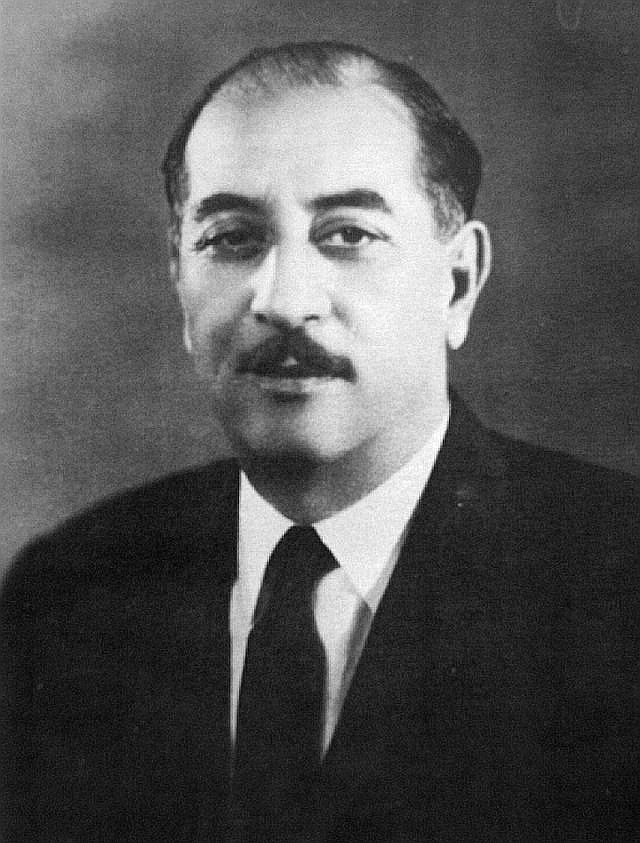


Early life and rise
Born in Tikrit in what was then Ottoman Iraq on 1 July 1914, al-Bakr entered the Iraqi military and became active in nationalist and Ba'athist circles. He was a prominent member of the Iraqi branch of the Ba'ath Party. Through involvement in coup politics of the 1950s and 1960s, he rose to lead the government after the July 1968 coup that brought the Ba'athists to power. He served as a civilian leader backed by military and party structures and was commonly referred to as the President of Iraq during his tenure.
Rule and policies
Al-Bakr's administration emphasized Arab nationalism, state-led economic development, and social reforms aligned with Ba'athist ideology. Key actions of his government included nationalization of foreign-controlled oil interests and expanding public investment in infrastructure, industry, and social services. Rising international oil prices in the 1970s contributed to rapid state revenue growth, which the regime used for development projects and to strengthen central authority.
Notable actions
- Consolidation of Ba'ath Party control over state institutions and security forces.
- National economic planning and increased state ownership in strategic sectors.
- Assertion of Iraqi sovereignty over oil resources and renegotiation of foreign contracts.
Resignation and legacy
During the 1970s al-Bakr became increasingly overshadowed by his cousin, Saddam Hussein, who occupied senior party and security roles and centralized power. Al-Bakr resigned in July 1979; his departure cleared the way for Saddam to assume full control of the Iraqi state. After leaving office, al-Bakr largely withdrew from public life. Historians note that his decade in power transformed Iraq's economy and state institutions but also set patterns of centralized authority and repression that defined the subsequent era.
For more context on the political movement he led and the city of his origin, see resources about the Ba'ath Party and Tikrit. Further readings and primary documents can be consulted for detailed timelines and policy analyses related to his government and its successors (Iraq).
Questions and answers
Q: Who was Ahmed Hassan al-Bakr?
A: Ahmed Hassan al-Bakr was the President of Iraq from 1968 to 1979.
Q: When was Ahmed Hassan al-Bakr born?
A: Ahmed Hassan al-Bakr was born on July 1st, 1914 in Tikrit, Ottoman Iraq.
Q: What political party was Ahmed Hassan al-Bakr a member of?
A: Ahmed Hassan al-Bakr was a member of the Arab Socialist Ba'ath Party and later the Baghdad-based Ba'ath Party.
Q: What was the economic growth in Iraq during Ahmed Hassan al-Bakr's rule?
A: During Ahmed Hassan al-Bakr's rule, Iraq had high economic growth due to high international oil prices.
Q: Who did Ahmed Hassan al-Bakr lose power to?
A: Ahmed Hassan al-Bakr lost power to his cousin Saddam Hussein.
Q: When did Ahmed Hassan al-Bakr's presidency end?
A: Ahmed Hassan al-Bakr's presidency ended on July 16th, 1979.
Q: What is Ahmed Hassan al-Bakr known for?
A: Ahmed Hassan al-Bakr is known for being the President of Iraq during a time of high economic growth and for eventually losing power to Saddam Hussein.
Related articles
Author
AlegsaOnline.com Ahmed Hassan al-Bakr Leandro Alegsa
URL: https://en.alegsaonline.com/art/113401