
Afonso IV of Portugal (the Brave) — king from 1325 to 1357
Afonso IV (1291–1357), called the Brave, ruled Portugal and the Algarve from 1325. His reign combined dynastic diplomacy, military action against North African incursions, and the tragic Inês de Castro episode.
Afonso IV (8 February 1291 – 28 May 1357), known by the epithet "the Brave," was king of Portugal and the Algarve from 1325 until his death. The only son of King Denis and Elizabeth of Aragon, he inherited a realm shaped by his father's administrative and agricultural reforms and faced the twin demands of consolidating royal authority at home and managing complex relations with neighbouring Castile.
Image gallery
5 Images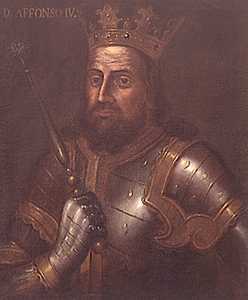


Early life and accession
Born into the royal house that had strengthened Portugal's institutions in the late 13th and early 14th centuries, Afonso came to the throne after the long reign of his father. His upbringing combined the responsibilities of princely education with the realities of noble factionalism; upon accession he had to secure loyalty from powerful magnates and preserve the lines of succession through marriage ties.
Domestic rule and governance
As king, Afonso IV worked to maintain stability in a country still consolidating central authority. He continued many royal traditions of administration and justice, relied on a council of nobles and clergy, and intervened when internal disputes threatened public order. His reign did not produce sweeping institutional reforms like those of earlier or later monarchs, but it aimed at steadiness and the protection of royal prerogatives.
Foreign policy and military actions
Diplomacy with Castile and action against North African forces marked Afonso's external agenda. He married Beatrice of Castile in 1309, linking his house with the Castilian royal family. During the 14th century he participated in the broader Christian response to Marinid and Granadan incursions on the Iberian peninsula and supported allied operations that checked those invasions.
Cultural legacy and the Inês de Castro episode
Afonso IV's reign is inseparable from the tragic episode involving Inês de Castro, the Galician noblewoman whose relationship with the king's son, the future Peter I, became a cause of courtly and dynastic conflict. Afonso ordered Inês's execution — a decision with deep personal and political consequences — and the story later inspired much Portuguese literature and legend, contributing strongly to his lasting historical image.
Family, succession and notable facts
In 1309 Afonso married Beatrice of Castile, daughter of Sancho IV and María de Molina; by her he had several children, including the future King Peter I. Historical sources record he had four sons and three daughters by Beatrice and at least one other daughter from another relationship. He died in 1357 and was succeeded by his son.
- Dynastic ties with Castile shaped much of his foreign policy.
- Associated with the Battle lines of the 1340s against North African forces.
- The Inês de Castro story is a major element of his cultural legacy.
For further context on Portuguese medieval monarchy and the period in which Afonso IV ruled, consult more detailed histories of Iberian politics in the 14th century and specialized studies of Portuguese royal institutions. See also entries on Portuguese medieval culture and dynasty relations in Iberia.
Questions and answers
Q: Who was Afonso IV of Portugal?
A: Afonso IV was the seventh king of Portugal and the Algarve, reigning from 1325 until his death.
Q: What was Afonso IV's nickname?
A: Afonso IV was commonly known as "the Brave" in Portuguese, or "o Bravo".
Q: Who were Afonso IV's parents?
A: Afonso IV was the only son of King Denis of Portugal and his wife Elizabeth of Aragon.
Q: When did Afonso IV get married and to whom?
A: Afonso IV married Beatrice of Castile in 1309, who was the daughter of Sancho IV, King of Castile and María de Molina.
Q: How many children did Afonso IV have with Beatrice of Castile?
A: Afonso IV had four sons and three daughters with Beatrice of Castile.
Q: Did Afonso IV have any other children besides those he had with Beatrice of Castile?
A: Yes, Afonso IV also had another daughter from a different mother.
Q: When did Afonso IV die?
A: Afonso IV died on May 28, 1357.
Related articles
Author
AlegsaOnline.com Afonso IV of Portugal (the Brave) — king from 1325 to 1357 Leandro Alegsa
URL: https://en.alegsaonline.com/art/113374