
Ada Yonath — Israeli crystallographer and Nobel laureate
Ada Yonath (born 1939) is an Israeli crystallographer who received the 2009 Nobel Prize in Chemistry for pioneering structural studies of the ribosome and revealing how antibiotics affect protein synthesis.
Overview
Ada E. Yonath (born 22 June 1939) is an Israeli structural biologist and crystallographer known for leading the first high-resolution crystallographic studies of the ribosome. She shared the 2009 Nobel Prize in Chemistry with Thomas A. Steitz and Venkatraman Ramakrishnan for work that clarified the architecture and function of the ribosome. Yonath's career combined skill in experimental methods with persistence in tackling one of molecular biology's hardest targets: the large, flexible ribosomal complex. She is frequently described simply as a crystallographer, but her contributions span methods, structures, and biological insight.
Image gallery
4 Images


Research challenges and methods
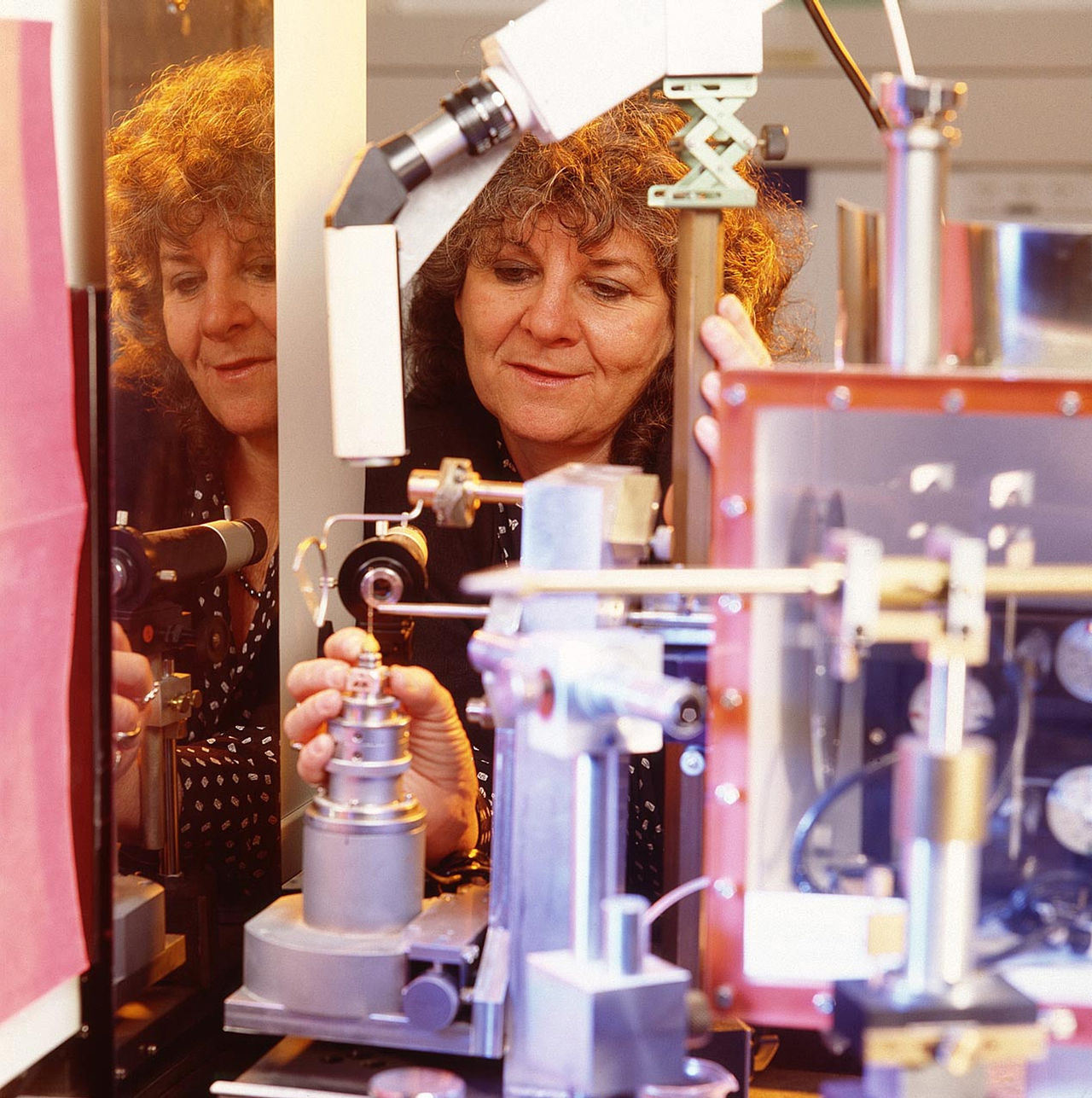
Ribosomes are large ribonucleoprotein assemblies that translate genetic information into proteins. Their size and dynamic nature made them resistant to conventional crystallography for decades. Yonath developed experimental approaches to stabilize and crystallize ribosomal subunits, refined techniques for handling fragile crystals and applied X-ray crystallography under low-temperature conditions to increase resolution. These methodological advances were essential to obtain interpretable electron density for ribosomal RNA and protein components.
Key contributions
- Produced some of the first three-dimensional crystal structures of ribosomal subunits, providing a framework to understand translation at the atomic level.
- Mapped binding sites for numerous antibiotics, showing how these drugs interfere with protein synthesis and explaining patterns of drug specificity and resistance.
- Introduced technical innovations in macromolecular crystallography that enabled studies of very large complexes.
Importance and applications
The structures solved by Yonath and collaborators transformed basic knowledge of how the ribosome catalyzes peptide bond formation and how its movement coordinates protein synthesis. This structural information has practical consequences: it guided interpretation of antibiotic action, informed the design and optimization of antimicrobial compounds, and opened avenues in synthetic biology and translational medicine. Beyond applied outcomes, the work clarified fundamental mechanisms shared across life.
Legacy and recognition
Yonath's achievements are notable both for their scientific depth and for overcoming long-standing technical obstacles. Her Nobel Prize acknowledged not only specific structures but also the broader impact of making the ribosome accessible to structural analysis. Her work continues to influence structural biology, pharmacology and our understanding of the molecular basis of translation.
Further reading: professional profile, Nobel citation, chemistry prize background, Steitz, Ramakrishnan, ribosome overview.
Questions and answers
Q: Who is Ada Yonath?
A: Ada Yonath is an Israeli crystallographer.
Q: What did Ada Yonath receive in 2009?
A: Ada Yonath received the 2009 Nobel Prize in Chemistry.
Q: Who did Ada Yonath share the Nobel Prize with in 2009?
A: Ada Yonath shared the Nobel Prize with Thomas A. Steitz and Venkatraman Ramakrishnan.
Q: What was the subject of the studies that led to Ada Yonath, Thomas A. Steitz, and Venkatraman Ramakrishnan being awarded the Nobel Prize in Chemistry in 2009?
A: The subject of the studies that led to Ada Yonath, Thomas A. Steitz, and Venkatraman Ramakrishnan being awarded the Nobel Prize in Chemistry in 2009 was the structure and function of the ribosome.
Q: When was Ada Yonath born?
A: Ada Yonath was born on June 22, 1939.
Q: Where is Ada Yonath from?
A: Ada Yonath is from Israel.
Q: What is Ada Yonath's background in?
A: Ada Yonath's background is in crystallography.
Related articles
Author
AlegsaOnline.com Ada Yonath — Israeli crystallographer and Nobel laureate Leandro Alegsa
URL: https://en.alegsaonline.com/art/113311
Sources
- nobelprize.org : "Ada E. Yonath - Facts"
- wikidata.orgQ7426.html : wikidata.orgq7426.html
- d-nb.info : 1168810302
- isni.org : 0000 0003 5348 2894
- id.loc.gov : n81010061
- uli.nli.org.il : 004546750
- data.bibliotheken.nl : 06910526X
- orcid.org : 0000-0002-1856-6964
- idref.fr : 160446104
- trove.nla.gov.au : 1284888
- viaf.org : 84144783000047395692
- worldcat.org : lccn-n81010061