
Big Blue River (Kansas and Nebraska)
The Big Blue River is the largest tributary of the Kansas River, flowing roughly 359 miles from central Nebraska into northeastern Kansas and joining the Kansas River at Manhattan.
The Big Blue River is a major Midwestern watercourse that begins in central Nebraska and flows southeast into northeastern Kansas before joining the Kansas River. At about 359 miles (578 km) in length, it is commonly described as the largest tributary of the Kansas River and plays a significant role in the region's hydrology, agriculture, and recreation. The river's general course and its confluence with the Kansas River are often noted in guides to the area.
Image gallery
4 Images


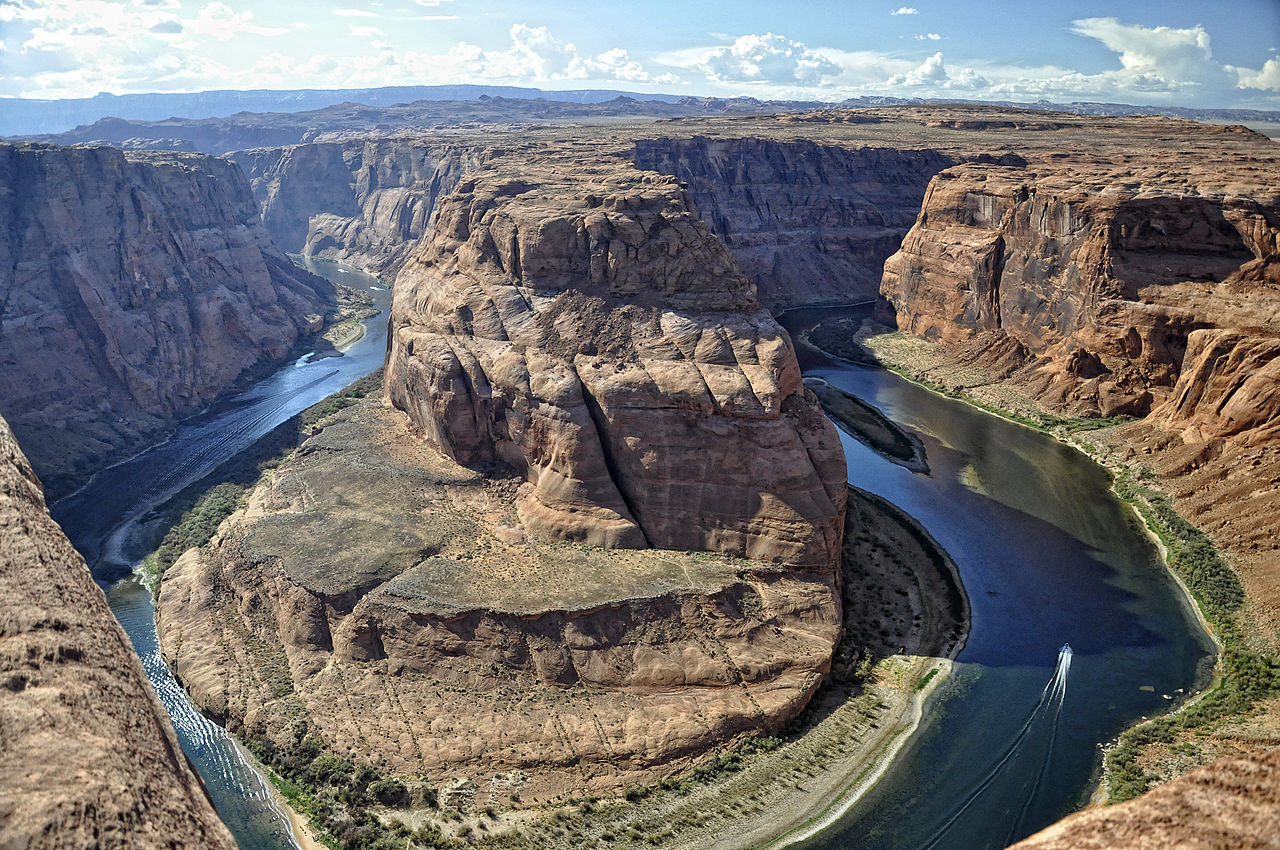
Course and physical characteristics
The river rises in the plains of central Nebraska and proceeds generally southeast across mixed farmland and prairie before crossing the Kansas border. Its channel and floodplain change with terrain and human modification; in some reaches the river meanders through broad lowlands, while in others it follows a more confined valley. Flow varies seasonally, with higher discharges typical in spring and during heavy rains. The Big Blue's length and watershed make it a significant tributary of the Kansas River system (largest tributary, Kansas River).
History and name
The river's name is derived from the Kansa (Kaw) people, whose name for the stream is often translated as the "Great Blue Earth River." The Kansa lived in the general confluence area and along parts of the river prior to Euro-American settlement. Later explorers, settlers, and maps adopted the English form "Big Blue" in recognition of the older indigenous name. The city where the river meets the Kansas River, Manhattan, sits near this historically important junction (Manhattan).
Human uses and importance
Communities and farms along the Big Blue depend on it for water supply, irrigation, and livestock, and it supports local recreation such as boating, fishing, and wildlife viewing. Flood management and water-storage projects on the river and its tributaries affect how water is released and used downstream. Reservoirs and levees associated with the system are managed for multiple purposes including flood control, water conservation, and outdoor recreation. The river also provides habitat for riparian plants and aquatic species that are typical of Midwestern prairie streams.
Notable facts and distinctions
- Overall length is commonly given as about 359 miles (578 km), making it the primary tributary of the Kansas River.
- The river crosses state lines, rising in Nebraska and entering Kansas, which shapes interstate water management considerations (Nebraska, Kansas).
- The point where it joins the Kansas River is described as the river's confluence; that junction is a focal point for local history and hydrology (confluence).
Recreation and conservation
Along its length, the Big Blue offers opportunities for day-use recreation: angling for warmwater fish, paddling in suitable sections, and viewing wetland and riparian wildlife. Conservation efforts along the river focus on water quality, bank stabilization, and balancing agricultural water use with ecosystem needs. Local and state agencies, together with community groups, often coordinate projects to maintain the river's health and the services it provides to towns and farmland in both states.
Questions and answers
Q: What is the Big Blue River?
A: The Big Blue River is a tributary of the Kansas River and is the biggest one.
Q: How long is the Big Blue River?
A: The Big Blue River is about 359 miles (578 km) long.
Q: Where does the Big Blue River flow from and to?
A: The Big Blue River goes from central Nebraska into Kansas and joins the Kansas River at Manhattan.
Q: What is the origin of the name of the Big Blue River?
A: The river was named by the Kansa tribe of Native Americans, who called it the Great Blue Earth River.
Q: When did the Kansa tribe live at the mouth of the Big Blue River?
A: The Kansa tribe lived at the mouth of the Big Blue River from 1780 to 1830.
Q: What was the name given by the Kansa tribe to the Big Blue River?
A: The Kansa tribe called the river the Great Blue Earth River.
Q: How important is the Big Blue River to the region?
A: The Big Blue River is an important water source for the region and plays a crucial role in agricultural activities in the area.
Tags
Related articles
Author
AlegsaOnline.com Big Blue River (Kansas and Nebraska) Leandro Alegsa
URL: https://en.alegsaonline.com/art/11323
Sources
- geonames.usgs.gov : "Big Blue River"
- viewer.nationalmap.gov : The National Map
- waterdata.usgs.gov : waterdata.usgs.gov/ks/nwis/uv?site_no=06887000
- conservationbuffers.unl.edu : "Big Blue River Basin"
- ksda.gov : "Kansas-Nebraska Big Blue River Compact"