
AD 9 (IX) — Year in the Roman Empire and China
AD 9 (IX) was a common Julian year notable for Rome’s defeat in the Teutoburg Forest and Wang Mang’s usurpation in China, events that affected imperial frontiers and dynastic rule in Eurasia.
Overview
The year AD 9 (Roman numeral IX) is recorded as a common year in the Julian calendar and is counted as the ninth year of the 1st century. In calendrical terms a common year in the Julian system is one that is not a leap year. Modern reconstructions of ancient chronology often compare the Julian reckoning with the proleptic Gregorian calendar. According to standard calculations AD 9 began on a Tuesday under the Julian system (Tuesday) and corresponds to a Thursday when projected onto the Gregorian system (Thursday). The year sits within the early Imperial period and is the ninth year of the 1st century.
Image gallery
4 Images


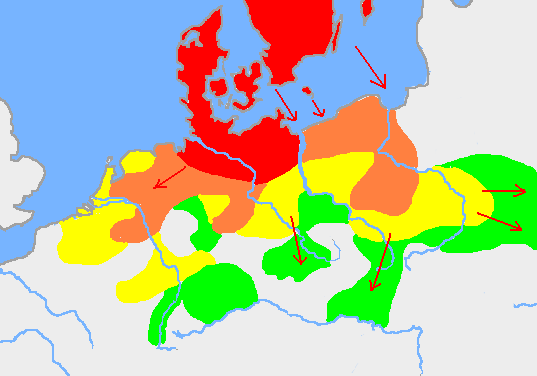
Major events in Europe
AD 9 is especially remembered for the defeat of Roman forces in Germania. A confederation of Germanic tribes, led by Arminius, ambushed and destroyed three Roman legions under the command of Publius Quinctilius Varus in the engagement commonly called the Battle of the Teutoburg Forest. The loss had immediate military and political consequences: Rome halted major attempts to annex territory east of the Rhine, adjusted frontier strategy, and the event became a lasting reference point in Roman military and administrative policy.
Major events in China
In the same year, China experienced a very different but equally consequential change. The powerful official Wang Mang consolidated control over the imperial household and effectively usurped the throne, founding the short-lived Xin dynasty. His seizure of power interrupted the Western Han line, and his program of monetary and land reforms provoked social unrest and opposition from landed and elite interests. These developments altered the trajectory of Han-era politics and are central to studies of early imperial China.
Chronology and context
AD 9 falls under the reign of the Roman emperor Augustus in the west and marks a turning point in the Han political order in the east. Because historians work with different calendar systems when translating ancient dates, entries about this year commonly note whether Julian or proleptic Gregorian dating is intended; see discussions of the Julian calendar and the Gregorian calendar for technical differences. Contemporary sources and later scholarship make AD 9 a convenient cross-cultural marker for the early Common Era.
Significance and legacy
The military disaster in Germania helped define the Rhine as Rome’s effective northern boundary in western Europe for centuries, shaping military deployments and provincial organization. In East Asia, Wang Mang’s usurpation and reforms are studied as catalysts for political upheaval and eventual restoration efforts that reshaped Han institutions. Both episodes are often cited in broad narratives about how single years can coincide with wider, long-term transformations.
Further notes
- Dating conventions: writers use AD 9, 9 CE, or the Roman consul names to indicate the year; calendar-start weekdays depend on which system is applied.
- Primary contexts: military history of the Roman Empire and political history of the Han dynasty and Xin interregnum.
- For technical calendar and chronology issues consult treatments of the Julian calendar and the Gregorian calendar, and reference works on early imperial Rome and Han China (Roman chronology, chronological terms).
Scholars continue to examine AD 9 not only for the specific events recorded but also for how those events illuminate larger processes of imperial consolidation, frontier management, and the risks of rapid reform. For concise timelines and comparative treatments of the period, see standard chronologies and collections of primary source translations that place AD 9 within broader political, military, and social narratives (weekday conventions, proleptic comparisons, century framing).
Questions and answers
Q: What year is being referred to in this passage?
A: The passage is referring to the year 9 AD.
Q: Which calendar started the year on a Tuesday, and which started it on a Thursday?
A: The Julian calendar started the year on a Tuesday, while the Gregorian calendar started it on a Thursday.
Q: In which century did the year 9 AD fall?
A: The year 9 AD fell in the 1st century.
Q: Was the year 9 AD considered a leap year?
A: It is not mentioned in the passage whether the year 9 AD was a leap year.
Q: What is the significance of the year 9 AD in history?
A: The passage does not mention any specific significance of the year 9 AD in history.
Q: What is the difference between the Julian and Gregorian calendars?
A: The Julian calendar was replaced by the Gregorian calendar and the main difference between them is the number of leap years. The Julian calendar had leap years every 4 years, while the Gregorian calendar has leap years every 4 years with the exception of years divisible by 100 but not by 400.
Q: How is the year 9 AD represented in Roman numerals?
A: The year 9 AD is represented in Roman numerals as IX.
Related articles
Author
AlegsaOnline.com AD 9 (IX) — Year in the Roman Empire and China Leandro Alegsa
URL: https://en.alegsaonline.com/art/113112
Sources
- calendarhome.com : "CalendarHome.com - 9"
- wolframalpha.com : "year 9 - Wolfram|Alpha"