
54th Massachusetts Volunteer Infantry Regiment
One of the first official African-American units in the Union Army during the American Civil War, noted for its assault on Fort Wagner and for challenging prejudice through military service.
Overview
The 54th Massachusetts Volunteer Infantry was an early state-organized African-American military unit formed to serve in the Union Army during the American Civil War. Frequently cited as one of the first official Black regiments raised in the North, it became widely known for its courage in combat and for the political and social impact of its service. Some accounts have associated the regiment with the nickname "Swamp Angels", though the unit is most often remembered simply as the 54th Massachusetts.
Image gallery
9 Images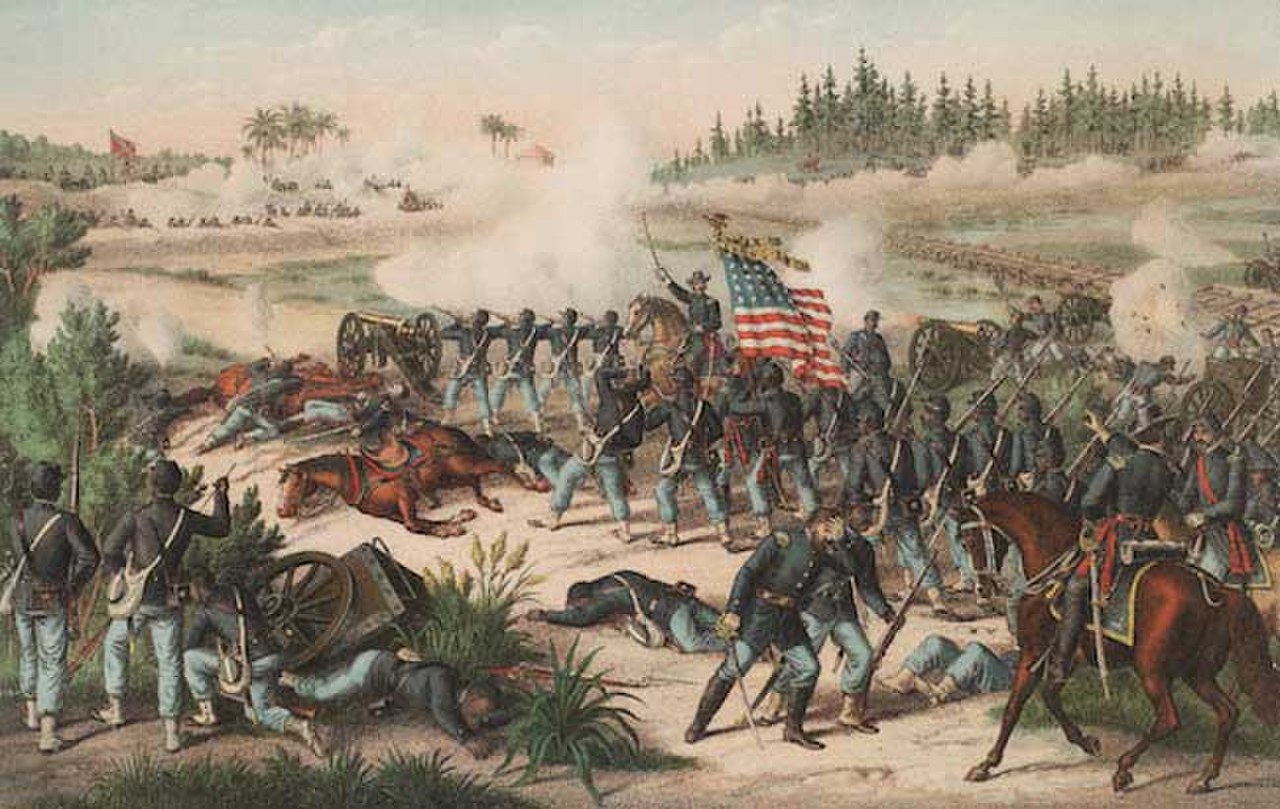


Organization and composition
Authorized by the Commonwealth of Massachusetts and supported by abolitionist leaders, the 54th was recruited in 1863 under the direction of Governor John A. Andrew and commanded by Colonel Robert Gould Shaw. Men who joined included free Black northerners, escaped enslaved people, and volunteers from other states. Training took place at camps near Boston and Readville; the unit was organized as an infantry regiment and outfitted to perform front-line duties alongside white regiments.
Combat and Fort Wagner
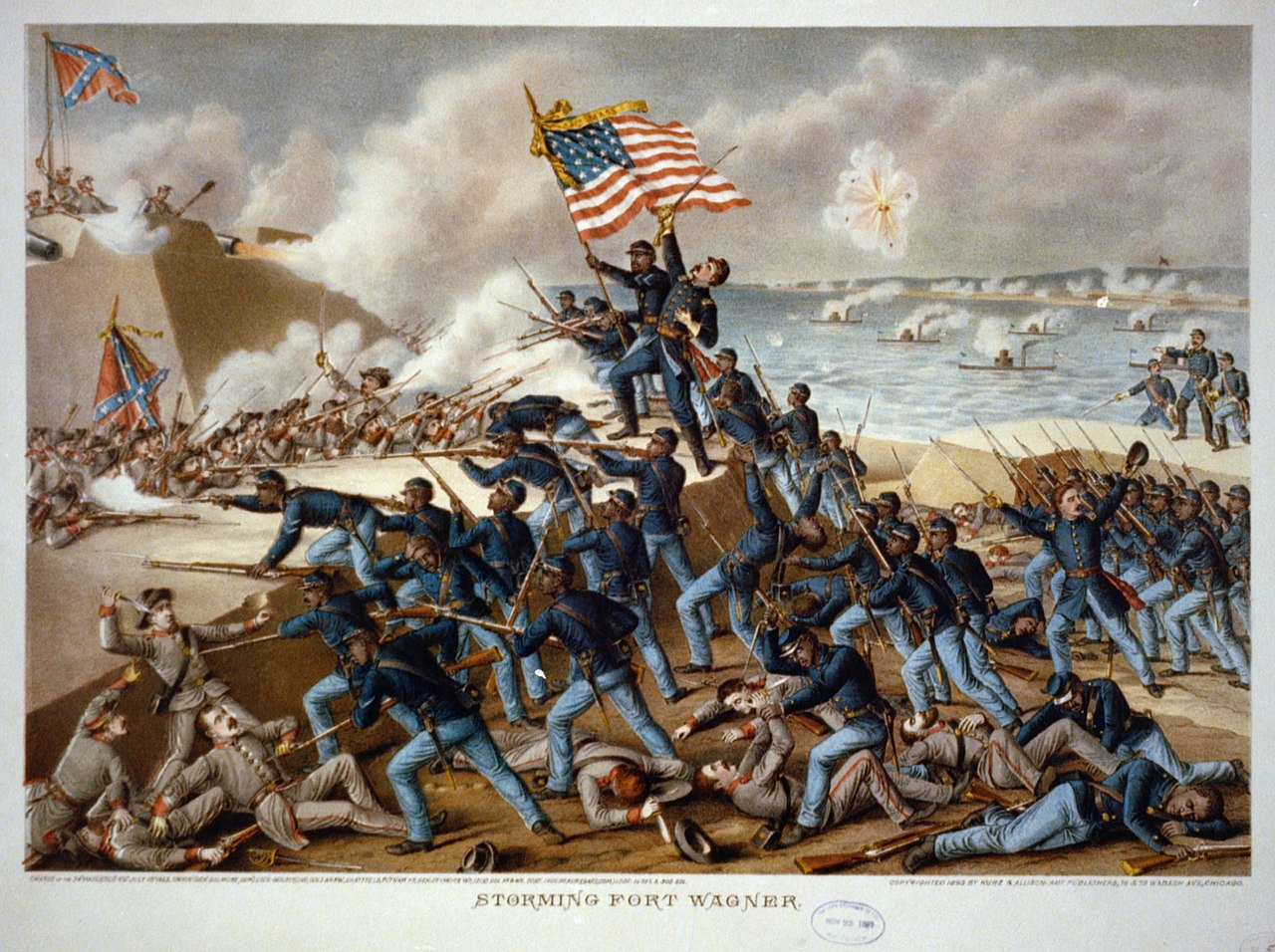
The regiment first gained national attention for its July 1863 assault on Fort Wagner, a Confederate coastal stronghold in South Carolina. In that attack the 54th demonstrated discipline and bravery under heavy fire, suffering severe losses and earning respect from observers in the North and abroad. Colonel Shaw was among the officers killed in the action and was buried by Confederates with many of his men, a fact that drew public attention to the shared sacrifice of Black soldiers.
Service, challenges, and recognition
Throughout its service the 54th performed siege operations, garrison duty, and raids in the southern theater. Its men faced not only battlefield danger but also unequal treatment: at first they were offered lower pay than white soldiers, a discrepancy that became a focal point of protest and was later corrected by federal action. The regiment’s conduct helped strengthen arguments for equal pay, fuller enlistment of Black soldiers, and broader emancipation policies.
Legacy and notable facts
The sacrifice of the 54th Massachusetts had enduring cultural and political effects. It bolstered recruitment of African-American troops and influenced public opinion in the North. Memorials, historical studies, and artistic portrayals have kept the regiment’s story in public memory. Earlier examples of Black military service in American conflicts—such as in the Revolutionary War and the War of 1812—provide context, but the 54th is often highlighted as a turning point in the formal acceptance of African-American soldiers into state and federal forces.
Further reading and resources
- Regimental histories and archives for primary documents and rosters.
- Museum exhibits and battlefield sites that interpret the regiment’s engagements.
- Scholarly works examining the 54th’s role in military, social, and political history.
For additional information, consult state military records and specialized Civil War collections. See also contemporary accounts of the regiment’s formation and reports from its commanders for firsthand perspectives.
infantry regiment Union Army American Civil War "Swamp Angels" War of 1812
Questions and answers
Q: What was the 54th Regiment Massachusetts Volunteer Infantry?
A: The 54th Regiment Massachusetts Volunteer Infantry was an infantry regiment in the Union Army during the American Civil War.
Q: What was the nickname of the 54th Regiment Massachusetts Volunteer Infantry?
A: The nickname of the 54th Regiment Massachusetts Volunteer Infantry was the "Swamp Angels".
Q: What was unique about the 54th Regiment Massachusetts Volunteer Infantry?
A: The 54th Regiment Massachusetts Volunteer Infantry was one of the first official African-American units in the United States during the Civil War.
Q: Had African-Americans fought in previous wars?
A: Yes, African-Americans had also fought in the American Revolution and the War of 1812 on both sides.
Q: Which side did the 54th Regiment Massachusetts Volunteer Infantry fight on?
A: The 54th Regiment Massachusetts Volunteer Infantry fought on the Union side during the American Civil War.
Q: Was the 54th Regiment Massachusetts Volunteer Infantry successful?
A: The 54th Regiment Massachusetts Volunteer Infantry is noted for its heroic participation in the Battle of Fort Wagner, where they suffered heavy casualties but successfully proved that African-American soldiers were as capable and brave as white soldiers.
Q: What impact did the 54th Regiment Massachusetts Volunteer Infantry have?
A: The 54th Regiment Massachusetts Volunteer Infantry is regarded as a pioneering force in the history of the United States and African-American military service. Their service and sacrifice helped to break down the racial prejudice and discrimination that existed in the United States at the time.
Author
AlegsaOnline.com 54th Massachusetts Volunteer Infantry Regiment Leandro Alegsa
URL: https://en.alegsaonline.com/art/112974
Sources
- masshist.org : "54th Regiment!"
- masshist.org : "To Colored Men. 54th Regiment! Massachusetts Volunteers, Of African Descent"
- history.umd.edu : "Jefferson Davis's Proclamation Regarding Captured Black Soldiers, December 23, 1862"
- nps.gov : nps.gov/civilwar/search-battle-units-detail.htm?battleUnitCode=UMA0054RI00C.html
- archives.gov : "Exhibit: 54th Mass Casualty List"
- battleofolustee.org : "Lt. Col. Henry N. Hooper, 54th Massachusetts Volunteer Infantry"
- books.google.com : Ethnic and Racial Minorities in the U.S. Military: An Encyclopedia
- books.google.com : The Negro in the American Rebellion: His Heroism and His Fidelity
- books.google.com : The Struggle for Equality